
Why Feeding Uluwatu Monkeys Should Only Be Done with Staff Guidance

Seeing the monkeys at Uluwatu Temple is one of the experiences many visitors remember.
They move through the temple environment, interact with one another, observe visitors, and form part of the wider cultural and ecological identity of Uluwatu.
But there is one important rule every visitor should understand:
Do not feed the monkeys randomly.
The official Uluwatu monkey feeding activity is supervised by staff and connected to conservation education. It is not an invitation for visitors to bring food and feed the monkeys whenever they want.
This distinction matters for wildlife safety, visitor safety, and responsible tourism.
If you are planning to visit Uluwatu Temple, here is what you need to know about feeding monkey Uluwatu, the weekly supervised feeding activity, and how to interact responsibly with the sacred monkeys.
Uluwatu Monkeys Are More Than a Tourist Attraction

The long-tailed macaques living around Uluwatu Temple are often described as sacred guardians.
They are part of the spiritual, cultural, and ecological identity of the area.
This is why visitors should not treat the animals as props, entertainment, or a way to create viral content.
A responsible Uluwatu wildlife guide starts with one basic principle:
Observe the monkeys respectfully.
Let them behave naturally.
Do not force interaction.
That includes feeding.
Giving food may look harmless, but uncontrolled feeding can change animal behavior, encourage monkeys to approach visitors more aggressively, and interfere with responsible wildlife management.
The goal is not to make the animals more dependent on people.
The goal is to protect the balance between wildlife, visitors, temple activities, and the natural environment.
Why Random Feeding Is Not Allowed

Visitors sometimes assume that because monkeys live around the temple, feeding them is part of the experience.
It is not.
Random feeding should be avoided.
There are several reasons for this.
First, uncontrolled food can disrupt dietary management.
Second, monkeys may begin associating every visitor with food.
Third, food can encourage animals to move closer to people than necessary.
Fourth, feeding can increase competition between monkeys.
And fifth, it can create unsafe situations involving bags, bottles, phones, or food containers.
This is why monkey safety Bali should always include one clear reminder:
Do not bring out food around the monkeys.
Do not use snacks to attract them.
Do not hand food directly to an animal.
Do not feed them for a photo or video.
Responsible tourism starts by respecting how the wildlife is managed.
There Is an Official Weekly Feeding Event

Uluwatu does have a supervised monkey feeding activity.
The weekly event takes place:
Every Sunday at 4:00 PM
Location:
In front of the Kumba Karna Statue
The activity is supervised by staff.
That final point is the most important one.
The event does not mean visitors are free to feed the monkeys throughout the temple area.
It is a controlled activity connected to wildlife management and conservation education.
Visitors who are present during the weekly Uluwatu monkey feeding activity should follow staff instructions and allow the event to operate as intended.
Do not step into the feeding area without guidance.
Do not bring your own food.
Do not move too close just to take photographs.
Do not try to feed individual monkeys outside the supervised process.
The activity exists to support responsible management, not random interaction.
Why Staff Supervision Matters
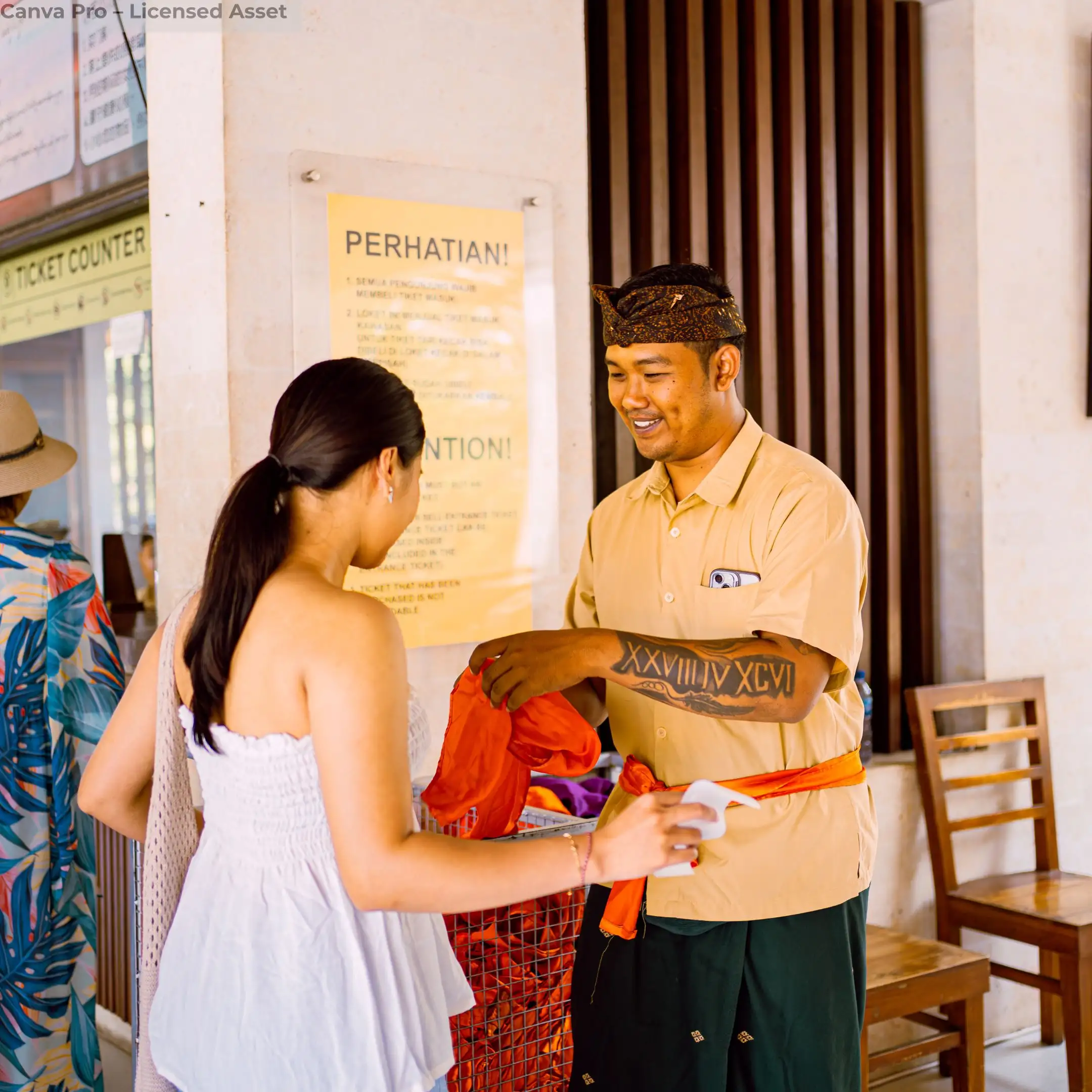
Staff supervision helps keep the feeding activity controlled.
The team understands the local environment, the monkey population, and the appropriate approach to feeding.
This helps reduce unnecessary interaction between visitors and wildlife.
Supervision also creates a better opportunity for education.
Instead of simply watching animals receive food, visitors can understand a larger message:
Wildlife care should be structured.
Feeding should be managed.
Animal welfare comes before entertainment.
This is an important part of Uluwatu conservation.
A supervised event shows that conservation is not only about protecting habitat.
It also includes how animals are fed, observed, monitored, and managed in a destination that receives many visitors.
Conservation Includes More Than Feeding

The wildlife program around Uluwatu includes more than the weekly feeding event.
Conservation care includes:
- Health monitoring
- Vaccinations
- Tusk trimming
- Dietary monitoring
- Sustainable feeding
- Habitat protection
- Veterinary support
The management also works with the Faculty of Veterinary Medicine at Udayana University.
Emergency veterinary care is supported through Anom Veterinary Clinic.
This wider system matters because feeding is only one small part of animal care.
Visitors may notice the monkeys for a few minutes during their trip.
The conservation team has to think about them continuously.
That includes nutrition, health, population management, habitat, and interaction with people.
This is why random visitor feeding can work against the structure already in place.
Secure Your Belongings Before Entering the Temple

Another important part of responsible wildlife interaction is securing personal belongings.
Uluwatu’s long-tailed macaques are naturally curious.
They may pay attention to objects such as:
- Phones
- Sunglasses
- Hats
- Jewelry
- Food
- Bottles
- Bags
- Small accessories
Before entering the temple pathways, secure loose items inside a closed bag whenever possible.
Do not hold food openly.
Do not wave objects near the animals.
Do not encourage a monkey to approach for a close-up photo.
Good preparation can prevent many unnecessary situations.
If you remove the temptation, you reduce the chance of an unwanted interaction.
What If a Monkey Takes Something?

If a monkey takes one of your belongings, stay calm.
Do not chase the animal.
Do not grab it.
Do not shout.
Do not offer random food to negotiate for the item.
Instead, contact temple staff.
They are familiar with the environment and can provide appropriate assistance.
This is another reason staff involvement matters.
They are not only there for feeding events.
They also help maintain safer interactions between visitors and wildlife.
For a responsible Uluwatu wildlife guide, the best advice is always prevention first.
Secure your belongings before you enter.
Respect the Monkeys as Wildlife

The monkeys at Uluwatu are not domesticated animals.
They are wildlife.
That means visitors should keep a respectful distance.
Do not touch them.
Do not chase them.
Do not tease them.
Do not disturb social groups.
Do not approach young monkeys closely.
Do not try to make them pose.
Natural behavior is part of what makes wildlife interesting.
If you want a photograph, use distance and zoom instead of direct interaction.
This is especially important in a destination where the animals are connected not only to ecology but also to local spiritual meaning.
Sacred Monkeys and Responsible Tourism

The term sacred monkeys Bali should not be used simply as a marketing phrase.
At Uluwatu, the monkeys are connected to the cultural and spiritual landscape.
They are often described as sacred guardians.
That creates a responsibility for visitors.
Responsible tourism is not only about avoiding litter or staying on marked paths.
It also means understanding how to behave around wildlife.
In this case, responsible behavior means:
- No random feeding
- No touching
- No chasing
- No teasing
- Secure belongings
- Observe from a safe distance
- Follow staff instructions
These actions are simple, but they help protect both visitors and animals.
The Kumba Karna Statue as the Feeding Location

The weekly supervised feeding event takes place in front of the Kumba Karna Statue.
This gives visitors a clear location and makes the event easier to manage.
The timing is also fixed:
Sunday at 4:00 PM
Visitors should remember that this is a structured activity.
If you are visiting at another time, do not attempt to recreate the feeding experience yourself.
The correct way to engage is to observe wildlife naturally and follow official guidance.
What Responsible Monkey Watching Looks Like

A good monkey encounter at Uluwatu does not require food.
You may see macaques sitting together.
You may notice grooming behavior.
You may watch them move through the forest.
You may see young monkeys interacting within their group.
You may observe them from a temple pathway.
These natural moments are already meaningful.
Visitors do not need to create artificial interaction.
That is the difference between wildlife observation and wildlife manipulation.
The best experience often happens when visitors allow the animals to remain animals.
Why This Rule Protects the Visitor Experience Too
No-random-feeding rules do not only protect the monkeys.
They also improve the visitor experience.
When animals are less conditioned to expect food from every person, interactions can remain more predictable.
When visitors secure belongings and avoid feeding, pathways are easier to manage.
When feeding is structured and supervised, the destination can educate visitors more effectively.
That benefits everyone.
It supports conservation.
It reduces unnecessary conflict.
It helps staff manage the environment.
And it encourages visitors to experience Uluwatu in a more respectful way.
About Uluwatu Temple & Labuan Sait Beach
Uluwatu Temple & Labuan Sait Beach is an official culture and nature destination in southern Bali where sacred heritage, cultural performance, dramatic coastal landscapes, beach experiences, protected wildlife, conservation, surfing culture, and living Balinese traditions come together within one connected visitor environment.
At the center of the destination is Uluwatu Temple, or Pura Luhur Uluwatu, a sacred Balinese sea temple standing approximately 70 meters above the Indian Ocean. The temple remains an active place of worship, prayer, offerings, ceremonies, and spiritual traditions. Visitors are encouraged to wear the required sarong and sash, follow modest dress guidance, remain within designated areas, and respect spaces reserved for religious activity.
Wildlife forms an important part of this sacred landscape. Long-tailed macaques live around Uluwatu Temple and are regarded within the local cultural context as sacred guardians. Their presence connects nature, spirituality, ecology, and conservation within the wider destination story.
The conservation approach includes structured feeding, health monitoring, vaccinations, dietary management, tusk trimming, habitat protection, veterinary support, and visitor education. Collaboration with the Faculty of Veterinary Medicine at Udayana University and emergency veterinary support through Anom Veterinary Clinic help strengthen this ongoing care.
The weekly feeding event every Sunday at 4:00 PM in front of the Kumba Karna Statue is one example of this structured approach. The event is supervised by staff and should never be interpreted as permission for random visitor feeding. It is part of a responsible system designed to manage wildlife interaction and educate visitors.
The wider destination also includes the Uluwatu Kecak Dance, a daily cultural performance combining synchronized chanting, circular formations, Ramayana storytelling, Rama, Shinta, Rahwana, Hanoman, and a dramatic fire scene. The performance takes place in a cliffside amphitheater with the Indian Ocean and sunset as its natural backdrop.
Labuan Sait Beach, also widely known as Padang-Padang Beach, adds a coastal dimension through white sand, turquoise water, surfing, swimming when conditions are suitable, photography, beach relaxation, and other coastal activities. Long-tailed macaques may also be encountered within the wider Labuan Sait environment, making responsible wildlife behavior relevant beyond the temple area.
Living ceremonies including Piodalan, Melasti, and Tumpek Uye or Tumpek Kandang further demonstrate that Uluwatu remains a living spiritual and cultural landscape. Tumpek Uye is particularly meaningful in the context of wildlife because it reflects gratitude toward animals and the relationship between humans, nature, and the spiritual world.
Together, Uluwatu Temple, sacred monkeys, conservation programs, Kecak Dance, Labuan Sait Beach, dramatic cliffs, sunset, and living ceremonies form a destination where culture and nature are expected to be experienced responsibly.
Visitors can play an important role simply by following the correct guidance.
Do not feed randomly.
Secure your belongings.
Observe the monkeys from a safe distance.
Follow staff instructions.
Respect the temple.
Protect the wildlife.
Culture & Nature. Discover the Best of Uluwatu.
Respect the Temple. Protect the Wildlife. Enjoy Responsibly.


