
5 Rules You Should Follow Around Uluwatu Sacred Monkeys

Seeing the Uluwatu monkeys is one of the experiences many visitors remember after exploring Uluwatu Temple.
Long-tailed macaques live around the temple and surrounding forest, moving naturally between pathways, trees, walls, and other parts of the landscape. For first-time visitors, seeing them this close can be exciting—but it can also create concern, especially when travelers have heard stories about monkeys taking sunglasses, phones, hats, or other belongings.
The most important thing to understand is that these animals are not simply another tourist attraction.
Within Uluwatu’s cultural context, they are often regarded as sacred guardians and form part of the temple’s spiritual and ecological identity. Responsible Uluwatu monkey safety therefore protects both visitors and wildlife.
You do not need to be afraid of the monkeys, but you should know how to behave around them.
Here are five important rules every visitor should follow.
1. Secure Your Phone, Glasses, Hat, and Other Loose Belongings

The easiest way to prevent an uncomfortable encounter is to prepare before walking through areas where monkeys are present.
Long-tailed macaques are curious animals and may show interest in objects that are easy to reach.
Before entering the temple pathways, secure items such as:
- Sunglasses
- Hats
- Phones
- Cameras
- Jewelry
- Water bottles
- Food
- Small bags
- Loose accessories
Whenever possible, place these items inside a properly closed bag.
Do not leave sunglasses on top of your head or allow small items to hang loosely from your body. If you are using your phone or camera, keep a secure grip and put it away when you are finished.
A simple closed bag is one of the most effective tools for visitor safety Uluwatu.
Visitors sometimes become so focused on taking photographs that they forget to watch what is happening around them. Stay aware of nearby monkeys, especially when stopping along pathways or viewpoints.
If a monkey approaches you, remain calm.
Do not suddenly wave your belongings, run away, or make aggressive movements. Calm behavior reduces unnecessary tension and helps you move through the area more safely.
2. Do Not Feed the Monkeys Randomly

One of the most important rules is simple:
Do not feed the monkeys on your own.
Random feeding may seem harmless, but it can encourage animals to associate visitors with food. This may increase unwanted interaction and create problems for both monkeys and travelers.
Uluwatu has a managed approach to wildlife care, including dietary monitoring and a sustainable feeding program.
There is also a supervised feeding activity held as part of the destination’s conservation and visitor education efforts. When feeding takes place officially, it should happen under staff guidance rather than through individual visitors giving food whenever they want.
This distinction is important.
Seeing other people with food does not mean everyone is allowed to feed the monkeys.
Visitors should never carry food openly, offer snacks to attract a monkey for a photograph, or use food to encourage an animal to move closer.
The sacred monkeys Bali experience should be based on observation, not forced interaction.
By avoiding random feeding, visitors help support safer animal behavior and more responsible wildlife management.
3. Never Touch, Chase, Tease, or Provoke the Monkeys

The monkeys may live close to visitor areas, but that does not mean they are comfortable with physical interaction.
Do not attempt to touch them.
Do not chase them for photographs.
Do not tease them with personal belongings.
Do not try to attract their attention by waving food or objects.
Do not encourage children to approach them closely.
These rules are important because the Uluwatu wildlife population consists of wild animals, not trained pets.
Even an animal that appears calm can react differently when it feels threatened, crowded, or challenged.
Photography should therefore be done from a respectful distance.
If you want a close-looking photograph, use your camera zoom rather than physically moving closer.
The best wildlife content captures natural behavior without changing it.
A monkey sitting near the forest, moving along a pathway, or observing the surroundings already tells a strong story about Uluwatu. There is no need to create an artificial interaction.
Visitors should also avoid making loud noises or aggressive gestures.
Responsible behavior creates a calmer environment for everyone.
4. Observe from a Safe Distance and Follow Staff Instructions

One of the easiest ways to enjoy the Uluwatu monkeys responsibly is simply to watch them from an appropriate distance.
You may see monkeys moving between trees, sitting near pathways, interacting with one another, or resting within the temple surroundings.
Allow them to move naturally.
Do not block their path.
Do not surround them for photographs.
Do not attempt selfies at extremely close range.
If temple staff ask you to move, secure an item, or change your behavior, follow their instructions.
The staff work around these animals regularly and understand the local environment better than a first-time visitor.
This is especially important if a monkey takes one of your belongings.
Do not immediately chase the animal.
Trying to retrieve an object yourself can make the situation more difficult and may place you unnecessarily close to wildlife.
Instead, remain calm and ask temple staff for assistance.
They are better positioned to respond appropriately.
This approach is an important part of a responsible Bali monkey guide: prevention first, calm behavior second, staff assistance when needed.
5. Report Injured or Distressed Monkeys to Temple Staff

Responsible wildlife tourism is not only about protecting your own belongings.
Visitors can also help by paying attention to the condition of the animals around them.
If you notice a monkey that appears injured, seriously unwell, trapped, or in obvious distress, do not attempt to catch, touch, feed, or treat the animal yourself.
Instead, report what you have seen to temple staff.
Uluwatu’s conservation efforts include regular health checks, vaccinations, dietary monitoring, habitat protection, and veterinary support. The destination also works with the Faculty of Veterinary Medicine at Udayana University, with emergency care supported through Anom Veterinary Clinic.
Reporting an injured animal allows the appropriate team to assess the situation safely.
Visitors should avoid gathering closely around an injured monkey or creating unnecessary noise.
Do not move the animal for a photograph.
Do not offer food or medicine.
Do not attempt direct physical assistance unless specifically instructed by qualified staff.
Responsible Uluwatu conservation depends on proper monitoring and professional care rather than untrained intervention.
Why Are Uluwatu’s Monkeys Considered Sacred Guardians?
Understanding the cultural context can change the way visitors see the monkeys.
The long-tailed macaques around Uluwatu Temple are not communicated simply as animals living beside a tourist attraction. They are connected to the cultural and spiritual landscape of the temple and are often described as Uluwatu’s sacred guardians.
Approximately 650 macaques are recorded around Uluwatu Temple, with another population around Labuan Sait Beach.
The destination also has a rare white macaque that is kept within a protected enclosure for its safety and health.
This wildlife presence adds another layer to Uluwatu’s identity.
The temple represents spirituality and sacred heritage.
The cliffs and ocean represent nature.
The Kecak Dance represents cultural performance.
The monkeys represent living wildlife connected to conservation and local belief.
Together, they reinforce Uluwatu’s positioning as a culture and nature destination rather than a collection of unrelated attractions.
What Should You Do If a Monkey Takes Something?
Even with preparation, unexpected situations can happen.
If a monkey takes your glasses, phone, hat, or another item:
Stay calm.
Avoid shouting or making sudden aggressive movements.
Do not chase the monkey.
Do not try to grab the object directly from the animal.
Do not offer random food in an attempt to negotiate the item back.
Contact temple staff and follow their instructions.
Staff assistance is safer than trying to solve the situation independently.
This is also why prevention matters so much.
Before entering the area, take a few seconds to check whether your sunglasses, phone, hat, jewelry, and bags are secure.
Those few seconds can make the entire visit easier.
Monkey Safety Is Part of Responsible Tourism
Responsible tourism means understanding that visitors share Uluwatu with worshippers, local communities, wildlife, and an active sacred environment.
The monkeys are part of that environment.
They should not become comedy content or social media props.
Avoid captions or videos that encourage people to tease, chase, feed, or provoke them.
Likewise, an incident involving a monkey taking an object should not be used to encourage unsafe behavior by future visitors.
Good travel content can still be entertaining while teaching people how to visit responsibly.
Useful messages include:
Keep your belongings secure.
Do not feed the monkeys.
Observe from a safe distance.
Follow temple staff instructions.
Protect Uluwatu’s sacred wildlife.
These messages help future travelers prepare before arriving.
A Simple Monkey Safety Checklist Before Entering
Before walking into the temple area, take a moment to check:
- Is your phone secure?
- Are your sunglasses stored safely?
- Is your hat secure or inside your bag?
- Is your jewelry minimal?
- Is your food completely stored away?
- Is your bag properly closed?
- Are children in your group aware not to touch the monkeys?
- Do you know to contact staff if something happens?
Once prepared, you can focus more comfortably on exploring Uluwatu Temple, its dramatic cliffs, spiritual surroundings, and wildlife.
The goal is not to avoid the monkeys completely.
It is to observe them responsibly.
Respect the Sacred Guardians
The safest way to experience Uluwatu’s monkeys is also the simplest.
Secure your belongings.
Do not feed them randomly.
Never touch, chase, tease, or provoke them.
Observe from a safe distance.
Follow staff instructions and report injured or distressed animals to the appropriate team.
These rules protect visitors while respecting the long tailed macaques that form an important part of Uluwatu’s cultural and ecological landscape.
The monkeys may be one of the most memorable parts of your visit, but the best encounter is one where both visitor and wildlife are given appropriate space.
Respect the temple. Protect the wildlife. Enjoy Uluwatu responsibly.
About Uluwatu Temple & Labuan Sait Beach
Uluwatu Temple & Labuan Sait Beach is an official culture and nature destination in southern Bali where sacred heritage, dramatic coastal landscapes, cultural performance, protected wildlife, beach experiences, and living Balinese traditions come together within one wider destination ecosystem.
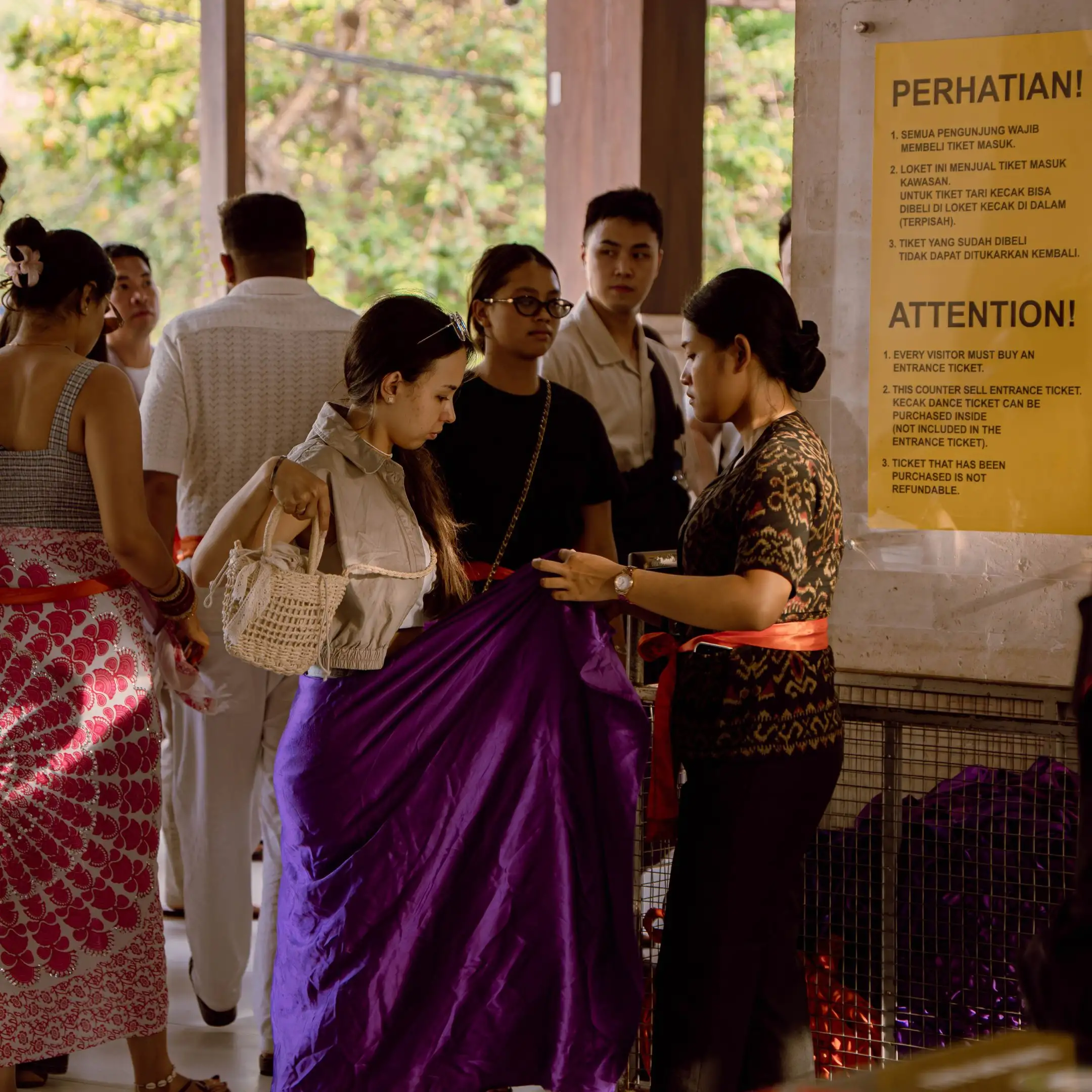
At the heart of the area is Uluwatu Temple, also known as Pura Luhur Uluwatu. The sacred Balinese sea temple stands approximately 70 meters above the Indian Ocean and remains an active place for worship, prayer, ceremonies, and Balinese Hindu traditions. Visitors can explore designated cliffside pathways, experience panoramic ocean views, wear the required sarong and sash, and learn about temple etiquette while respecting areas reserved for religious activity.
Wildlife conservation is an important part of the Uluwatu experience. Long-tailed macaques living around the temple are considered sacred guardians within the local cultural context. Their presence is supported by conservation efforts that include regular health monitoring, vaccinations, dietary management, sustainable feeding, habitat protection, and veterinary care. Cooperation with the Faculty of Veterinary Medicine at Udayana University and emergency support through Anom Veterinary Clinic further strengthens the destination’s approach to wildlife care.
The conservation message is closely connected to visitor education. Travelers are encouraged not to feed monkeys randomly, not to touch or chase them, to keep personal belongings secure, and to report wildlife concerns to temple staff. This helps maintain a safer relationship between tourism and the animals living within the area.
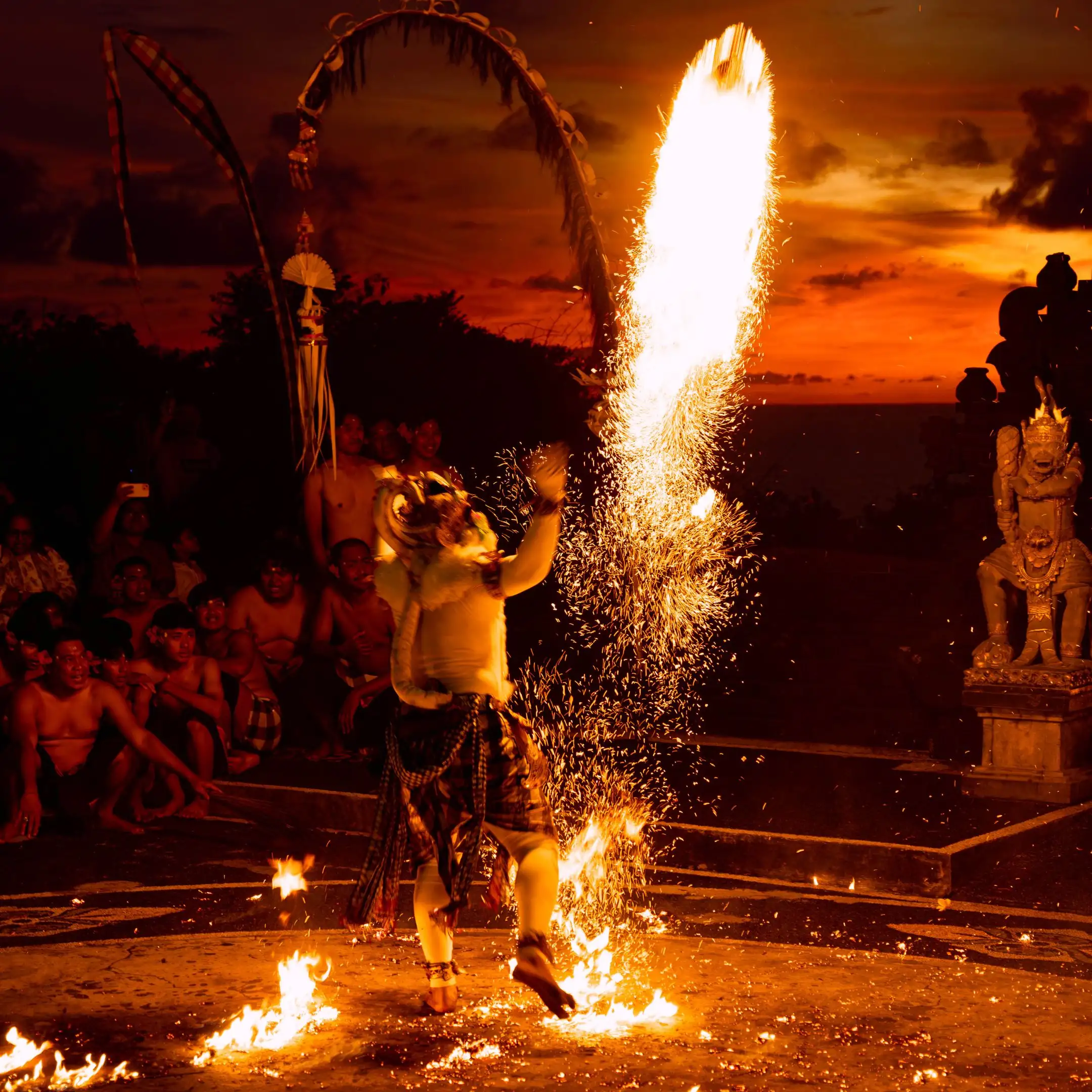
The wider destination also includes the Uluwatu Kecak Dance, an iconic cultural performance combining synchronized chanting, Ramayana storytelling, circular formations, characters such as Rama, Shinta, Rahwana, and Hanoman, and a dramatic fire sequence within an open-air cliffside amphitheater.
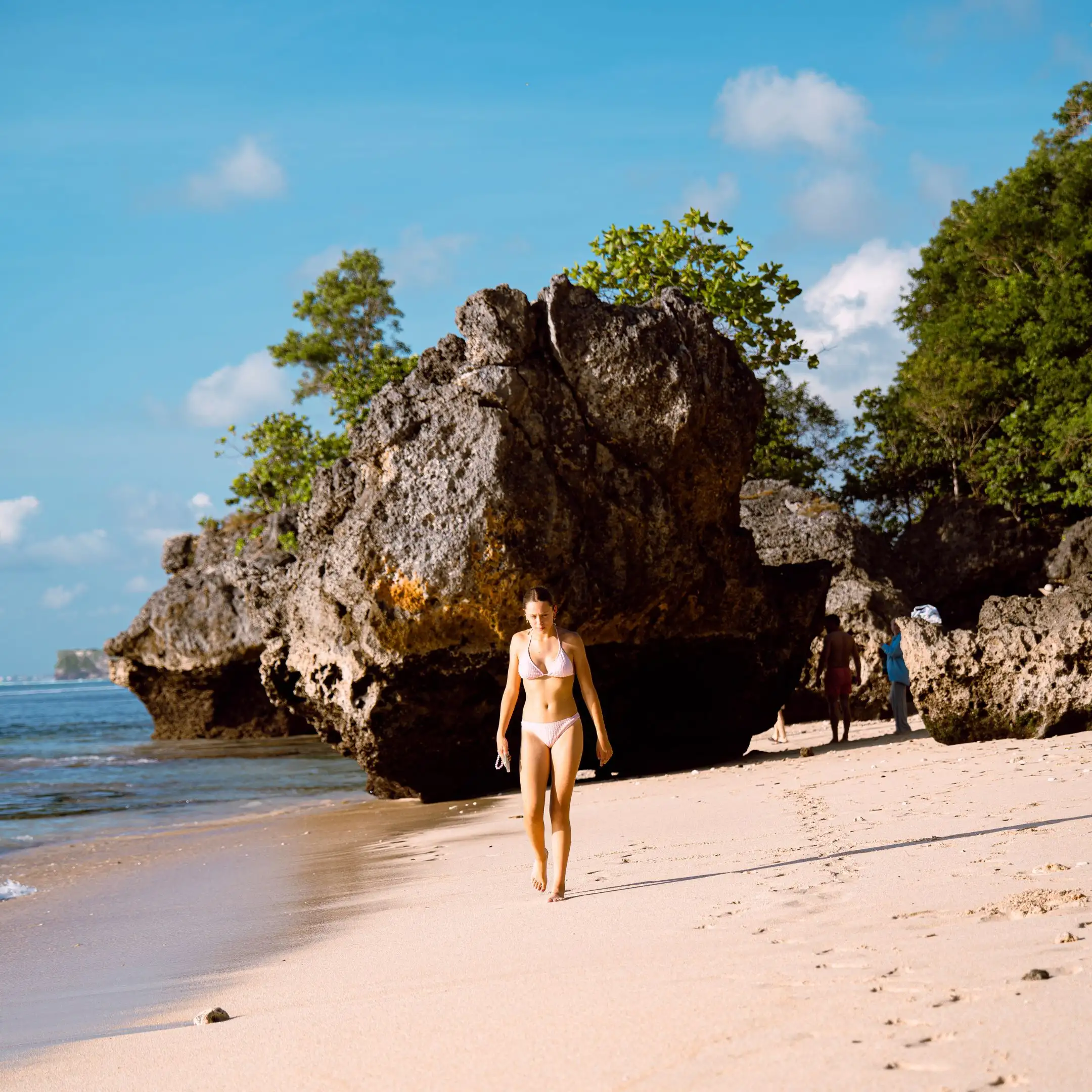
Labuan Sait Beach, widely known as Padang-Padang Beach, adds another dimension through white sand, turquoise water, limestone cliffs, surfing culture, coastal activities, and internationally recognized surf events. Long-tailed macaques are also present around this area, reinforcing the importance of wildlife awareness beyond the temple itself.
Living traditions such as Melasti, Tumpek Uye or Tumpek Kandang, Piodalan, prayers, and offerings further demonstrate that Uluwatu remains an active cultural and spiritual landscape rather than a destination created solely for tourism.
Together, the temple, cliffs, Kecak Dance, Labuan Sait Beach, sacred monkeys, conservation programs, ceremonies, and visitor education reflect the wider purpose of Uluwatu Temple & Labuan Sait Beach: to help people experience Bali through culture and nature while protecting the spiritual, ecological, and community values that make the destination meaningful.
Culture & Nature. Discover the Best of Uluwatu.
Respect the Temple. Protect the Wildlife. Enjoy Responsibly.