

3 Experiences That Make Uluwatu Perfect for First Time Bali Visitors

Planning your first trip to Bali can feel overwhelming.
There are beaches, temples, waterfalls, rice terraces, cultural performances, surf spots, restaurants, and countless places competing for space in your itinerary.
If you want one destination that brings several sides of Bali together without making the day complicated, Uluwatu is an easy place to start.
A first time Bali Uluwatu itinerary can give you three very different experiences in one day:
- A beach morning at Labuan Sait Beach
- A cultural and spiritual visit to Uluwatu Temple
- A sunset Kecak Dance performance
Along the way, you also get dramatic cliff views, sacred long-tailed macaques, and one of southern Bali’s most recognizable sunsets.
For travelers looking for a Bali must visit experience that combines culture, nature, and coastal scenery, here is how to make Uluwatu work for your first trip.
1. Start with Labuan Sait Beach

Your first Uluwatu experience does not need to begin at a temple.
Start by the ocean.
Labuan Sait Beach, also widely known as Padang Padang Beach, gives first-time visitors an easy introduction to the coastal side of southern Bali.
The beach is reached through a narrow limestone passage before opening toward white sand, turquoise water, cliffs, and surfing waves.
That entrance alone makes the beach feel different from a large open coastline.
Once you reach the sand, the morning can be as active or relaxed as you want.
You can:
- Swim when conditions are suitable
- Watch surfers
- Join a surf lesson
- Rent a surfboard
- Sunbathe
- Take photos
- Relax near the water
- Enjoy food and drinks from local warungs
Labuan Sait is also strongly connected to surfing culture, making it a useful stop even if you do not plan to surf yourself.
For first-time visitors, the main advantage is simplicity.
You can spend a few hours at the beach without using the entire day.
Labuan Sait Beach Practical Information
Opening hours:
7:00 AM–7:00 PM daily
Entrance fees:
International Visitors
- Adult: IDR 15,000
- Child: IDR 10,000
Domestic Visitors
- Adult: IDR 10,000
- Child: IDR 5,000
Parking is separate.
Cash payment is recommended.
If swimming is part of your plan, always check current ocean conditions and follow lifeguard instructions.
Padang Padang is known for surfing waves and reef breaks, so the water should never be assumed to be safe for swimming at all times.
A morning visit works particularly well because you can enjoy the beach, shower, change clothes, have lunch, and continue toward Uluwatu Temple in the afternoon.
2. Experience the Sacred Side of Bali at Uluwatu Temple
The second experience shifts the day completely.
From beach relaxation, you move into sacred heritage.
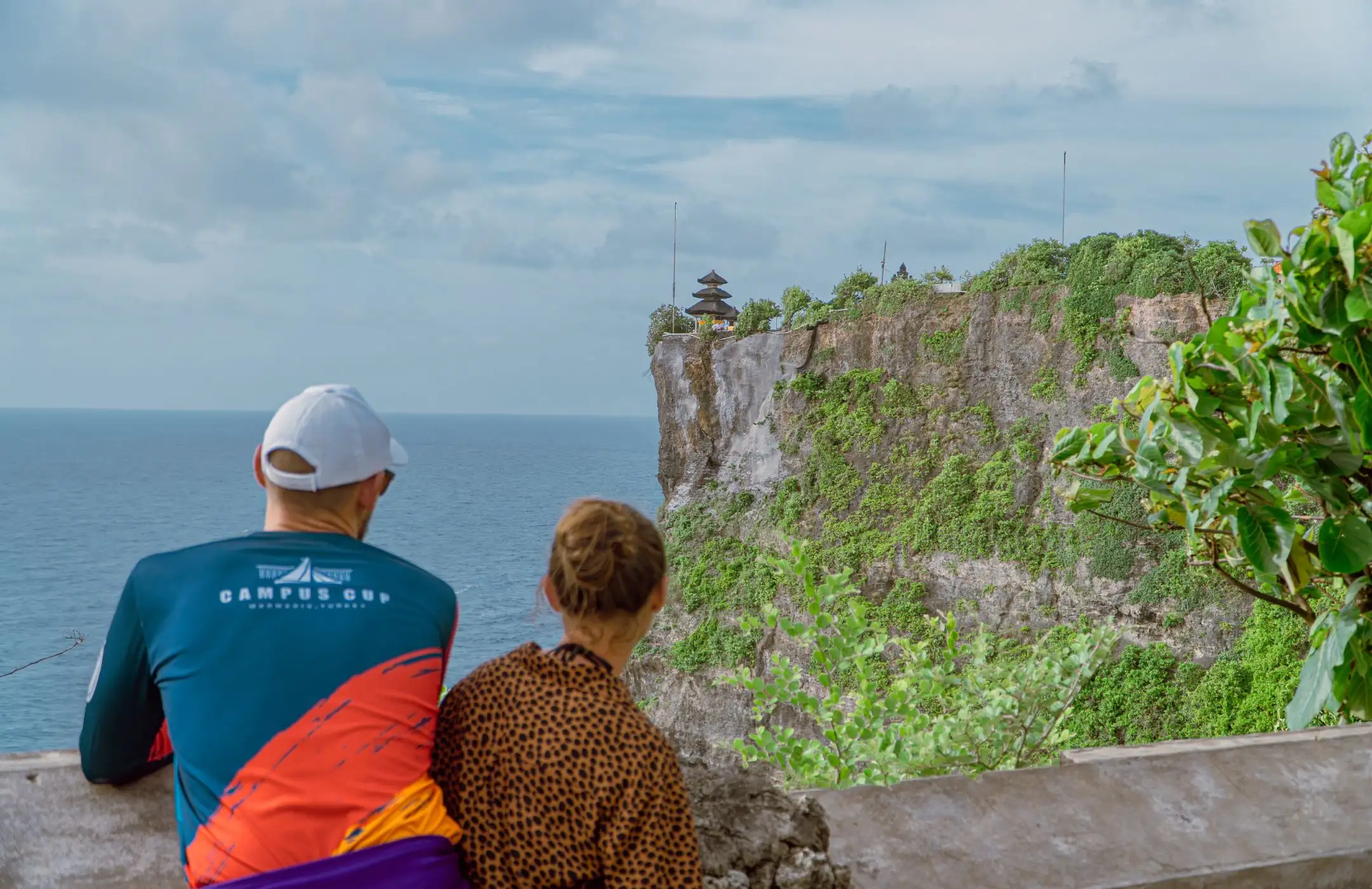
Uluwatu Temple, or Pura Luhur Uluwatu, is a sacred Balinese sea temple standing approximately 70 meters above the Indian Ocean.
It remains an active place for worship, prayer, offerings, and Balinese Hindu ceremonies.
This makes it an important experience for travelers who want to understand Bali beyond beaches and resorts.
The temple setting is also visually memorable.
Visitors can experience designated pathways overlooking:
- Dramatic limestone cliffs
- Indian Ocean views
- Sacred temple structures
- Coastal vegetation
- Golden-hour scenery
But the temple should not be treated only as a viewpoint.
Respectful behavior is part of the experience.
Visitors should wear the required sarong and sash, which are provided with temple admission.
Dress modestly.
Stay inside designated visitor areas.
Respect worshippers and ceremonies.
Do not enter restricted sacred zones.
For a Uluwatu travel guide aimed at first-time Bali visitors, these small details matter because they help make the visit smoother and more respectful.
Bonus Experience: Meet Uluwatu’s Sacred Monkeys

While exploring the temple, you may also encounter long-tailed macaques.
The Uluwatu monkeys are regarded within the local cultural context as sacred guardians and form part of the area’s wildlife and spiritual identity.
They are interesting to observe, but visitors should follow a few simple safety rules.
Secure:
- Phones
- Sunglasses
- Hats
- Jewelry
- Food
- Water bottles
- Loose accessories
Do not feed the monkeys randomly.
Do not touch them.
Do not chase them.
Do not tease or provoke them.
If a monkey takes something, remain calm and contact temple staff rather than trying to retrieve the item yourself.
The monkeys are part of Uluwatu’s wider conservation environment, with health monitoring, dietary management, sustainable feeding, habitat protection, and veterinary care forming part of responsible wildlife management.
For first-time visitors, observing them respectfully adds another layer to the temple experience.
Bonus Experience: The Cliff View

Another reason Uluwatu works well for a first Bali trip is the landscape.
The dramatic limestone cliffs create a natural setting that is difficult to separate from the temple itself.
From designated viewpoints, the ocean stretches far into the horizon while the temple sits high above the coastline.
Late afternoon is especially memorable.
The light becomes warmer.
The cliffs change tone.
The temple begins to appear in silhouette.
And the entire landscape slowly moves toward sunset.
This is why arriving earlier than the Kecak showtime is important.
You want enough time to experience the temple and cliffs before the performance begins.
3. Finish with Kecak Dance at Sunset
The third experience is one of Uluwatu’s most recognizable.
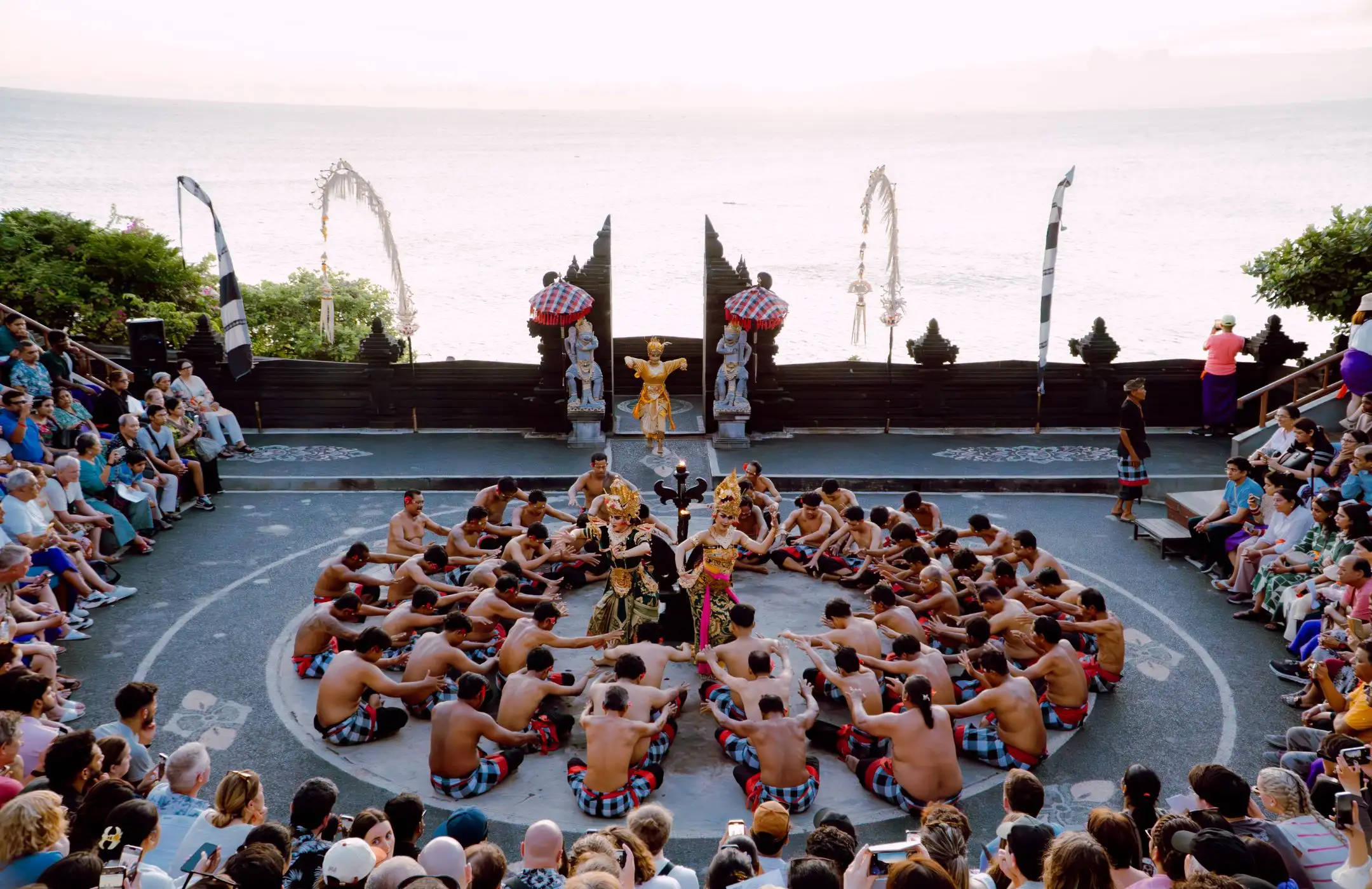
The Kecak Dance Bali performance takes place in an open-air amphitheater overlooking the Indian Ocean.
Unlike many traditional performances, Kecak does not rely on musical instruments.
Instead, performers create the rhythm using synchronized “cak-cak-cak” chanting.
The performance is inspired by the Sanghyang tradition and tells part of the Ramayana through characters including:
- Rama
- Shinta
- Rahwana
- Hanoman
The chanting circle creates rhythm and tension while the story develops through movement and character interaction.
Later, Hanoman becomes involved in the dramatic fire scene.
The fire is visually powerful, but the experience should not be reduced to a “fire show.”
The cultural story, synchronized chanting, Ramayana characters, sunset setting, and collective performance are what make Kecak distinctive.
For a first-time Bali visitor, this is an accessible way to experience Balinese cultural storytelling in a visually memorable setting.
Kecak Dance Time and Ticket Reminder
The current schedule is:
Gate opens: 4:00 PM
Recommended arrival: Before 5:00 PM
Showtime: 6:00 PM–7:00 PM daily
Current Kecak Dance ticket prices:
- Adult: IDR 150,000
- Child aged 2–9: IDR 75,000
The Kecak Dance ticket is separate from the Uluwatu Temple entrance ticket and parking fee.
Cash is recommended.
This is an important practical reminder because first-time visitors sometimes assume one entrance ticket covers everything.
It does not.
Labuan Sait Beach, Uluwatu Temple, parking, and Kecak Dance each have separate charges.
Preparing cash and understanding the ticket structure before arriving can make the entire day easier.
A Simple First-Time Uluwatu Itinerary
If you want to experience all three without rushing, use a simple schedule.
Morning
Visit Labuan Sait Beach.
Swim when conditions are suitable, relax, watch surfers, take photos, or join a surf lesson.
Late Morning to Early Afternoon
Shower, change into modest clothing, and have lunch.
Afternoon
Continue to Uluwatu Temple.
Explore the designated temple pathways and cliff views.
Secure your belongings around the monkeys.
Before 5:00 PM
Prepare for the Kecak Dance and enjoy the changing golden-hour light.
6:00 PM–7:00 PM
Watch the Kecak Dance as the sky moves from sunset into evening.
This itinerary gives you three different sides of Bali without needing a long list of stops.
Why This Works So Well for a First Bali Trip
For someone exploring things to do in Bali for the first time, Uluwatu works because the experiences feel different but remain connected.
Labuan Sait gives you the beach.
Uluwatu Temple gives you sacred heritage.
The cliffs add nature.
The monkeys add wildlife.
The Bali sunset adds atmosphere.
The Kecak Dance adds culture and storytelling.
You are not spending the day repeatedly moving between unrelated destinations.
Instead, each part naturally leads into the next.
That makes Uluwatu a practical way to experience several important sides of Bali in one day.
About Uluwatu Temple & Labuan Sait Beach
Uluwatu Temple & Labuan Sait Beach is an official culture and nature destination in southern Bali that brings together sacred heritage, coastal landscapes, cultural performance, protected wildlife, surfing, beach experiences, conservation, sunset views, ceremonies, and living Balinese traditions within one connected destination.
At the center of the experience is Uluwatu Temple, or Pura Luhur Uluwatu. Standing approximately 70 meters above the Indian Ocean, the temple remains an active sacred site connected to Balinese Hindu prayer, offerings, worship, and ceremonial traditions. Visitors can experience designated public areas and dramatic cliffside views while following temple etiquette, wearing the required sarong and sash, and respecting spaces reserved for religious activity.
The surrounding limestone cliffs and Indian Ocean create one of Uluwatu’s defining natural landscapes. These views become especially distinctive in the late afternoon when the light begins to change toward golden hour and sunset. The scenery is an important part of the visitor experience, but safe behavior remains essential. Guests should remain on designated pathways and avoid unstable cliff edges or boundary walls.
Protected wildlife adds another dimension. Long-tailed macaques around Uluwatu Temple are regarded in the local cultural context as sacred guardians. Conservation efforts include health monitoring, vaccinations, dietary management, sustainable feeding, habitat protection, veterinary care, and visitor education. Travelers are encouraged to observe the monkeys from a safe distance, secure loose belongings, avoid random feeding, and never touch, chase, or provoke them.
The cultural experience continues through the Uluwatu Kecak Dance, performed daily in a cliffside amphitheater. Kecak combines synchronized human chanting, circular formations, Ramayana storytelling, characters including Rama, Shinta, Rahwana, and Hanoman, and a dramatic fire scene. The Indian Ocean and changing evening sky form the natural backdrop, creating one of Uluwatu’s most recognizable combinations of culture and nature.
Beyond the temple area, Labuan Sait Beach, also widely known as Padang Padang Beach, represents Uluwatu’s coastal side. The beach is known for its narrow limestone passage, white sand, turquoise water, surfing culture, swimming when conditions are suitable, sunbathing, photography, surf lessons, and beach relaxation. Its location makes it practical to experience in the morning before continuing to Uluwatu Temple.
Labuan Sait also remains connected to living Balinese traditions. Ceremonies such as Melasti demonstrate that the coastline can function as part of sacred purification practices and community life. Visitors who encounter ceremonies should respect processions, prayer areas, offerings, and temporary access restrictions.
Other traditions such as Piodalan and Tumpek Uye or Tumpek Kandang further reinforce Uluwatu as a living cultural landscape rather than a collection of isolated attractions.
This is what makes the destination especially suitable for first-time Bali visitors.
Within one day, travelers can experience the beach, sacred heritage, dramatic nature, protected wildlife, sunset, and Balinese cultural performance without creating an overly complicated itinerary.
Start at Labuan Sait Beach.
Continue to Uluwatu Temple.
Stay for the Kecak Dance at sunset.
Three experiences. One connected Uluwatu journey.
Culture & Nature. Discover the Best of Uluwatu.
All in One Unforgettable Destination.


