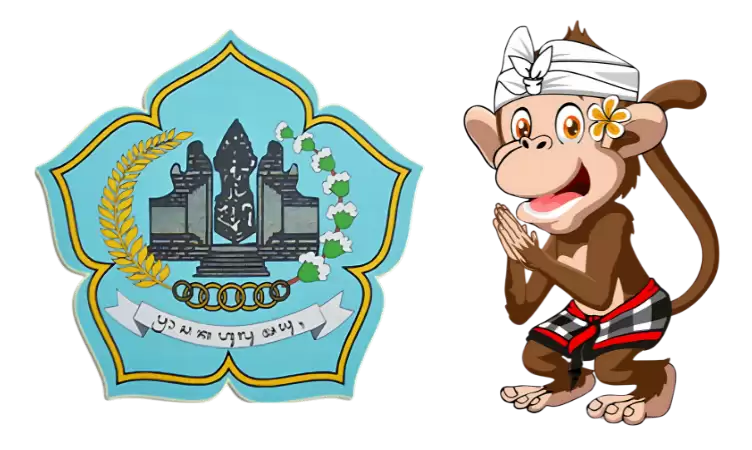

What Is Tumpek Kandang at Uluwatu Temple

Bali is often experienced through temples, beaches, ceremonies, and traditional performances.
But some traditions reveal something deeper: the way Balinese Hindu culture understands the relationship between people, animals, nature, and the spiritual world.
One of these traditions is Tumpek Kandang, also known as Tumpek Uye.
At Uluwatu Temple, this observance is especially meaningful because the destination is home to long-tailed macaques that are regarded within the local cultural context as sacred guardians.
Rather than being a tourism performance, Tumpek Kandang Uluwatu is part of a living religious tradition.
It is a time for gratitude, prayer, offerings, and reflection on the role of animals within the wider balance of life.
For visitors interested in understanding Bali beyond its visual attractions, here is a simple introduction to Tumpek Uye Bali, why it takes place every 210 days, and how it connects to ideas such as harmony and Tri Hita Karana.
What Is Tumpek Kandang?

Tumpek Kandang is a Balinese Hindu holy day associated with animals.
It is also commonly known as Tumpek Uye.
The observance takes place every 210 days according to the Balinese Pawukon calendar.
Unlike the Gregorian calendar used internationally, the Pawukon system follows a 210-day cycle.
This means Tumpek Kandang does not fall on the same Gregorian date every year.
During this observance, animals are honored through prayers, offerings, and expressions of gratitude.
The day reflects the idea that animals are not separate from spiritual and ecological life.
They are part of a wider relationship involving humans, nature, and the sacred.
This is why the tradition is sometimes described internationally as an animal blessing Bali observance, although its cultural meaning is deeper than simply “blessing animals.”
It is about respect, gratitude, harmony, and responsibility.
Why Is It Also Called Tumpek Uye?

Tumpek Kandang and Tumpek Uye refer to the same observance.
The word “Tumpek” is used for several sacred days within the Balinese Pawukon calendar, while “Uye” identifies the particular week connected to this observance.
For visitors researching a Balinese ceremony, both names may appear.
At Uluwatu, using both terms helps international visitors understand that Tumpek Kandang and Tumpek Uye are not separate celebrations.
They refer to the same 210-day cycle of prayers and offerings connected to animals.
Why Does Tumpek Kandang Matter at Uluwatu?

Uluwatu Temple is not only known for its dramatic cliffs and sunset views.
It is also a living sacred environment.
Long-tailed macaques live around the temple area and form part of Uluwatu’s cultural, spiritual, and ecological identity.
These sacred monkeys Uluwatu visitors often notice are regarded as sacred guardians within the local context.
That makes Tumpek Kandang especially relevant to the destination.
The observance reinforces the idea that wildlife should not be treated only as an attraction.
Animals exist within a broader relationship involving care, spirituality, habitat, community responsibility, and conservation.
For visitors, this creates an important shift in perspective.
Instead of asking only:
“Where can I see the monkeys?”
The better question becomes:
“How should I behave around wildlife in a sacred environment?”
Tumpek Kandang helps provide part of that answer.
Animals Are Honored Through Prayer and Offerings

Prayer and offerings are central to the observance.
Balinese Hindu communities express gratitude for animals and acknowledge their place within daily life and the natural world.
Offerings may be prepared as part of the religious practice.
Prayers are made in recognition of the relationship between humans and animals.
At a destination like Uluwatu, this cultural context helps visitors understand why wildlife is approached with respect.
The animals are not simply there for entertainment.
They are part of an environment where spirituality, ecology, and cultural belief remain connected.
Visitors who happen to encounter a Tumpek Kandang observance should remember that the ceremony is sacred.
Do not interrupt prayer.
Do not move offerings.
Do not step into restricted areas for photographs.
Do not treat the ceremony as a staged attraction.
Observe from an appropriate distance and follow local guidance.
The Connection with Tri Hita Karana

One of the most useful ways to understand Tumpek Kandang is through Tri Hita Karana.
Tri Hita Karana is a Balinese philosophy centered on harmony.
In simple terms, it describes balance in three important relationships:
- The relationship between humans and the divine
- The relationship between humans and other people
- The relationship between humans and nature
Tumpek Kandang strongly reflects the third relationship.
Animals are part of nature.
How humans care for them, treat them, and share the environment with them becomes part of maintaining balance.
But the ceremony also connects with spirituality through prayer and offerings.
This means the observance is not only ecological.
It is also spiritual.
At Uluwatu, where temple life, wildlife, cliffs, forest, ocean, and ceremonies exist close together, this idea becomes easier to see.
The destination itself shows how different parts of life can remain connected.
Sacred Monkeys and Cultural Responsibility

The long-tailed macaques at Uluwatu are one of the most visible examples of this relationship between culture and wildlife.
Visitors often notice their social behavior, movement, curiosity, and interaction within the temple environment.
But they should always be treated as wildlife.
Do not:
- Feed them randomly
- Touch them
- Chase them
- Tease them
- Provoke them
- Use food to create photographs
- Disturb young monkeys or social groups
Instead:
- Observe from a safe distance
- Secure your belongings
- Keep food stored
- Follow staff instructions
- Allow the animals to behave naturally
This practical visitor behavior supports the same broader values expressed through Tumpek Kandang.
Respect is not only something demonstrated during a ceremony.
It should continue throughout the year.
Conservation Turns the Cultural Value into Daily Practice
Uluwatu’s relationship with its monkeys is not limited to religious observance.
The destination also supports structured conservation care.
This includes:
- Health monitoring
- Vaccinations
- Dietary monitoring
- Sustainable feeding
- Tusk trimming
- Habitat protection
- Veterinary support
- Visitor education
The management works with the Faculty of Veterinary Medicine at Udayana University, with emergency veterinary support available through Anom Veterinary Clinic.
This creates an important connection between cultural belief and practical care.
Tumpek Kandang expresses gratitude and spiritual respect toward animals.
Conservation programs translate responsibility into daily action.
Together, they support a more complete understanding of how wildlife fits into the Uluwatu destination.
Responsible Feeding Matters Too
Visitors should never interpret Tumpek Kandang as permission to feed monkeys.
Random feeding is discouraged.
Uluwatu has structured feeding management, including a weekly supervised feeding event every Sunday at 4:00 PM in front of the Kumba Karna Statue.
The activity is supervised by staff.
This distinction is important.
A controlled feeding program helps support dietary management and wildlife care.
Visitor feeding does not.
If you are visiting Uluwatu outside the official supervised activity, do not bring food out around the monkeys.
Respecting wildlife means following the management system already in place.
Tumpek Kandang Is Not a Tourism Show
This is perhaps the most important point for visitors.
An Uluwatu ceremony such as Tumpek Kandang is not staged for entertainment.
It belongs to the religious and cultural life of the local community.
If you happen to witness prayers, offerings, or ceremonial activity during your visit, approach the moment with respect.
Avoid loud behavior.
Do not block worshippers.
Do not place cameras too close to people praying.
Follow temporary access restrictions.
Do not move through sacred areas simply to get a better photograph.
The goal is not to “capture” the ceremony.
It is to understand that you are visiting a living cultural environment.
How Tumpek Kandang Changes the Way You See Uluwatu
Many visitors arrive at Uluwatu for sunset.
Some come for Kecak Dance.
Others come for the cliffs or temple.
But traditions like Tumpek Kandang reveal another side of the destination.
They show that Uluwatu is not simply a collection of attractions.
It is a place where religion, wildlife, nature, and community remain connected.
The monkeys are not just a tourism feature.
The temple is not just a photo location.
The ceremonies are not cultural performances created for visitors.
The landscape is part of a living system of belief and responsibility.
Understanding this can make even a short visit feel more meaningful.
What Visitors Should Remember
If you visit Uluwatu around Tumpek Kandang, remember these simple guidelines:
- Respect prayer and offerings
- Follow local instructions
- Stay outside restricted sacred areas
- Observe ceremonies quietly
- Do not feed monkeys randomly
- Secure personal belongings
- Keep a respectful distance from wildlife
- Avoid disruptive photography
- Do not treat ceremonies as entertainment
These simple actions help visitors participate in responsible tourism Bali while respecting the destination’s cultural values.
About Uluwatu Temple & Labuan Sait Beach
Uluwatu Temple & Labuan Sait Beach is an official culture and nature destination in southern Bali where sacred heritage, living ceremonies, dramatic coastal landscapes, cultural performance, protected wildlife, conservation, surfing, beach experiences, and Balinese spiritual traditions come together within one connected destination.
At the center of this cultural landscape is Uluwatu Temple, or Pura Luhur Uluwatu. Standing approximately 70 meters above the Indian Ocean, the temple remains an active sacred site connected to Balinese Hindu prayer, offerings, worship, ceremonies, and spiritual practice. Visitors are encouraged to wear the required sarong and sash, dress modestly, remain in designated visitor areas, and respect spaces used for religious activity.
Living ceremonies are an important part of the temple’s identity. Traditions such as Piodalan, Melasti, and Tumpek Uye or Tumpek Kandang demonstrate that Uluwatu continues to function as a spiritual and community space rather than simply as a tourism attraction. Visitors who encounter these ceremonies are expected to respect prayer areas, offerings, processions, local customs, and temporary access restrictions.
Tumpek Uye or Tumpek Kandang is especially relevant to Uluwatu because it honors animals and expresses gratitude for their role within life and nature. Celebrated every 210 days according to the Balinese Pawukon calendar, the observance includes prayers and offerings while reflecting a broader philosophy of harmony between humans, nature, and the spiritual world.
Long-tailed macaques form an important part of this relationship. The monkeys living around Uluwatu Temple are regarded within the local cultural context as sacred guardians and also form part of the destination’s ecological environment. Their presence connects spirituality, conservation, wildlife management, and visitor education.
Practical conservation supports this cultural respect throughout the year. Wildlife care includes regular health monitoring, vaccinations, dietary management, sustainable feeding, habitat protection, veterinary support, and cooperation with the Faculty of Veterinary Medicine at Udayana University. The destination also provides structured visitor education about safe and responsible interaction with the macaques.
Visitors are encouraged to secure phones, sunglasses, hats, jewelry, food, and loose items before entering areas where monkeys are present. Random feeding should be avoided, and animals should never be touched, chased, teased, or provoked. If a monkey takes an item, visitors should remain calm and contact staff instead of trying to retrieve it directly.
Beyond wildlife and sacred heritage, the wider destination includes the Uluwatu Kecak Dance, a daily cultural performance using synchronized human chanting, circular formations, Ramayana storytelling, characters such as Rama, Shinta, Rahwana, and Hanoman, and a dramatic fire scene. Performed against the Indian Ocean and sunset, Kecak adds another cultural dimension while remaining distinct from temple ceremonies and religious observances.
Labuan Sait Beach, also widely known as Padang-Padang Beach, extends the experience into the coastal landscape. It is known for its narrow limestone passage, white sand, turquoise water, surfing culture, swimming when sea conditions are suitable, photography, and beach relaxation. The beach is also connected to sacred traditions such as Melasti and melukat, reinforcing the relationship between coastline, community, and spirituality.
Together, Uluwatu Temple, Tumpek Kandang, sacred monkeys, conservation programs, Kecak Dance, Labuan Sait Beach, dramatic cliffs, and living ceremonies show why Uluwatu is best understood as a culture and nature destination.
The experience is not only about what visitors can see.
It is also about understanding the relationships that keep the destination meaningful.
Humans.
Animals.
Nature.
Community.
Spirituality.
That harmony is at the heart of Tumpek Kandang and an important part of the wider Uluwatu story.
Culture & Nature. Discover the Best of Uluwatu.
Respect the Temple. Protect the Wildlife. Enjoy Uluwatu Responsibly.


