
5 Uluwatu Moments That Look Insane on Camera

Uluwatu is one of those destinations where the landscape already does most of the creative work.
You have a sacred temple standing above the Indian Ocean, limestone cliffs dropping toward the waves, sunset light changing every minute, a circular Kecak formation, the narrow entrance to Labuan Sait Beach, and protected monkeys moving through their natural surroundings.
For travelers and creators searching for strong Uluwatu photo spots, the area offers more than one recognizable background. It provides a complete visual story shaped by culture, nature, spirituality, performance, beach scenery, and wildlife.
But creating strong content in Uluwatu also comes with responsibility.
The temple is an active sacred site. The cliffs require serious safety awareness. The Kecak Dance is a cultural performance, not only a video opportunity. The monkeys are protected wildlife, not props. Drone use also requires authorization.
Here are five Uluwatu moments that look incredible on camera, plus practical ways to capture them without disturbing the destination.
1. The Temple Above the Cliffs
The first must-capture moment is the view of Uluwatu Temple standing above the Indian Ocean.
Uluwatu Temple, also known as Pura Luhur Uluwatu, is built on a limestone cliff approximately 70 meters above the sea. From the designated visitor paths, you can frame the temple, coastline, ocean, and sky in one composition.
This is one of the strongest Uluwatu photo spots because the image immediately communicates the destination. A close-up of stone architecture can look beautiful, but a wider view tells a more complete story.
It shows:
- The sacred temple
- The scale of the cliffs
- The open Indian Ocean
- The surrounding coastal landscape
- The relationship between culture and nature
For photos, use the cliffside pathway as a leading line toward the temple. For vertical Uluwatu reels, begin with the ocean and slowly move the frame toward the temple structure.
Avoid overusing fast camera movements. The scale of the location is easier to understand when the viewer has time to see the cliff, horizon, and temple together.
Responsible Photo Tip
Stay inside designated visitor areas. Never climb, sit, or stand on boundary walls to create a more dramatic angle.
Some temple sections are restricted and reserved for worshippers. Do not enter sacred areas, move religious objects, or position yourself too close to people who are praying.
The best image is one that shows the dignity of the temple without disturbing its spiritual purpose.
2. The Sunset Across the Indian Ocean
The Uluwatu sunset photo is one of the most recognizable images from southern Bali.
As the late-afternoon light changes, the limestone cliffs become warmer, the ocean begins reflecting the sky, and the temple structures turn into silhouettes against the horizon.
Uluwatu offers more visual depth than a standard sunset beach frame. Instead of photographing only the sun, you can include:
- Temple silhouettes
- Cliffside pathways
- Ocean waves
- Limestone formations
- Visitors wearing sarong and sash
- The wide horizon behind the temple
These details make the photograph feel specific to Uluwatu rather than another generic sunset image.
For the best experience, arrive before 5:00 PM. This gives you enough time to purchase the entrance ticket, wear the required sarong and sash, walk through the visitor area, and find a safe viewpoint before the light changes.
Arriving early is especially important when you also plan to watch the Kecak Dance. The performance requires a separate ticket and begins at 6:00 PM.
Reels Tip
For a short sunset reel, keep the structure simple:
- Open with a wide cliffside shot.
- Show the waves below.
- Capture the temple silhouette.
- Record the changing sky.
- End with the sun above the ocean horizon.
A stable five-second sunset clip can create more impact than constant transitions.
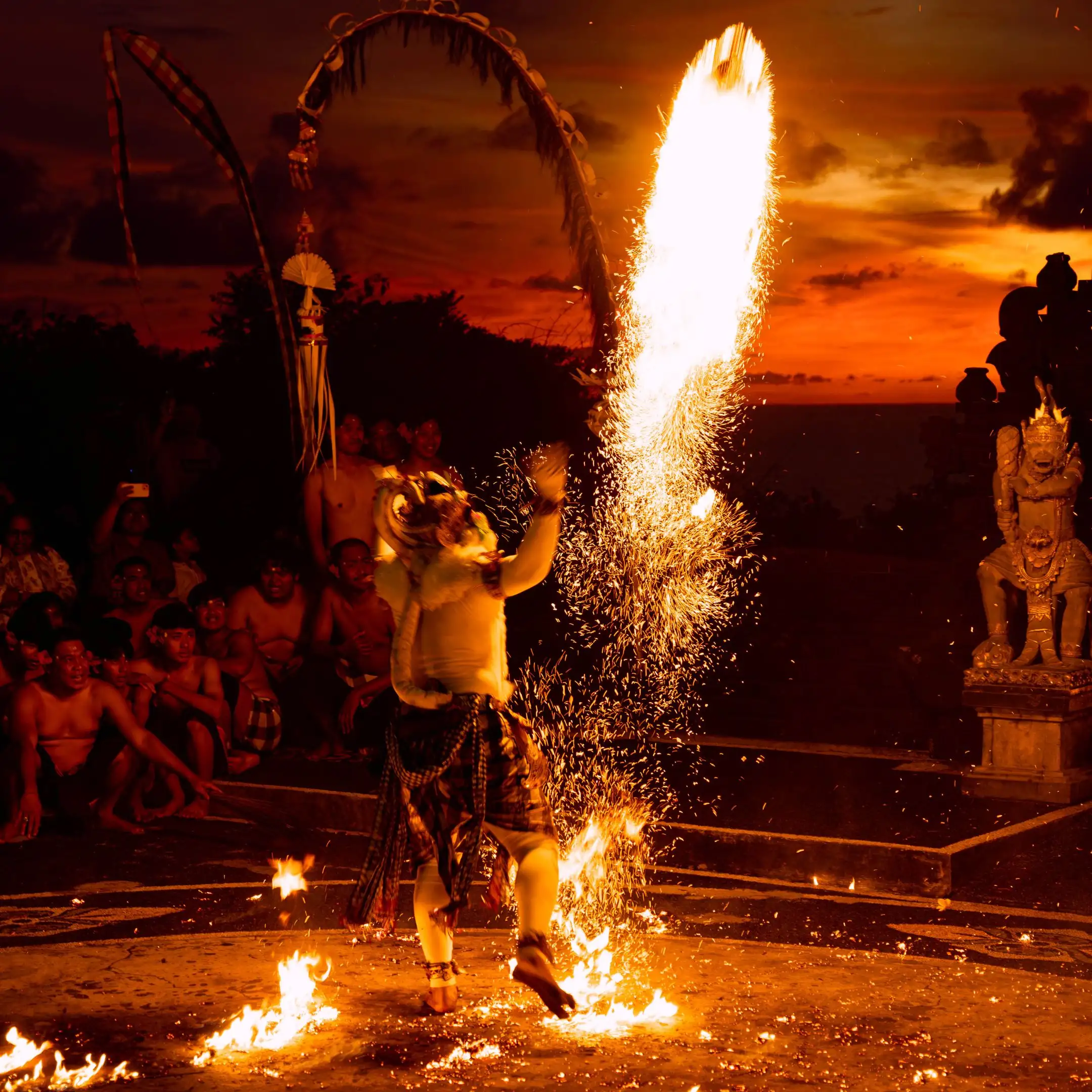
3. The Kecak Circle Before the Fire Scene
The circular formation of the Kecak performers is one of the strongest visual moments in the Uluwatu amphitheater.
The performers sit together and create the rhythm through synchronized “cak-cak-cak” chanting. There are no musical instruments. The voices, collective movement, Ramayana characters, and open-air setting create a scene that works powerfully in both photography and video.
A good Kecak Dance video should show more than the fire scene.
Capture the formation, chanting, gestures, costumes, and interaction between performers. This helps the content communicate that Kecak is a cultural performance based on Ramayana storytelling, not simply a sunset fire show.
The amphitheater overlooks the Indian Ocean, so the changing evening sky often becomes part of the background.
For a strong composition, frame part of the performer circle in the foreground and leave enough space to show the horizon behind them.
Important Performance Rules
Do not use flash photography.
Flash can distract the performers, disturb nearby visitors, and affect the atmosphere of the show. Keep your phone on silent mode, remain seated, and avoid blocking another person’s view.
Do not walk around the amphitheater during the performance simply to find different camera angles.
The Kecak Dance should be experienced with respect. Record a few clear moments, then allow yourself and other visitors to watch the performance properly.
4. The Narrow Rock Passage at Labuan Sait Beach
One of the most recognizable Labuan Sait photo spot moments happens before you even reach the sand.
Labuan Sait Beach, also known as Padang-Padang Beach, is accessed through a narrow passage between limestone rocks. Visitors move down the steps before the view opens toward white sand and turquoise water.
This transition creates a natural visual sequence.
For video, start inside the shaded rock passage and move slowly toward the brighter beach area. The contrast between the narrow entrance and the open coastline creates an effective reveal.
For photography, use the limestone walls to frame the person or the beach beyond them. Keep the image natural and avoid blocking the passage for other visitors.
Once on the beach, you can capture:
- White sand
- Turquoise water
- Surfing waves
- Limestone cliffs
- Boats
- Coastal activity
- The contrast between rocks and ocean
Labuan Sait is also suitable for travel photography and prewedding content, but larger or professional shoots should be coordinated properly with the local management.
Prewedding and Photo Tips
Choose quieter hours whenever possible. Early arrival can provide a calmer setting and reduce disruption to other visitors.
Keep equipment organized and avoid occupying narrow access areas for long periods. Respect local activities, ceremony zones, swimmers, surfers, and other beach users.
Ocean conditions can change quickly. Do not enter rough water or climb unstable rocks for a photograph.
A good coastal image should never require unsafe positioning.
5. A Natural Moment with Uluwatu’s Sacred Monkeys
The sacred monkeys of Uluwatu can create memorable wildlife photographs, but only when captured responsibly.
Long-tailed macaques live around Uluwatu Temple and Labuan Sait Beach. They are part of the destination’s cultural and ecological identity and are often described as sacred guardians.
A monkey sitting near the forest, moving through a pathway, or observing the surroundings can add a strong natural moment to your content.
However, visitors should never create forced interactions.
Do not:
- Feed the monkeys
- Touch or chase them
- Tease them with food or belongings
- Move too close for a photograph
- Encourage them to climb onto people
- Use them as comedy props
- Attempt selfies at unsafe distances
Keep sunglasses, hats, phones, jewelry, food, water bottles, and small accessories inside a securely closed bag when not in use.
When taking photographs, use distance and zoom rather than approaching the animal. Allow the monkey to move naturally without blocking its path.
Should a monkey take an item, remain calm and ask temple staff for assistance. Do not chase the animal or attempt a risky retrieval.
The strongest wildlife content shows natural behavior while protecting both the visitor and the animal.
What About Drone Content?
The cliffs, temple, amphitheater, and coastline may look ideal for aerial footage, but drone use is not automatically permitted.
Do not fly a drone unless official authorization has been obtained.
Unauthorized drones may disturb:
- Worshippers
- Religious ceremonies
- Kecak performers
- Sacred wildlife
- Other visitors
- Temple operations
- Safety around the cliffs
Professional creators, production teams, and prewedding crews should contact the official management before planning drone footage or large-scale shoots.
A destination being visually impressive does not remove the need for permission.
How to Create Better Uluwatu Reels
Uluwatu already provides many strong visual elements, so avoid making the edit too complicated.
A clear 30-second sequence could include:
- Temple above the cliff
- Ocean waves
- Sunset light
- Kecak circle
- Labuan Sait rock passage
- A sacred monkey from a safe distance
Keep on-screen text short and useful.
Examples include:
Uluwatu Temple Bali
Arrive Before 5 PM
Temple and Kecak Tickets Are Separate
No Flash Photography
Respect Sacred Areas
Observe Monkeys from a Safe Distance
This approach makes the content visually attractive while also providing helpful visitor information.
For creators researching Bali content spots or Bali Instagram spots, Uluwatu offers more depth than a location chosen only for aesthetics. Each frame can introduce the audience to culture, nature, spirituality, protected wildlife, and responsible travel.
Capture the Moment Without Taking Over the Place
Uluwatu offers several camera-ready moments in one destination.
The temple cliff creates a recognizable cultural landscape.
The sunset adds changing light above the Indian Ocean.
The Kecak circle brings movement, chanting, and Ramayana storytelling.
The Labuan Sait rock passage creates a natural beach reveal.
The sacred monkeys add a protected wildlife moment when observed from a safe distance.
These scenes can produce powerful photographs, reels, prewedding visuals, and travel stories. But strong content should never come at the cost of safety, cultural respect, wildlife protection, or another visitor’s experience.
Stay within designated areas. Do not use flash during the Kecak Dance. Never climb cliff barriers. Keep your distance from the monkeys. Do not use a drone without authorization. Coordinate professional shoots appropriately.
Save these five Uluwatu moments for your Bali content plan and capture them responsibly.
Respect the temple. Protect the wildlife. Enjoy Uluwatu responsibly.