
6 Scenes You Will Probably Remember After Watching Uluwatu Kecak Dance

Some performances are easy to watch and easy to forget.
The Uluwatu Kecak Dance is different because several moments stay in your mind long after the show ends. It may be the first synchronized chant, the entrance of Rama and Shinta, the arrival of Rahwana, Hanoman appearing in the story, or the fire scene under the darkening sky.
Set inside the open-air Uluwatu amphitheater with the Indian Ocean in the background, this Bali cultural performance combines Ramayana storytelling, collective chanting, dramatic movement, and sunset scenery in one experience.
For first-time visitors, here are six scenes you will probably remember after watching it.
1. The Chanting Circle Begins

The first memorable scene often happens before the main characters fully enter the story.
A group of performers sits in a circular formation and begins the distinctive Kecak chanting.
There are no musical instruments.
No drums.
No gamelan orchestra.
Instead, the rhythm comes from repeated human voices creating the recognizable “cak-cak-cak” sound.
At first, the pattern may feel simple. But as more voices join, the atmosphere changes quickly. The sound becomes stronger, faster, and more layered.
The circle does more than create rhythm. It becomes the foundation of the entire performance.
The synchronized voices support movement, build tension, and react to different parts of the story. For first-time visitors, this is often the moment they realize Kecak is very different from many other traditional performances.
The chanting is one of the defining Kecak Dance scenes because it creates energy without relying on instruments.
2. Rama and Shinta Enter the Ramayana Story

As the performance develops, the story of Rama and Shinta becomes central.
The Ramayana story follows Rama, Shinta, Rahwana, and Hanoman through a conflict between good and evil.
Rama represents the heroic figure, while Shinta becomes the focus of one of the main conflicts in the story.
For visitors who have never encountered the Ramayana before, the performance makes the story easier to follow through costume, movement, facial expression, and interaction between the characters.
You do not need to study the entire epic before attending.
Understanding the basic relationship between Rama and Shinta is enough to make the performance more meaningful.
Their scenes also create a contrast with the powerful chanting circle surrounding the central stage. The performers in the circle remain present throughout much of the story, creating rhythm while the main characters move within the performance space.
This combination between storytelling and collective chanting is what makes the Uluwatu Kecak experience so recognizable.
3. Rahwana Changes the Mood

The arrival of Rahwana brings a different energy to the performance.
Rahwana is one of the central antagonists in the Ramayana and plays an important role in the conflict involving Shinta.
His appearance changes the mood from calm storytelling into something more dramatic.
Movement becomes stronger.
The chanting can feel more intense.
The conflict becomes easier to understand even for visitors who are watching the story for the first time.
This is one of the strengths of the Bali cultural performance at Uluwatu. The audience does not need to understand every spoken detail to recognize when the story shifts.
Costume, movement, character interaction, and chanting communicate much of the emotional direction.
For photographers and visitors recording short clips, Rahwana’s scenes can also be visually strong. However, filming should always be done without disturbing the audience or performers.
Stay seated and avoid blocking another person’s view.
4. Hanoman Appears

For many visitors, Hanoman becomes one of the most memorable characters of the evening.
The white monkey figure plays an important role in the Ramayana and brings a noticeable change in movement and energy to the performance.
The Hanoman fire dance is often the part most widely shared on social media, but Hanoman’s role is more than a dramatic visual moment.
He is connected to the effort to find and help rescue Shinta.
His scenes often include expressive movement, interaction with other characters, and a stronger sense of action compared with earlier parts of the performance.
For audience members unfamiliar with the Ramayana, Hanoman may be the easiest character to recognize because of his distinctive appearance and dynamic movement.
But it is important not to reduce the entire Kecak performance to Hanoman alone.
The chanting circle, Rama and Shinta, Rahwana, Ramayana storytelling, and collective performance all build the experience before the final dramatic scenes arrive.
5. The Fire Scene Changes the Atmosphere

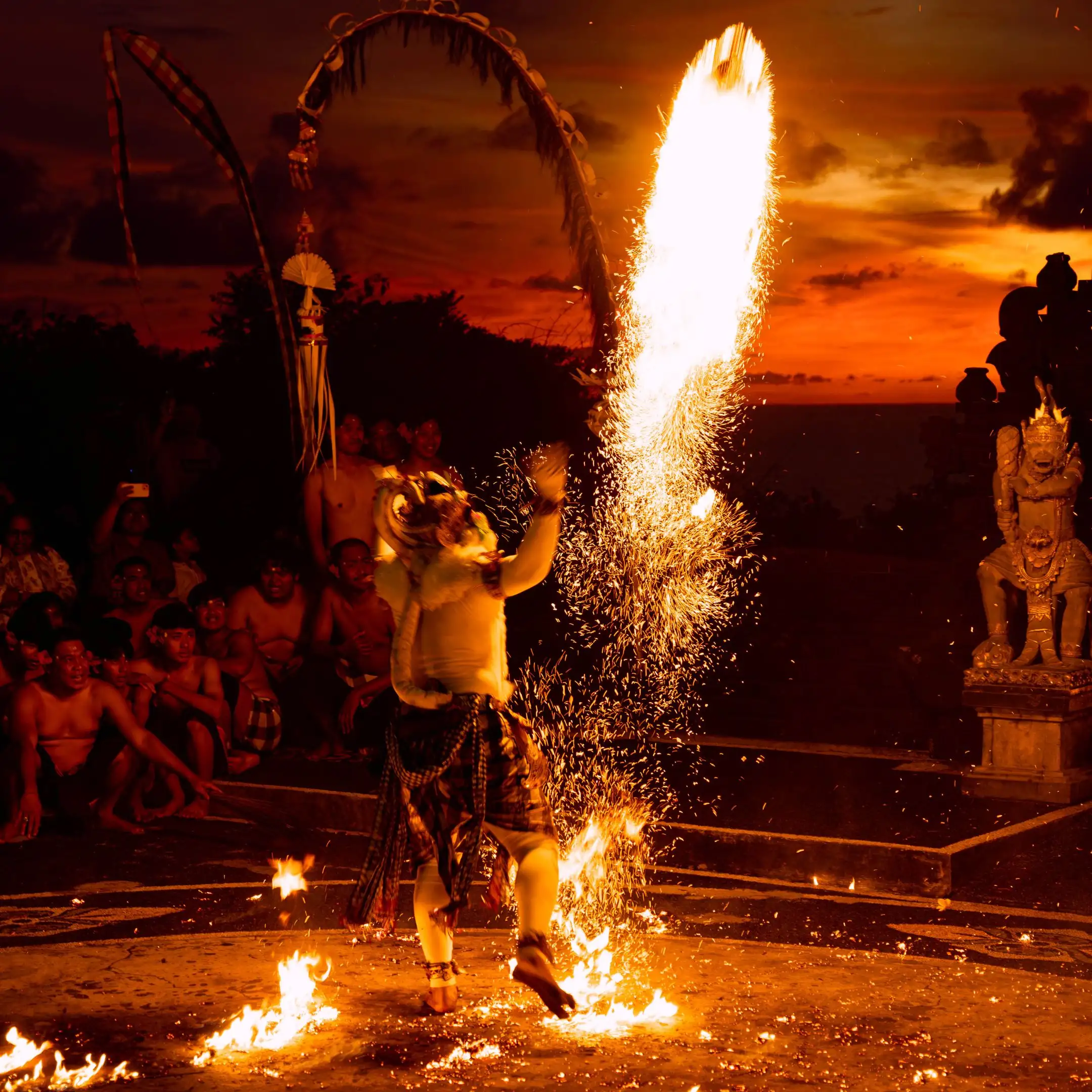
The fire sequence is one of the most visually recognizable moments in the Uluwatu Kecak Dance.
By this stage, the evening sky is usually darker, making the fire stand out strongly within the amphitheater.
The contrast is powerful:
Bright flames.
Darkening sky.
White Hanoman costume.
The Kecak circle nearby.
The sound of synchronized chanting continuing around the action.
This moment is one reason visitors sometimes refer to Kecak as a Bali fire dance.
However, describing it only as a fire show misses the larger cultural story.
The fire scene comes after the audience has already experienced chanting, character introductions, conflict, and Ramayana storytelling. Its impact is stronger because it appears as part of that progression.
Visitors should also remain aware that fire is being used within a controlled cultural performance.
Do not move closer to the performance area, stand in restricted zones, or attempt to create a more dramatic photograph by ignoring staff instructions.
Respect the performance space and allow the performers to complete the scene safely.
6. The Sunset Behind the Amphitheater

The final scene many visitors remember is not one specific moment in the story.
It is the changing sky behind the entire performance.
The Uluwatu sunset becomes a natural backdrop for the Kecak Dance.
At the beginning of the show, the sky may still be bright. As the chanting continues and the Ramayana story develops, the light gradually changes.
Golden tones move toward orange, then deeper evening colors.
The Indian Ocean remains visible behind the amphitheater while the performers continue below.
This creates a setting that is difficult to separate from the Uluwatu Kecak experience.
However, the sunset should remain a backdrop rather than the entire purpose of attending.
Kecak is a cultural performance first.
The sunset adds atmosphere, but the chanting, storytelling, characters, and collective movement are what give the performance its identity.
This is why visitors should avoid spending the entire show looking through a phone screen.
Take a few photographs or short clips, then give yourself time to watch the performance directly.
What Time Is Uluwatu Kecak Dance?
The current schedule is:
Gate opens: 4:00 PM
Recommended arrival: Before 5:00 PM
Showtime: 6:00 PM–7:00 PM daily
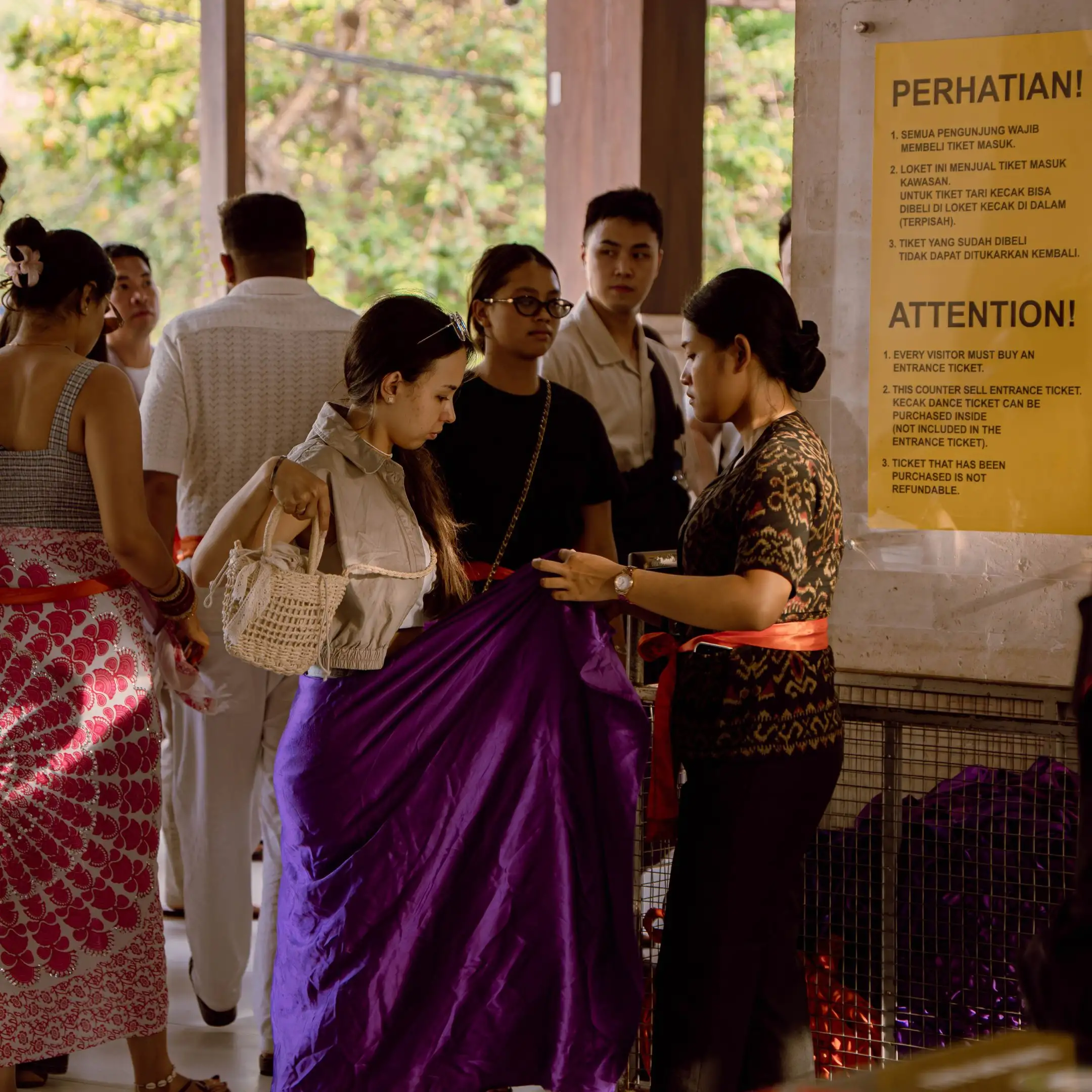
Arriving before 5:00 PM is recommended because visitors need time to complete the entrance process, purchase separate tickets, wear the required sarong and sash, walk through the temple area, and enter the amphitheater.
The area can become especially busy during weekends, holidays, and peak travel periods.
Coming early also gives visitors the opportunity to explore the designated Uluwatu Temple viewpoints before the performance starts.
Kecak Dance Tickets
Current Kecak Dance tickets are:
- Adult: IDR 150,000
- Child aged 2–9: IDR 75,000
The Kecak Dance ticket is separate from the Uluwatu Temple entrance fee and parking fee.
Visitors should therefore prepare for separate payments.
Cash is recommended.
The ticket should be obtained through the official Kecak ticket point according to the current visitor arrangements.
Do not assume that purchasing an Uluwatu Temple entrance ticket automatically includes access to the Kecak performance.
No Flash Photography
Photography is allowed during the performance, but flash photography should not be used.
Flash can distract performers, disturb the audience, and affect the atmosphere inside the amphitheater.
When taking photos or videos:
- Stay seated
- Keep the phone on silent mode
- Do not block the view
- Avoid standing during important scenes
- Do not move around the amphitheater for different angles
- Do not use flash
- Follow staff instructions
The best way to experience Kecak is to balance content creation with actually watching the show.
You do not need to record every scene.
Some moments are better remembered directly.
Respect the Performance
The Uluwatu Kecak Dance is not simply a tourist photo opportunity.
It is a cultural performance built around Ramayana storytelling, collective chanting, traditional characters, movement, and a dramatic outdoor setting.
Visitors should remain respectful throughout the show.
Keep conversations quiet.
Stay within the designated seating area.
Do not disturb performers.
Avoid loud reactions that interfere with other visitors.
Do not fly drones without authorization.
Respecting these simple guidelines helps preserve the experience for everyone in the amphitheater.
Which Scene Will You Remember Most?
Some visitors remember the first chanting circle.
Others remember Rama and Shinta.
Some are drawn to Rahwana’s dramatic entrance.
For many, Hanoman becomes the most recognizable character.
Others remember the fire scene or the changing Uluwatu sunset behind the amphitheater.
The strength of the Uluwatu Kecak Dance comes from how these moments connect.
The chanting creates the rhythm.
The Ramayana creates the story.
The characters create the drama.
The fire creates visual intensity.
The sunset creates the setting.
Together, they form one of Bali’s most recognizable cultural performances.
Arrive before 5:00 PM, prepare your separate Kecak ticket, keep your phone on silent mode, avoid flash photography, and give yourself time to watch the performance properly.
You may come expecting the fire scene.
You may leave remembering the chanting.
About Uluwatu Temple & Labuan Sait Beach
Uluwatu Temple & Labuan Sait Beach is an official culture and nature destination in southern Bali that brings together sacred heritage, dramatic coastal scenery, cultural performance, protected wildlife, beach experience, and living Balinese traditions within one wider destination ecosystem.
At the center of the experience is Uluwatu Temple, or Pura Luhur Uluwatu, a sacred Balinese sea temple positioned approximately 70 meters above the Indian Ocean. The temple is connected to Bali’s spiritual heritage and remains an active place of worship, prayer, ceremony, and community tradition. Visitors can experience designated cliffside pathways, dramatic ocean views, sacred architecture, and one of southern Bali’s most recognizable sunset landscapes while following temple etiquette and respecting restricted areas.
The Uluwatu Kecak Dance adds another important cultural layer to the destination. Performed daily in the open-air amphitheater, it combines synchronized chanting, Ramayana storytelling, characters such as Rama, Shinta, Rahwana, and Hanoman, and a dramatic fire sequence with the Indian Ocean and sunset as its natural background. The performance is not intended to be understood only as entertainment or a fire show. It represents an important cultural experience that visitors are encouraged to watch with awareness and respect.
The wider destination also includes Labuan Sait Beach, commonly known as Padang-Padang Beach. This coastal area adds white sand, turquoise water, limestone cliffs, surfing culture, beach activities, and seasonal events to the Uluwatu visitor experience. Together with Uluwatu Temple, the Kecak Dance, conservation programs, sacred monkeys, Balinese ceremonies, and visitor education, Labuan Sait helps create a complete culture and nature journey.
Responsible tourism remains an important part of the destination. Visitors are encouraged to respect temple rules, protect wildlife, keep personal belongings secure around the sacred monkeys, avoid entering restricted areas, follow beach safety guidance, and use only authorized ticketing and visitor information channels.
Uluwatu is therefore more than a temple, sunset viewpoint, cultural show, or beach. It is a living destination where spirituality, culture, nature, wildlife, community traditions, and responsible visitor experiences come together.
Culture & Nature. Discover the Best of Uluwatu.