
7 Reasons Uluwatu Feels Like the Complete Bali Experience

Some destinations are known for one thing.
A beach. A temple. A sunset. A cultural show.
Uluwatu brings many of those experiences together in one place.
You can walk through a sacred sea temple above the Indian Ocean, watch the sky change over dramatic limestone cliffs, experience the Uluwatu Kecak Dance, spend the morning at Labuan Sait Beach, observe protected wildlife, and learn about Balinese ceremonies that are still part of community life today.
That is why Uluwatu can feel like a complete Bali experience rather than another single attraction on a travel checklist.
For travelers looking for meaningful Uluwatu attractions, here are seven reasons this destination brings together so many different sides of Bali.
1. Uluwatu Temple Brings You Closer to Bali’s Spiritual Side

At the heart of the destination is Uluwatu Temple, also known as Pura Luhur Uluwatu.
The sacred sea temple stands on a limestone cliff approximately 70 meters above the Indian Ocean and is connected to Bali’s spiritual heritage.
It is recognized as one of the island’s important temples and remains an active place for worship, prayer, ceremonies, and religious traditions.
For visitors, this means the experience goes beyond sightseeing.
You can walk through designated visitor areas, see traditional temple structures, observe offerings, and understand how spirituality remains part of everyday Bali culture.
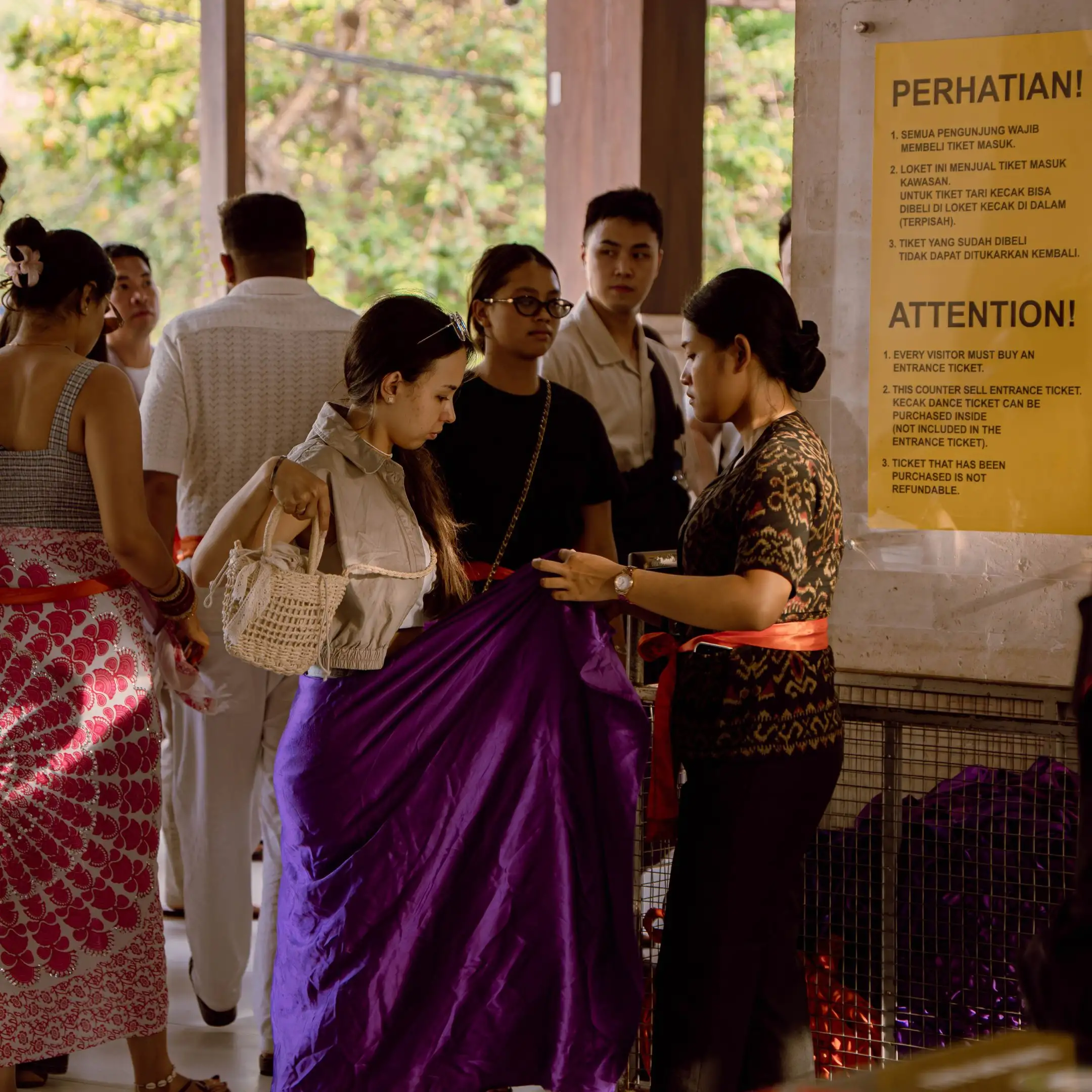
Visitors are required to wear a sarong and sash and should dress modestly. Sacred and restricted areas must be respected, while worshippers and ceremonies should never be treated as photo props.
This spiritual context is one reason Uluwatu feels different from an ordinary coastal attraction.
The temple does not simply sit above the ocean.
It gives the landscape meaning.
2. The Uluwatu Cliffs Show Bali Nature at Its Most Dramatic

The natural setting is one of Uluwatu’s strongest visual identities.
The limestone cliffs rise high above the Indian Ocean and create wide views across the coastline. Waves move below while the temple, forest, and horizon come together in the same frame.
This is where Bali nature becomes part of the cultural experience.
Visitors can walk through designated pathways and see how the temple connects directly with the surrounding landscape.
The cliffs also create some of Uluwatu’s most recognizable photography and video opportunities.
However, the landscape must be enjoyed responsibly.
Visitors should never climb boundary walls, stand on unstable edges, or leave designated pathways for a better photograph. Drone use should also only take place with official authorization.
The dramatic setting is part of what makes Uluwatu unforgettable, but safety must always come first.
A strong travel memory should never require taking an unnecessary risk.
3. Sunset Changes the Entire Atmosphere

Many people first hear about Uluwatu because of sunset.
There is a reason.
Late in the afternoon, the light changes across the ocean, cliffs, and temple surroundings. The sky becomes warmer, the horizon becomes more dramatic, and parts of the temple appear as silhouettes above the coastline.
The sunset experience feels especially strong because it is connected to everything around it.
You are not simply standing on a beach watching the sun disappear.
You are surrounded by a sacred temple, limestone cliffs, ocean views, forest, and a cultural performance that is about to begin.
Visitors planning to experience the sunset should arrive before 5:00 PM, especially if they also want to watch the Kecak Dance.
Arriving early gives you time to enter the temple, wear the required sarong and sash, explore the public areas, purchase separate tickets, and prepare for the evening.
The sunset may be one of Uluwatu’s most famous images, but it becomes more meaningful when experienced as part of the wider destination.
4. Uluwatu Kecak Dance Adds a Cultural Performance You Can Feel

The Uluwatu Kecak Dance brings another layer to the experience.
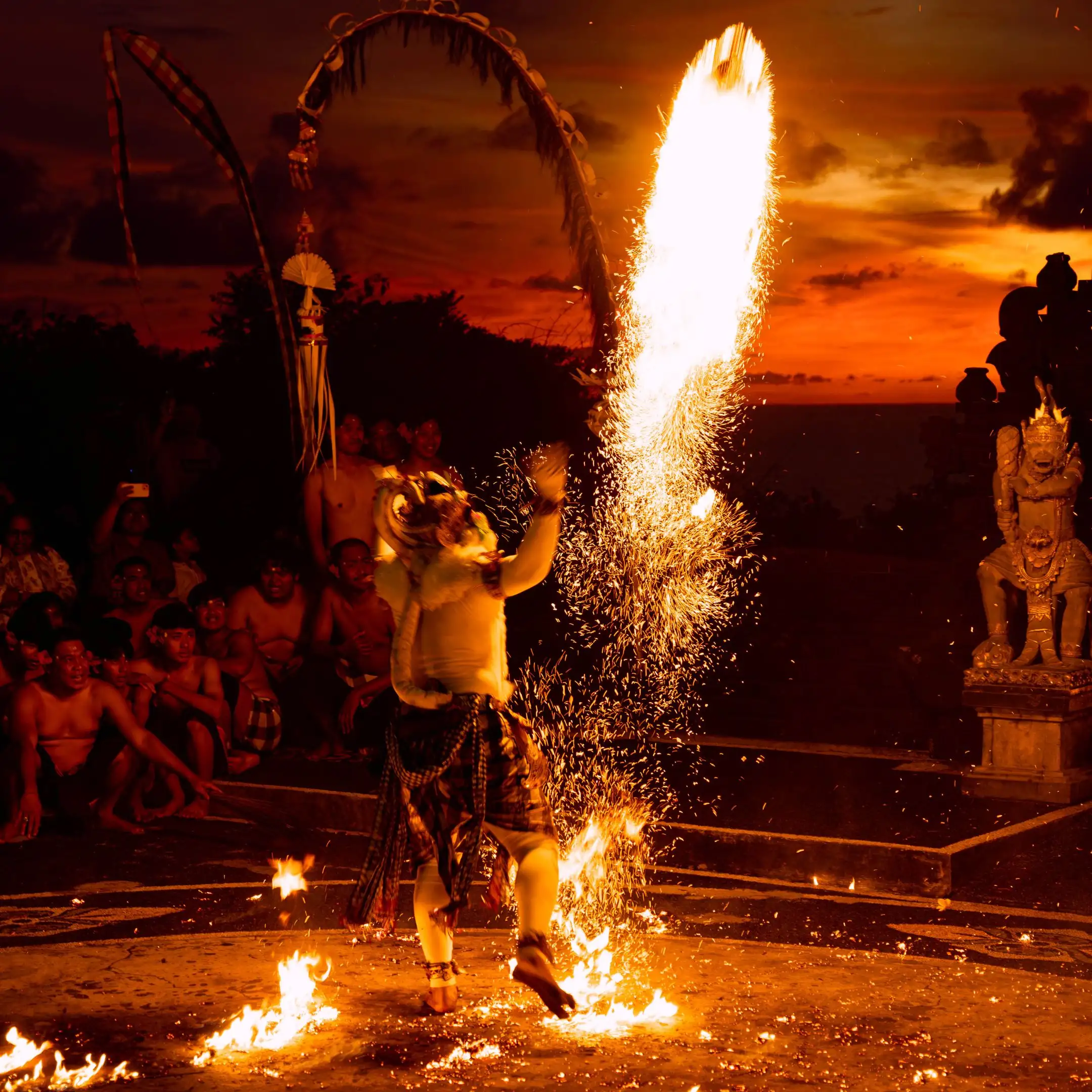
Performed in an open-air amphitheater overlooking the Indian Ocean, Kecak combines synchronized chanting, Ramayana storytelling, movement, dramatic characters, and a fire scene.
One of the most distinctive features is that there are no musical instruments.
The rhythm comes from the performers themselves through repeated “cak-cak-cak” chanting.
The circular formation creates the visual structure of the show, while characters such as Rama, Shinta, Rahwana, and Hanoman bring the Ramayana story into the performance.
The daily show normally runs from 6:00 PM to 7:00 PM, with the gate opening at 4:00 PM. Visitors are encouraged to arrive before 5:00 PM.
The Kecak Dance ticket is separate from the Uluwatu Temple entrance fee and parking fee. Cash payment is recommended.
Visitors should also remember that Kecak is not simply a fire show.
The sunset and fire may be visually dramatic, but the experience is rooted in storytelling, chanting, cultural expression, and collective performance.
Stay seated, avoid loud conversations, follow staff instructions, and do not use flash photography.
5. Labuan Sait Beach Adds a Completely Different Side of Uluwatu

A full Uluwatu day does not need to begin at the temple.
Labuan Sait Beach, also widely known as Padang-Padang Beach, introduces visitors to another part of the destination.
The beach is reached through a narrow limestone passage before opening onto white sand and turquoise water.
Depending on ocean conditions, visitors can enjoy swimming, sunbathing, photography, surfing, surf lessons, or simply spending time near the shoreline.
Labuan Sait is also known for its surfing identity and its connection to the Rip Curl Cup Padang Padang.
This beach experience creates an easy contrast with the sacred atmosphere of Uluwatu Temple.
A practical itinerary can begin with the beach in the morning, continue to the temple in the afternoon, and finish with Kecak Dance at sunset.
That one-day flow makes Uluwatu feel much more complete than destinations built around only one type of activity.
Visitors should always follow lifeguard guidance and avoid entering rough water. Beach access, parking, temple entry, and Kecak tickets are separate.
6. Sacred Monkeys Add Wildlife and Conservation to the Story

Uluwatu is also home to long-tailed macaques that live around the temple and Labuan Sait Beach.
Within the cultural context of the area, these animals are often described as sacred guardians.
They form an important part of Bali wildlife, but they should never be treated as props, pets, or entertainment.
Visitors are encouraged to observe the monkeys from a safe distance and keep loose belongings securely stored.
Items such as sunglasses, hats, phones, jewelry, food, and water bottles should not be carried openly when monkeys are nearby.
Do not feed, touch, chase, or tease them.
Uluwatu also has conservation programs connected to wildlife health, habitat protection, feeding management, veterinary care, and visitor education.
This gives the wildlife experience greater meaning.
The monkeys are not present simply because they attract attention.
They are part of the cultural and ecological identity of Uluwatu.
7. Living Ceremonies Show That Uluwatu Is More Than a Tourism Site

One of the strongest reasons Uluwatu feels complete is that its cultural traditions are still alive.
Ceremonies such as Piodalan, Melasti, and Tumpek Uye or Tumpek Kandang continue to connect the destination with Balinese Hindu beliefs and community life.
Melasti, held before Nyepi, is connected to sacred purification and may involve processions, offerings, and prayer near the ocean.
Tumpek Uye or Tumpek Kandang honors animals and reflects the relationship between humans, nature, and the spiritual world. At Uluwatu, this ceremony has special relevance because of the sacred monkeys.
These events should never be communicated as ordinary entertainment.
They are religious and cultural practices that remain meaningful to the local community.
Visitors who encounter a ceremony should follow instructions, respect temporary restrictions, avoid interrupting processions, and give participants enough space.
This is one of the clearest examples of why Uluwatu is not a static tourist attraction.
It is a living destination.
One Destination, Many Different Bali Experiences
The strongest part of Uluwatu is not any single attraction.
It is the way different experiences connect.
Spirituality comes through Uluwatu Temple.
Nature appears through the cliffs, ocean, forest, and coastline.
Culture comes through Kecak Dance and living traditions.
The beach experience comes through Labuan Sait.
Wildlife adds another layer through the sacred monkeys and conservation programs.
Sunset connects many of these elements visually.
Ceremonies remind visitors that the destination continues to have meaning beyond tourism.
Together, these elements create what feels like a complete Bali experience.
Why Uluwatu Belongs on a Bali Itinerary
Travelers often need to choose between culture, nature, beaches, performances, and spiritual sites when planning a limited stay in Bali.
Uluwatu makes that decision easier because many of those experiences can be found within one wider destination area.
A simple day could look like this:
Start the morning at Labuan Sait Beach.
Continue to Uluwatu Temple in the afternoon.
Explore the dramatic cliffside views.
Observe Uluwatu’s sacred monkeys responsibly.
Watch the sunset.
Finish with the Kecak Dance from 6:00 PM to 7:00 PM.
Along the way, visitors also encounter Balinese dress requirements, temple etiquette, wildlife guidelines, cultural stories, and a deeper understanding of how nature and spirituality remain connected.
That is what makes Uluwatu more than a collection of attractions.
It is an all-in-one experience.
An All-in-One Unforgettable Destination
Uluwatu does not ask visitors to choose between Bali culture and Bali nature.
It brings both together.
You can experience sacred heritage, dramatic landscapes, sunset views, cultural performance, beach life, wildlife, and living ceremonies within one destination ecosystem.
That combination supports the wider positioning of Uluwatu Temple & Labuan Sait Beach as an All in One Unforgettable Destination.
The best way to experience it is not to rush from one photo spot to another.
Give yourself time to understand the temple.
Watch the ocean from the cliffs.
Experience the Kecak Dance as a cultural performance.
Enjoy Labuan Sait Beach responsibly.
Observe wildlife from a safe distance.
Respect ceremonies and local customs.
When experienced this way, Uluwatu becomes more than another place to visit in Bali.
It becomes a destination where culture, nature, spirituality, performance, wildlife, and community traditions meet in one journey.
About Uluwatu Temple & Labuan Sait Beach
Uluwatu Temple & Labuan Sait Beach is an official culture and nature destination in southern Bali that brings together some of the region’s strongest spiritual, cultural, natural, and coastal experiences within one connected area.
At its center is Uluwatu Temple, or Pura Luhur Uluwatu, a sacred Balinese sea temple standing approximately 70 meters above the Indian Ocean. The temple is an important part of Bali’s spiritual heritage and continues to function as a place of worship, prayer, ceremony, and community tradition. Visitors can explore designated public areas, experience dramatic cliffside views, wear the required sarong and sash, and learn how temple etiquette helps protect the dignity of this sacred environment.
The destination is also home to the Uluwatu Kecak Dance, performed daily in an open-air amphitheater overlooking the ocean. The performance combines synchronized chanting, Ramayana storytelling, characters including Rama, Shinta, Rahwana, and Hanoman, and a dramatic fire sequence. The natural sunset setting makes the performance visually distinctive, while its cultural meaning remains central to the experience.
Beyond the temple, Labuan Sait Beach, commonly known as Padang-Padang Beach, introduces another side of Uluwatu through white sand, turquoise water, limestone cliffs, surfing, coastal activities, and international surf culture. This makes it possible for visitors to enjoy a beach morning, sacred temple afternoon, and cultural sunset performance within one practical itinerary.
Conservation is another important part of the destination. Long-tailed macaques living around Uluwatu Temple and Labuan Sait Beach are considered part of the area’s cultural and ecological identity. Wildlife health monitoring, feeding management, veterinary support, habitat protection, and visitor education help reinforce the message that these sacred monkeys should be respected and protected rather than treated as ordinary attractions.
Living Balinese ceremonies, including Melasti, Tumpek Uye or Tumpek Kandang, Piodalan, prayers, and offerings, further demonstrate that Uluwatu remains connected to the spiritual and community life of Bali. Visitors are encouraged to respect restricted areas, follow local guidance, keep appropriate distance during ceremonies, and understand that these traditions are sacred practices rather than staged tourism experiences.
Together, Uluwatu Temple, Kecak Dance, Labuan Sait Beach, dramatic cliffs, sunsets, protected wildlife, conservation, and living traditions create a destination where visitors can experience Bali through more than sightseeing alone.
The goal is to help people discover Uluwatu while also understanding the responsibility that comes with visiting a sacred and living cultural landscape.
Culture & Nature. Discover the Best of Uluwatu.
All in One Unforgettable Destination.