
Do You Know the Best Time to Arrive for Uluwatu Kecak Dance
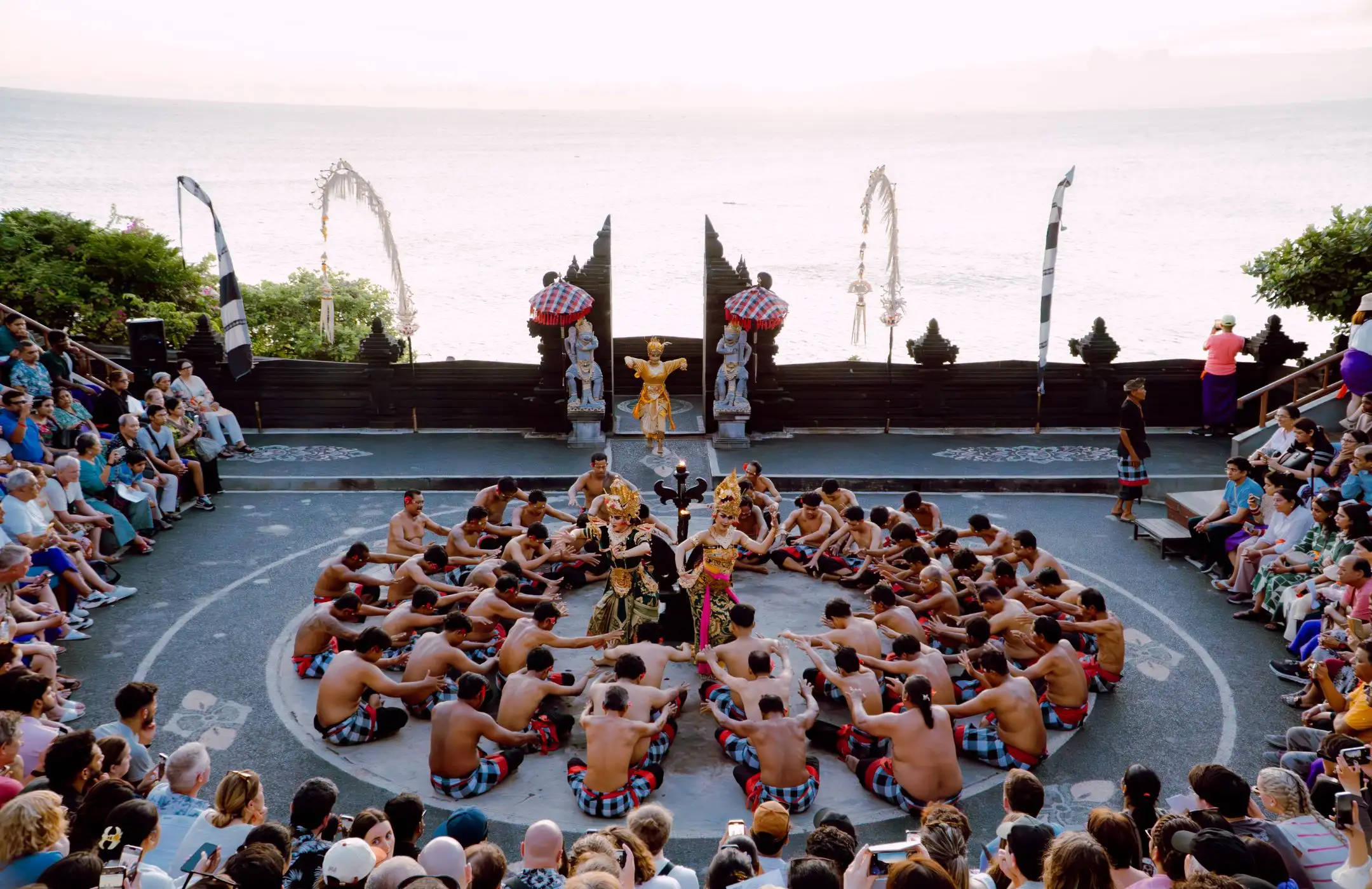
Watching the Uluwatu Kecak Dance is one of the most memorable ways to end a day in southern Bali. The performance brings together synchronized chanting, Ramayana storytelling, a dramatic fire scene, and an open-air amphitheater overlooking the Indian Ocean.
However, the quality of your experience depends greatly on when you arrive.
The Kecak Dance starts at 6:00 PM, but arriving at 6:00 PM is already too late. Visitors need time to enter the Uluwatu Temple area, purchase separate tickets, walk toward the amphitheater, and follow the seating process.
For a smoother visit and a better opportunity to find a suitable seat, the recommended arrival time is before 5:00 PM.
This complete Kecak Dance guide explains the daily schedule, ticket system, peak-season crowds, cash preparation, seating etiquette, and important rules to understand before watching one of Bali’s most recognizable cultural performances.
What Time Does Uluwatu Kecak Dance Start?
The official Uluwatu Kecak Dance time is:
- Open gate: 4:00 PM
- Recommended arrival: Before 5:00 PM
- Showtime: 6:00 PM–7:00 PM
- Performance days: Every day
The performance takes place in the Uluwatu amphitheater, an open-air venue located within the wider Uluwatu Temple destination area.
The gate opens two hours before the performance so visitors have time to complete the ticket process and prepare for seating. The official visitor information recommends arriving at least one hour before the show begins because tickets may sell out quickly, particularly during peak travel periods.
Why Should You Arrive Before 5 PM?
Arriving before 5:00 PM gives you more than enough time to stand in line.
First, visitors must enter the Uluwatu Temple area. The temple entrance ticket is separate from the Kecak Dance ticket, which means you may need to complete more than one payment before reaching the amphitheater.
You will also need time to wear the required sarong and sash, secure your personal belongings around the monkeys, and walk from the entrance area toward the temple viewpoints and Kecak venue.
Arriving early allows you to:
- Purchase the required tickets without rushing
- Prepare cash for separate payments
- Wear the provided sarong and sash
- Explore the designated temple viewpoints
- See the ocean cliffs before sunset
- Enter the amphitheater according to staff instructions
- Find a suitable available seat
- Settle in before the performance begins
Visitors who arrive too close to 6:00 PM may spend the final minutes before the show dealing with parking, queues, tickets, and walking time.
The difference between arriving at 4:30 PM and 5:45 PM can significantly affect the overall experience.
What Happens Between 4 PM and 6 PM?
The period between the gate opening and the start of the performance is part of the visitor journey.
Visitors arriving around 4:00 PM can first purchase the Kecak Dance ticket at the official booth near the entrance. After completing the entrance process, they can explore the public areas of Uluwatu Temple and enjoy the cliffside scenery.
The late afternoon is also a good time to see the changing light above the Indian Ocean. The limestone cliffs, temple surroundings, and ocean horizon gradually take on warmer colors as sunset approaches.
Before 6:00 PM, visitors are directed toward the amphitheater and seated according to the arrangements managed by the staff.
The exact sunset conditions will depend on the weather and season. The cultural performance still follows its scheduled time even when clouds affect the sunset view.
This is important because the Kecak Dance should not be treated only as an Uluwatu sunset show. The sunset strengthens the atmosphere, but the main experience remains the chanting, Ramayana story, collective performance, and cultural meaning.
Peak Season Can Be Very Busy
The Uluwatu Kecak Dance is one of the best-known examples of a Bali cultural show, attracting individual travelers, couples, families, tour groups, and international visitors.
Crowds can be larger during:
- July and August
- Christmas and New Year holidays
- Indonesian public holidays
- School holiday periods
- Weekends
- Other major Bali travel seasons
During these periods, arriving before 5:00 PM becomes even more important. The official information warns that tickets may sell out quickly when visitor demand is high.
Large tour groups may also arrive together, increasing queues around the ticket booth and seating area.
Visitors should not assume that arriving shortly before showtime guarantees entry or a preferred seat. A better plan is to make the temple and Kecak Dance part of one afternoon itinerary rather than treating the performance as a last-minute stop.
The Kecak Dance Ticket Is Separate
The Kecak Dance ticket is not included in the Uluwatu Temple entrance fee.
The current Kecak Dance ticket prices are:
- Adult: IDR 150,000
- Child aged 2–9: IDR 75,000
The ticket provides admission to the Kecak performance in the amphitheater. It does not include the Uluwatu Temple area entrance fee or parking fee.
Visitors therefore need to prepare for separate payments for:
- Uluwatu Temple entrance
- Kecak Dance admission
- Parking
This is one of the most important details for first-time visitors. Purchasing the temple entrance ticket does not automatically provide access to the performance.
Tickets are available from the official booth near the entrance of Uluwatu Temple. Visitors should always use official information and ticketing points when planning their visit.
Bring Enough Cash
Cash payment is generally used for the Kecak Dance ticket, so visitors should prepare Indonesian rupiah before arriving.
Do not rely entirely on card or digital payment availability. Payment options can differ between the temple entrance, Kecak ticket booth, parking area, and nearby local businesses.
Bringing smaller banknotes can help make the payment process faster, especially when the entrance area is busy.
An adult visitor planning to enter Uluwatu Temple and watch the Kecak Dance should calculate the temple entrance, Kecak ticket, parking, transportation, and personal expenses separately.
Preparing cash in advance is a simple step, but it can prevent unnecessary delays before the show.
What Makes Kecak Dance at Uluwatu Different?
The Kecak Dance Bali experience at Uluwatu combines cultural performance with one of the island’s most recognizable natural settings.
The dance presents scenes from the Ramayana, including the story of Rama, Shinta, Rahwana, and Hanoman. Rather than using a gamelan orchestra, the rhythm is created entirely by synchronized male voices repeating the distinctive “cak-cak-cak” chant.
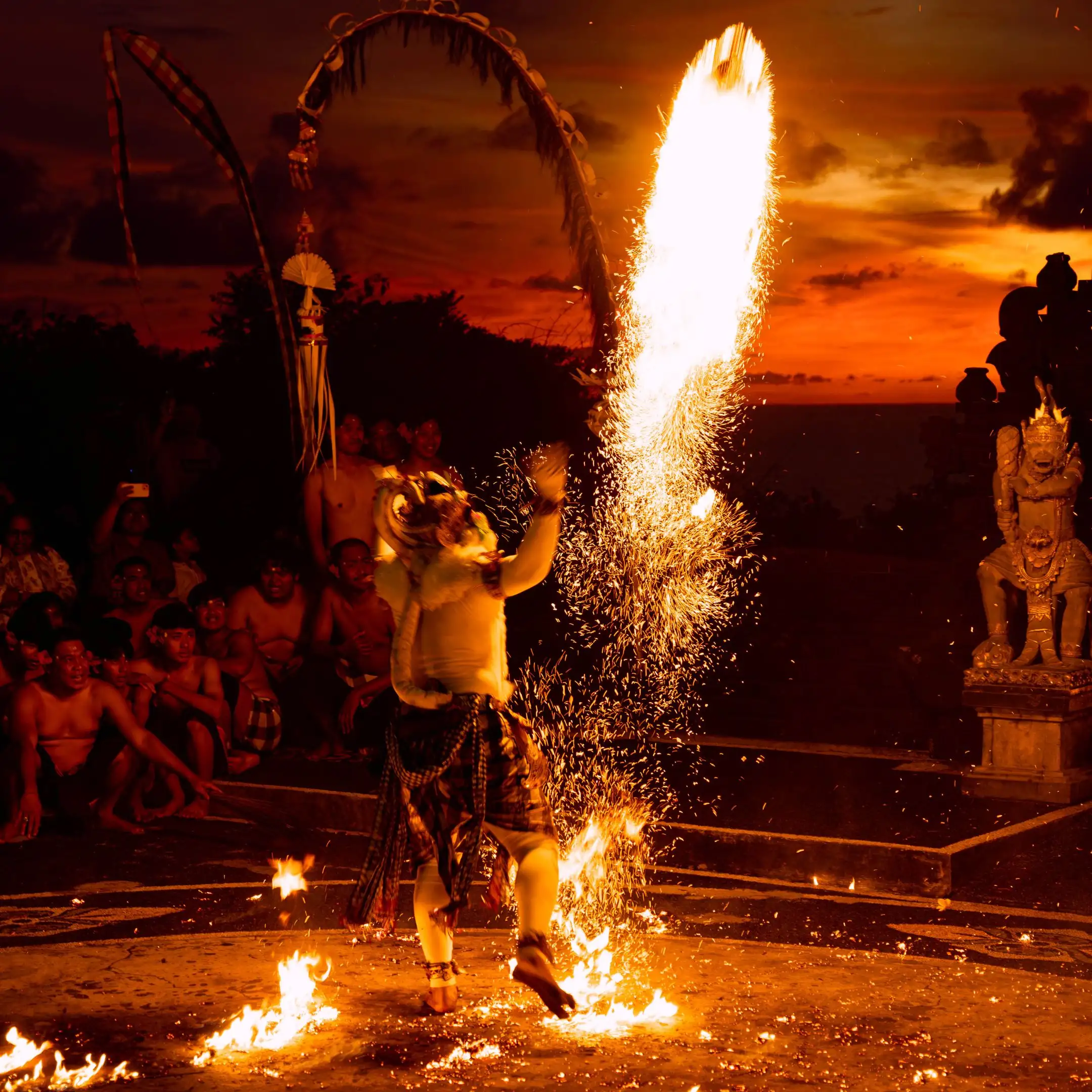
The circular formation creates a powerful visual and vocal structure around the central performers. As the story develops, chanting, movement, costumes, and dramatic scenes build toward the appearance of Hanoman and the well-known fire sequence.
Fire is not included only for visual impact. Within the performance narrative, it connects to themes of purification, protection, and the conflict between good and evil.
The Uluwatu setting adds another layer to the experience. The amphitheater stands above the Indian Ocean, allowing the evening sky and coastal landscape to form a natural background behind the performers.
Follow the Amphitheater Guidelines
A good seat is only one part of a positive visitor experience. Audience behavior also affects the performers and everyone watching the show.
Once seated, visitors should remain in their assigned or directed area. Avoid standing, changing seats repeatedly, or walking in front of other spectators during the performance.
Keep conversations quiet and place mobile phones on silent mode.
Photography is allowed, but flash photography must not be used. Flash can distract the performers, disturb nearby spectators, and reduce the atmosphere of the performance.
Visitors should also avoid:
- Blocking another person’s view
- Talking loudly
- Smoking inside the amphitheater
- Bringing unnecessarily large bags
- Flying unauthorized drones
- Moving close to the performance area
- Treating the fire scene as an invitation to leave the assigned seating area
The official visitor guidelines ask guests to remain seated, respect the performers, follow the seating arrangements, and avoid flash photography throughout the show.
Dress Respectfully and Prepare for the Venue
The amphitheater is located within the Uluwatu Temple destination, so respectful clothing remains important.
Visitors entering the temple area must wear a sarong and sash. These are generally provided at the temple entrance.
Comfortable shoes are recommended because reaching the amphitheater may involve walking across stone surfaces, stairs, and outdoor pathways.
The venue is open-air, so visitors should also consider bringing:
- Drinking water
- Sunglasses for the late-afternoon light
- Sun protection
- A secure bag
- Light rain protection during the wet season
Keep hats, sunglasses, phones, jewelry, food, and other loose objects secured when walking near Uluwatu’s monkeys.
Do not feed, touch, chase, or disturb the monkeys. They are protected wildlife and form part of Uluwatu’s cultural and ecological identity.
A Simple Afternoon Plan
A practical schedule for watching the Kecak Dance could be:
4:00 PM–4:30 PM
Arrive, park, purchase the temple entrance ticket, and prepare the required sarong and sash.
4:30 PM–5:00 PM
Purchase the separate Kecak Dance ticket at the official booth.
5:00 PM–5:30 PM
Explore the designated temple viewpoints and cliffside surroundings.
Before 6:00 PM
Enter the amphitheater, follow the seating instructions, and prepare for the performance.
6:00 PM–7:00 PM
Watch the Uluwatu Kecak Dance.
Timing may need to be adjusted during busy periods, ceremonies, holidays, or changing operational conditions.
Arrive Early for a Smoother Kecak Experience
The best time to arrive for the Uluwatu Kecak Dance is before 5:00 PM.
The gate opens at 4:00 PM, while the daily performance runs from 6:00 PM to 7:00 PM. Arriving early gives you time to manage separate tickets, prepare cash, explore the temple area, follow the seating process, and settle into the amphitheater before the performance begins.
Remember that the Kecak Dance ticket is separate from the Uluwatu Temple entrance and parking fees.
During the show, remain seated, respect the performers, keep conversations quiet, and avoid flash photography.
Save this guide before your Uluwatu visit and share it with your Bali travel group.
Respect the temple. Respect the performance. Enjoy Uluwatu responsibly.