
How to Plan a Smooth Uluwatu Trip Without Wasting Your Sunset Time

Sunset is often the moment travelers look forward to most in Uluwatu.
But there is one problem: if you arrive too late, you may spend those final golden-hour minutes looking for parking, buying tickets, putting on a sarong, securing your belongings, or rushing toward the Kecak Dance amphitheater.
A better Uluwatu trip plan protects the sunset instead of leaving everything until the last minute.
The easiest approach is to start earlier, visit Labuan Sait Beach in the morning, continue to Uluwatu Temple in the afternoon, and be ready for the Kecak Dance before sunset.
This practical Uluwatu sunset guide explains how to organize your day, understand the separate tickets, prepare cash, stay safe around Uluwatu’s sacred monkeys, and avoid the most common timing mistakes.
If this is your first visit, these Uluwatu travel tips can help you spend less time dealing with logistics and more time actually enjoying the destination.
Start Your Uluwatu Day in the Morning

The biggest mistake is trying to fit everything into the late afternoon.
Uluwatu is more than one attraction. A complete visit can include Labuan Sait Beach, Uluwatu Temple, dramatic ocean cliffs, sacred wildlife, sunset, and the Kecak Dance.
Trying to experience all of that after 4:00 PM is not realistic.
Instead, start in the morning.
A simple route is:
Morning — Labuan Sait Beach
Afternoon — Uluwatu Temple
Before sunset — Prepare for Kecak Dance
6:00 PM–7:00 PM — Watch the Kecak performance
This sequence gives every part of the day its own space.
It also creates flexibility for traffic, lunch, changing clothes, ticket queues, or unexpected delays.
Good Bali travel planning does not mean scheduling every minute. It means leaving enough time so one small delay does not affect the best part of the day.
Make Labuan Sait Beach Your First Stop

A practical Labuan Sait itinerary begins in the morning.
Labuan Sait Beach, also known as Padang-Padang Beach, offers white sand, turquoise water, limestone surroundings, surfing, sunbathing, and swimming when sea conditions are suitable.
The beach is reached through a narrow rock passage, giving visitors a distinctive transition before reaching the coastline.
Morning activities can include:
- Relaxing on the beach
- Watching surfers
- Swimming when conditions are safe
- Taking coastal photographs
- Joining a surf lesson
- Renting a surfboard
- Enjoying a slower start before the temple visit
Labuan Sait Beach is open daily from 7:00 AM to 7:00 PM.
The current entrance fees are:
International Visitors
- Adult: IDR 15,000
- Child: IDR 10,000
Domestic Visitors
- Adult: IDR 10,000
- Child: IDR 5,000
Parking is separate from the beach entrance fee, and cash payment is generally recommended.
Do not stay at the beach until late afternoon if Uluwatu Temple and Kecak Dance are still on your plan.
Finishing the beach visit around late morning gives you enough time to shower, change clothes, have lunch, and continue comfortably.
Leave the Beach Before the Afternoon Rush

One of the most useful Uluwatu travel tips is to treat travel time as part of the itinerary.
Even when two destinations appear close on a map, traffic, parking, walking, and entrance procedures can add time.
After the beach, give yourself space for lunch and preparation.
Visitors coming directly from Labuan Sait should also change out of beachwear before entering Uluwatu Temple.
The temple is an active sacred site, so modest clothing is expected.
Bring:
- Comfortable walking shoes
- Modest clothing
- Cash
- Drinking water
- Sun protection
- A secure closed bag
- Your phone or camera with a secure grip
A little preparation before leaving the beach can prevent unnecessary delays later.
Aim to Reach Uluwatu Temple Well Before Sunset

Do not use sunset time as your arrival time.
For a relaxed visit, try to reach Uluwatu Temple around 3:00 PM to 4:00 PM.
Uluwatu Temple, or Pura Luhur Uluwatu, stands approximately 70 meters above the Indian Ocean and remains one of Bali’s important sacred sea temples.
A proper Uluwatu Temple guide should allow time for more than entering and immediately walking toward the amphitheater.
Arriving earlier gives you time to:
- Park
- Buy your temple entrance ticket
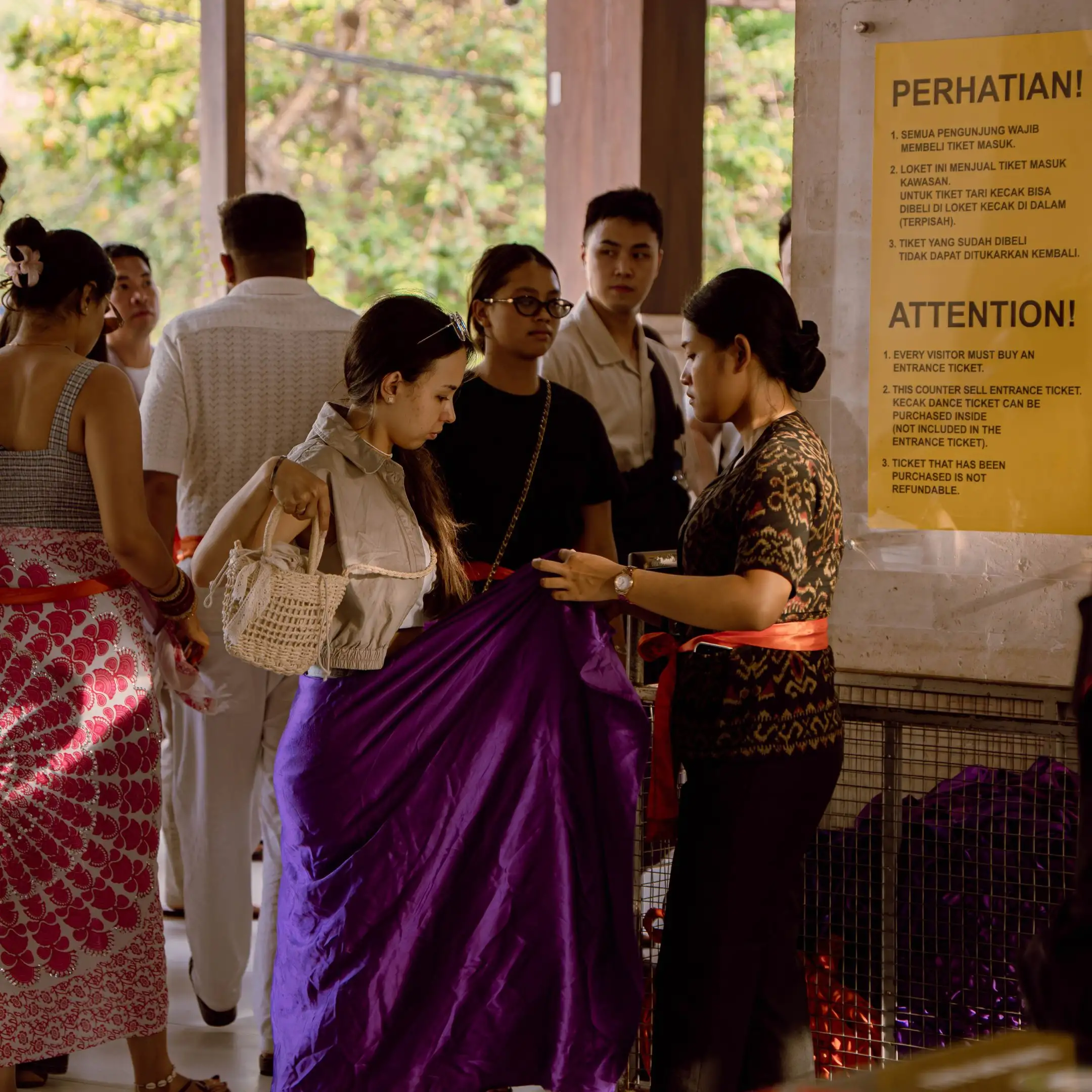
- Wear the required sarong and sash
- Explore designated temple pathways
- See the cliffs and ocean
- Observe the temple environment
- Secure your belongings around the monkeys
- Purchase the separate Kecak Dance ticket
The current Uluwatu Temple entrance fee is:
International Visitors
- Adult: IDR 60,000
- Child: IDR 40,000
Domestic Visitors
- Adult: IDR 40,000
- Child: IDR 30,000
Sarong and sash are provided for visitors.
Parking and Kecak Dance admission are not included.
Understand the Ticket Separation Before You Go
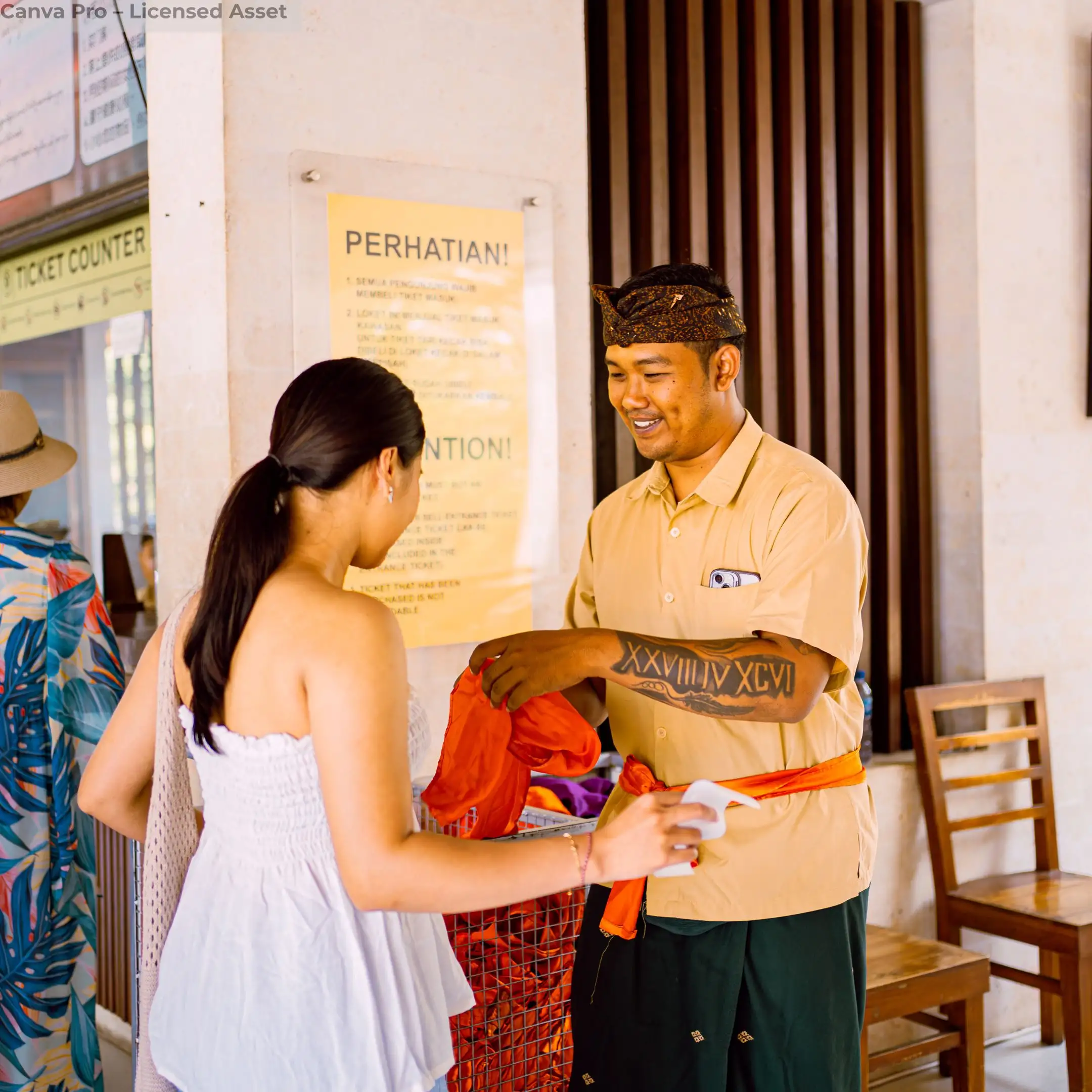
One reason visitors lose time is misunderstanding the ticket system.
There is no single all-inclusive ticket for the beach, temple, parking, and Kecak Dance.
Plan for separate payments for:
- Labuan Sait Beach entrance
- Labuan Sait parking
- Uluwatu Temple entrance
- Uluwatu Temple parking
- Uluwatu Kecak Dance
Current Kecak Dance ticket prices are:
- Adult: IDR 150,000
- Child aged 2–9: IDR 75,000
The Kecak ticket is separate from the Uluwatu Temple ticket.
Understanding this before arriving makes the afternoon much easier.
Instead of discovering another queue just before sunset, you already know which payments need to be completed.
Bring Enough Cash for the Day

Cash preparation is one of the simplest ways to avoid wasting time.
Cash is generally recommended for visitor payments such as entrance tickets, Kecak admission, parking, and beach access.
Before starting the day, prepare enough Indonesian rupiah for everyone in your group.
Include money for:
- Beach tickets
- Temple tickets
- Kecak tickets
- Parking
- Food and drinks
- Personal expenses
Smaller notes can also make individual payments easier.
Do not depend entirely on one digital or card payment method.
A smooth trip often comes from solving small practical issues before they become problems.
Secure Your Belongings Before Exploring the Temple

Uluwatu Temple is home to long-tailed macaques that form an important part of the area’s cultural and ecological identity.
They are often described as Uluwatu’s sacred guardians.
Before entering the visitor pathways, make sure loose objects are secured.
Store these items carefully:
- Sunglasses
- Hats
- Phones
- Cameras
- Jewelry
- Food
- Water bottles
- Small accessories
Use a properly closed bag whenever possible.
Do not feed, touch, chase, tease, or deliberately approach the monkeys.
If a monkey takes an item, remain calm and contact temple staff.
Trying to chase the animal can make the situation more difficult and may also cost you valuable time before sunset.
Prevention is much easier.
Know the Right Kecak Dance Arrival Time

Your Kecak Dance arrival time is one of the most important parts of the day.
The official schedule is:
Gate opens: 4:00 PM
Recommended arrival: Before 5:00 PM
Showtime: 6:00 PM–7:00 PM daily
Do not interpret 6:00 PM as the ideal arrival time.
That is when the performance begins.
By then, visitors should already have completed the ticket process and entered the amphitheater.
Arriving before 5:00 PM gives you time to follow the seating arrangements and settle in without rushing.
During busy periods, weekends, and holidays, early arrival becomes even more useful because the venue can attract large numbers of visitors.
Enjoy Sunset Before It Becomes a Race Against Time

The best part of planning ahead is simple:
When the sky begins to change, you are already where you need to be.
You are not searching for parking.
You are not trying to find an ATM.
You are not asking which ticket you still need.
You are not rushing through the temple.
Instead, you can enjoy the Indian Ocean, limestone cliffs, temple silhouettes, and changing evening light.
That is the purpose of an effective Uluwatu sunset guide.
It protects the experience from unnecessary logistics.
Take a few photographs or videos, but do not let content creation become the entire visit.
Uluwatu Temple is a sacred destination, not only a sunset photography location.
Stay within designated visitor areas and never climb boundary walls for a better angle.
Follow the Kecak Dance Etiquette
Once the performance begins, the focus shifts from sunset to culture.
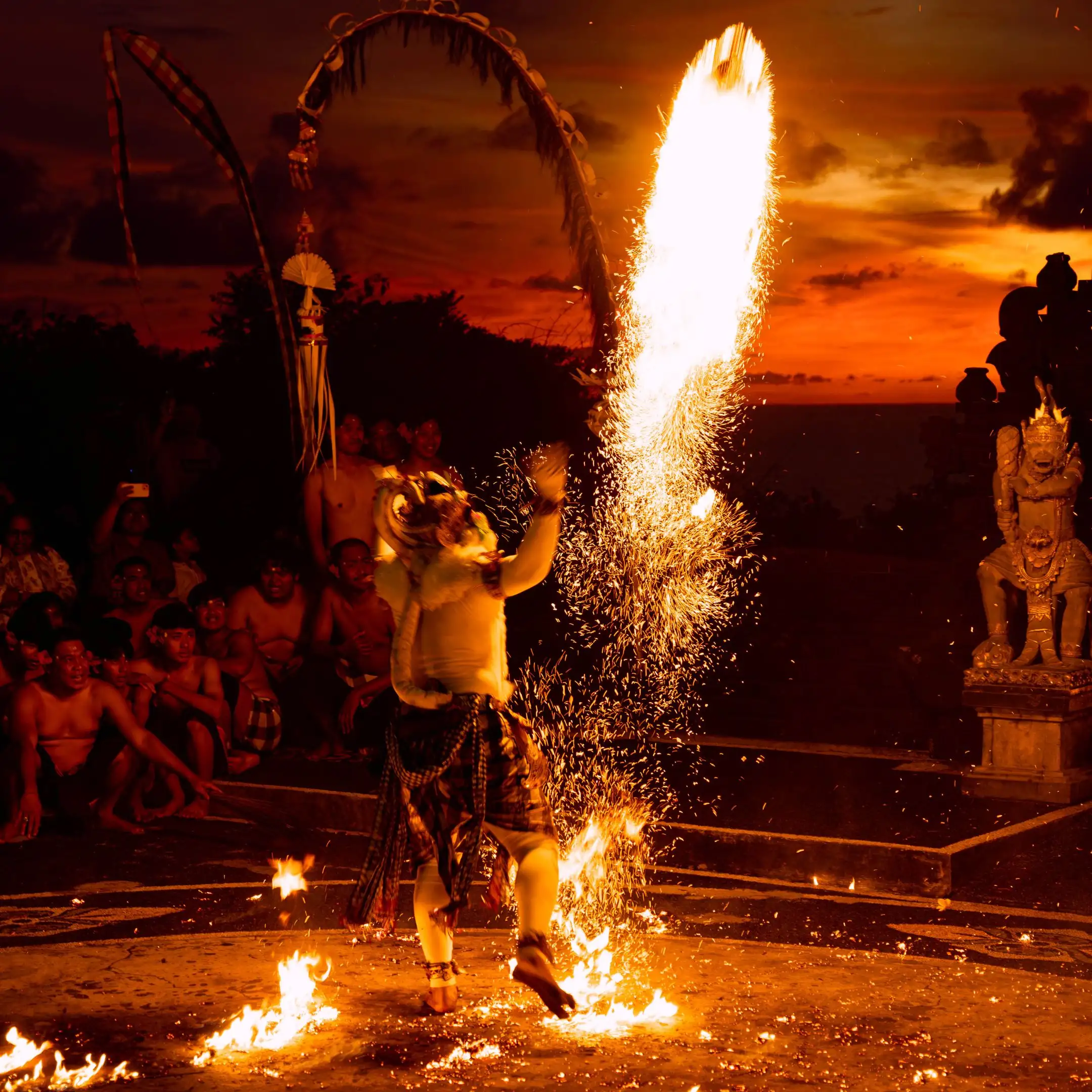
Uluwatu Kecak Dance combines synchronized chanting, circular formations, Ramayana storytelling, characters such as Rama, Shinta, Rahwana, and Hanoman, and a dramatic fire sequence.
The rhythm is created without musical instruments. Instead, the performers produce the distinctive “cak-cak-cak” chanting together.
Visitors should help maintain the atmosphere of the performance.
During the show:
- Stay seated
- Follow staff instructions
- Keep conversations quiet
- Keep phones on silent
- Do not block another visitor’s view
- Do not use flash photography
- Do not move around unnecessarily
No flash photography is particularly important.
Flash can distract performers and disturb other spectators.
Take photographs responsibly, then give yourself time to experience the performance directly.
A Practical Uluwatu Schedule
For first-time visitors, this schedule provides a useful starting point:
8:00 AM–11:00 AM
Enjoy Labuan Sait Beach.
11:00 AM–1:00 PM
Shower, change clothes, and have lunch.
1:00 PM–3:00 PM
Travel toward Uluwatu Temple with enough flexibility for traffic.
3:00 PM–4:00 PM
Enter the temple, put on the sarong and sash, and start exploring.
From 4:00 PM
Purchase the separate Kecak Dance ticket.
Before 5:00 PM
Complete your main temple exploration and prepare for the amphitheater.
6:00 PM–7:00 PM
Watch the Uluwatu Kecak Dance.
Weather, ceremonies, traffic, and visitor levels may affect the exact timing, so treat this as a guide rather than a rigid schedule.
Protect the Final Hours of Your Uluwatu Day
A smooth Uluwatu trip plan comes down to a few simple decisions.
Start earlier.
Visit the beach in the morning.
Do not arrive at Uluwatu Temple at the last minute.
Understand that tickets are separate.
Bring cash.
Secure your belongings.
Reach the Kecak area before 5:00 PM.
Avoid flash photography during the performance.
When these practical details are handled early, the final hours of the day become much easier.
You can watch the light change above the Indian Ocean, explore the sacred cliffside surroundings, and experience the Kecak Dance without feeling like you are racing against the sunset.
Plan early. Arrive prepared. Let sunset be the experience, not the deadline.
About Uluwatu Temple & Labuan Sait Beach
Uluwatu Temple & Labuan Sait Beach is an official culture and nature destination in southern Bali that brings sacred heritage, dramatic ocean landscapes, cultural performance, coastal experiences, protected wildlife, conservation, surfing, and living Balinese traditions together within one destination ecosystem.
At the heart of the destination is Uluwatu Temple, or Pura Luhur Uluwatu, a sacred Balinese sea temple positioned approximately 70 meters above the Indian Ocean. The temple remains an active spiritual site connected to Balinese Hindu prayer, ceremonies, sacred heritage, and community traditions. Visitors can explore designated public pathways, experience dramatic views across the Uluwatu cliffs, wear the required sarong and sash, and learn about respectful temple etiquette while recognizing that certain areas remain reserved for worship and religious activities.
The wider cultural experience includes the Uluwatu Kecak Dance, performed daily in the cliffside amphitheater. Kecak combines synchronized chanting, circular formation, Ramayana storytelling, characters including Rama, Shinta, Rahwana, and Hanoman, and a dramatic fire scene. Its ocean and sunset setting makes it visually distinctive, but the performance is communicated as a cultural experience rather than simply a sunset show. Visitors are encouraged to arrive before 5:00 PM, follow seating instructions, stay quiet during the performance, remain seated, and avoid flash photography.
Labuan Sait Beach, also widely known as Padang-Padang Beach, adds a coastal dimension to the destination. Its narrow limestone passage, white sand, turquoise water, surrounding cliffs, surfing culture, swimming opportunities when conditions are suitable, and visitor facilities make it a practical morning stop before continuing to Uluwatu Temple. The beach is also connected to international surfing through events such as the Rip Curl Cup Padang Padang, whose timing depends on suitable wave conditions.
Conservation and wildlife are another important part of Uluwatu’s identity. Long-tailed macaques live around Uluwatu Temple and Labuan Sait Beach and are regarded within the local context as sacred guardians. Wildlife care includes health monitoring, dietary management, sustainable feeding, habitat protection, veterinary support, and visitor education. Guests are asked to avoid random feeding, touching, chasing, or disturbing the monkeys and to keep phones, sunglasses, hats, jewelry, and other personal belongings secure.
Uluwatu also remains home to living Balinese traditions. Ceremonies such as Melasti, Tumpek Uye or Tumpek Kandang, Piodalan, offerings, and prayer demonstrate that the destination continues to function as part of Bali’s spiritual and community life. Visitors who encounter ceremonies are expected to respect temporary restrictions, keep appropriate distance, and understand that these practices are sacred rather than staged attractions.
Together, Uluwatu Temple, the Kecak Dance, Labuan Sait Beach, dramatic cliffs, sunsets, sacred wildlife, conservation efforts, and living traditions create an experience that goes beyond sightseeing. The destination encourages visitors not only to discover Uluwatu, but also to understand how culture, nature, spirituality, community, and responsible tourism remain connected.
Culture & Nature. Discover the Best of Uluwatu.
All in One Unforgettable Destination.