
How Uluwatu Kecak Dance Tells the Ramayana Story

Many visitors arrive at Uluwatu knowing that Kecak includes chanting, fire, and sunset.
But understanding the story behind the performance can completely change the way you watch it.
The Uluwatu Kecak Dance is not simply a fire show performed beside the ocean. It combines synchronized human voices, circular formations, characters from the Ramayana, dramatic movement, and a story built around loyalty, conflict, courage, and the struggle between good and evil.
There are no musical instruments.
Instead, dozens of voices create the rhythm through the repeated “cak-cak-cak” sound that gives Kecak its distinctive identity.
For first-time visitors, learning the basic Kecak Dance story before entering the amphitheater can make each scene easier to follow.
Here is how the Ramayana Kecak Dance at Uluwatu brings the ancient story to life.
Where Did Kecak Dance Come From?
The modern form of Kecak developed in Bali during the 1930s.
Its development is associated with Balinese artist Wayan Limbak and Walter Spies. The performance drew inspiration from Sanghyang, a sacred Balinese ritual tradition, before developing into a dramatic storytelling format connected to the Ramayana.
This background is important because it explains why Kecak feels different from many stage performances.
Its foundation is not built around a musical orchestra.
The human voice becomes the main source of rhythm.
The performers sit together in a circle and repeat coordinated vocal patterns. Their chanting creates changes in pace, tension, and atmosphere while the central characters move through the story.
This relationship between collective chanting and dramatic storytelling is one of the defining features of the Uluwatu Kecak experience.
Why Does Kecak Use No Musical Instruments?

One of the first things visitors notice about the Uluwatu Kecak Dance is the absence of instruments.
There is no gamelan orchestra accompanying the performers.
Instead, the rhythm is created entirely by synchronized voices.
The repeated Kecak chanting may begin with a simple “cak-cak-cak” pattern, but the sound changes as the performance develops.
At different moments, the performers may increase the speed, change the intensity, or coordinate their movements with the vocal rhythm.
The circle becomes several things at once:
- The rhythm of the performance
- The background to the story
- A visual formation
- A source of tension
- A collective response to the characters
For visitors watching for the first time, this is one of the most powerful parts of the show.
Each voice may seem simple on its own.
Together, the voices create the entire musical atmosphere.
The Chanting Circle Creates the Stage

The circular formation is another important part of the Ramayana Kecak Dance.
The performers sit closely together around the central area where the main characters appear.
Rather than disappearing into the background, the circle remains active throughout the performance.
The performers raise their arms, change their vocal patterns, react to dramatic moments, and help create the emotional rhythm of each scene.
This means the audience is effectively watching two performances at once.
The first is the Ramayana story being told by the central characters.
The second is the collective movement and chanting created by the Kecak circle.
At Uluwatu, the open-air amphitheater adds another visual layer. The Indian Ocean and changing evening sky become the natural background while the performers create the rhythm below.
Rama and Shinta Begin the Central Story

The Kecak Dance story follows characters from the Ramayana.
At the center are Rama and Shinta.
Rama is the heroic figure, while Shinta becomes central to the conflict that drives the story forward.
Their relationship represents loyalty and devotion, but the peaceful beginning does not last.
The arrival of Rahwana changes the direction of the performance.
For visitors unfamiliar with the Ramayana, knowing these names before the show makes the scenes easier to understand:
Rama — the central hero.
Shinta — Rama’s wife and a central figure in the conflict.
Rahwana — the antagonist who abducts Shinta.
Hanoman — the white monkey warrior who helps Rama in the effort to find and rescue Shinta.
These four characters form the core of the story presented during the performance.
Rahwana Brings the Main Conflict

Rahwana represents the opposing force in the story.
His involvement creates the conflict between good and evil that becomes central to the performance.
When Shinta is taken away, the story changes from peaceful interaction into a rescue journey.
The chanting circle helps communicate this shift.
The rhythm may become stronger and more dramatic as the tension grows.
Costumes, facial expressions, character movement, and the reaction of the Kecak performers help international visitors follow what is happening even without understanding every spoken element.
This is one of the strengths of the Bali cultural performance.
The story is communicated through more than words.
Sound, movement, costume, and visual contrast work together.
Hanoman Changes the Energy of the Performance

Among all the Ramayana characters, Hanoman is often the one first-time visitors remember most.
The white monkey warrior enters with very different movement and energy from the characters seen earlier.
Hanoman becomes an important ally in the effort to find and rescue Shinta.
His arrival usually makes the performance feel more active and dynamic.
He interacts with other characters, moves through the central performance space, and eventually becomes connected to one of the most recognizable scenes of the evening.
The Hanoman fire dance is widely photographed and shared, but understanding Hanoman’s role before that scene helps visitors see it as part of the story rather than an isolated spectacle.
He is not included simply because the fire scene looks dramatic.
His character has a purpose within the Ramayana narrative.
The Story Represents the Struggle Between Good and Evil

One of the easiest ways for first-time visitors to understand the performance is through the larger theme of good versus evil.
Rama represents the effort to restore what has been disrupted.
Rahwana represents the opposing force.
Shinta becomes central to the conflict.
Hanoman helps move the story toward rescue and resolution.
The Kecak circle surrounds these characters throughout the performance, strengthening dramatic moments through chanting and movement.
This clear conflict is one reason the story remains understandable even for visitors seeing the Ramayana for the first time.
You do not need to know every detail of the epic.
Understanding the basic roles of Rama Shinta Rahwana and Hanoman is enough to give the performance much more context.
Why Is Fire Used in the Kecak Dance?

The fire scene is one of the most recognizable moments of the Uluwatu performance.
By the time it appears, the sky is usually darker and the visual contrast becomes much stronger.
Hanoman, fire, the chanting circle, and the evening atmosphere come together in one dramatic sequence.
But fire should not be understood only as an entertainment effect.
Within the performance direction, fire is connected to ideas of purification and divine power.
This gives the scene symbolic meaning beyond its visual impact.
The fire arrives after the audience has already experienced chanting, conflict, character development, and the progression of the Ramayana story.
That is why the scene feels more powerful when visitors understand what came before it.
Calling Kecak only a “Bali fire dance” misses much of the cultural storytelling that gives the performance its identity.
Sunset Makes the Setting Different

The Uluwatu sunset dance experience is strongly connected to its location.
The Kecak performance takes place in an open-air amphitheater on the Uluwatu cliffs, with the Indian Ocean behind the performers.
The current schedule is:
Gate opens: 4:00 PM
Recommended arrival: Before 5:00 PM
Showtime: 6:00 PM–7:00 PM daily
As the story progresses, the natural light changes.
The performance may begin while the sky is still bright, then continue through sunset into the darker evening atmosphere.
This makes the surroundings visually memorable.
However, the sunset should be understood as the backdrop.
The central experience remains the Ramayana, synchronized chanting, characters, movement, and cultural performance.
What to Know Before Watching
Visitors planning to watch the Uluwatu Kecak Dance should arrive before 5:00 PM.
The Kecak Dance ticket is separate from the Uluwatu Temple entrance fee and parking fee.
Current Kecak ticket prices are:
- Adult: IDR 150,000
- Child aged 2–9: IDR 75,000
Cash payment is recommended.
During the performance:
- Follow the seating arrangement
- Stay seated
- Keep conversations quiet
- Keep phones on silent
- Avoid flash photography
- Do not block another visitor’s view
- Respect the performers
- Do not fly drones without authorization
These simple guidelines allow the chanting, storytelling, and atmosphere of the performance to remain the focus.
Understanding the Story Changes the Experience
Watching Kecak without knowing the story can still be visually impressive.
But knowing the basic Ramayana narrative gives every scene more meaning.
You understand why Rama and Shinta matter.
You recognize Rahwana as the source of the central conflict.
You understand why Hanoman becomes important.
You see the fire scene as part of a larger story.
And you begin to recognize how the chanting circle supports the action from beginning to end.
That is what makes the Uluwatu Kecak Dance more than a sunset performance.
It combines voice, movement, cultural storytelling, symbolic fire, dramatic characters, and a natural cliffside setting into one experience.
Come for the sunset if that is what first catches your attention.
But watch the story.
Listen to the chanting.
Follow the characters.
That is where the performance becomes much more meaningful.
About Uluwatu Temple & Labuan Sait Beach
Uluwatu Temple & Labuan Sait Beach is an official culture and nature destination in southern Bali where sacred heritage, spiritual traditions, cultural performance, dramatic coastal scenery, protected wildlife, beach experiences, surfing culture, conservation, and living Balinese traditions come together within one connected visitor ecosystem.
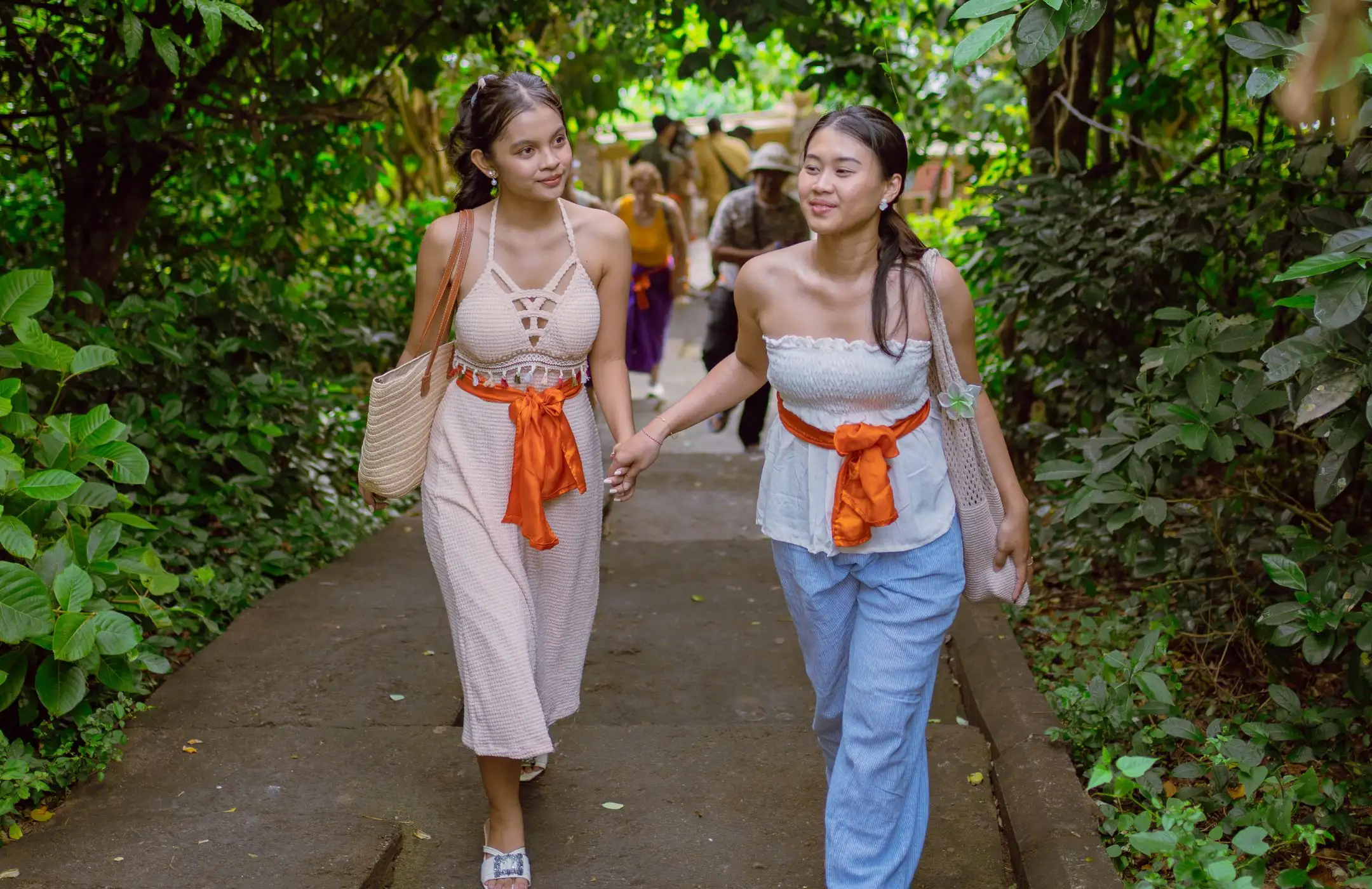
At the center of the destination is Uluwatu Temple, or Pura Luhur Uluwatu, a sacred Balinese sea temple standing approximately 70 meters above the Indian Ocean. The temple forms an important part of Bali’s spiritual landscape and remains an active place for worship, prayer, offerings, ceremonies, and community traditions. Visitors can explore designated public pathways, experience dramatic ocean and cliff views, wear the required sarong and sash, and learn about appropriate temple etiquette while respecting areas reserved for religious activity.
The Uluwatu Kecak Dance represents one of the destination’s major cultural experiences. Developed from a performance tradition inspired by Sanghyang and shaped into Ramayana storytelling, Kecak uses synchronized human voices rather than musical instruments. Performers form a circular chanting group around characters such as Rama, Shinta, Rahwana, and Hanoman, creating rhythm and dramatic tension through coordinated sound and movement. The later fire scene brings themes of purification and divine power into one of the performance’s most visually recognizable moments.
Its setting in the open-air Uluwatu amphitheater adds another layer to the experience. The Indian Ocean, dramatic cliffs, and changing sunset sky form the natural backdrop while the Ramayana story develops. Visitors are encouraged to understand the performance as a cultural experience rather than only as a sunset or fire attraction. Respectful audience behavior, including remaining seated, keeping conversations quiet, following staff guidance, and avoiding flash photography, is an important part of preserving the atmosphere of the show.
Beyond the temple and amphitheater, Labuan Sait Beach, also widely known as Padang-Padang Beach, expands the Uluwatu experience through its narrow limestone passage, white sand, turquoise water, surfing identity, swimming when conditions are suitable, sunbathing, and coastal activities. Its location makes it practical to combine a morning beach visit with Uluwatu Temple in the afternoon and Kecak Dance at sunset.
Conservation is another important part of the wider destination. Long-tailed macaques around Uluwatu Temple and Labuan Sait Beach are connected to the area’s cultural and ecological identity and are often described as sacred guardians. Wildlife care includes health monitoring, sustainable feeding, dietary management, habitat protection, veterinary support, and visitor education. Travelers are encouraged to observe the monkeys from a safe distance, secure loose belongings, avoid random feeding, and never touch, chase, or provoke the animals.
Living Balinese traditions also remain central to Uluwatu. Ceremonies including Piodalan, Melasti, and Tumpek Uye or Tumpek Kandang demonstrate that the area continues to function as part of Bali’s spiritual and community life. These practices are not staged attractions. Visitors who encounter them should respect prayer areas, processions, temporary restrictions, and local guidance.
Together, Uluwatu Temple, the Kecak Dance, Labuan Sait Beach, dramatic cliffs, sacred wildlife, conservation programs, sunset views, and living ceremonies create a destination where visitors can experience Bali through culture, nature, spirituality, storytelling, and responsible tourism.
Culture & Nature. Discover the Best of Uluwatu.
All in One Unforgettable Destination.