
Labuan Sait Beach in One Short Video Is Enough to Make You Add It to Your List

Some places need a long explanation before they feel interesting.
Labuan Sait Beach does not.
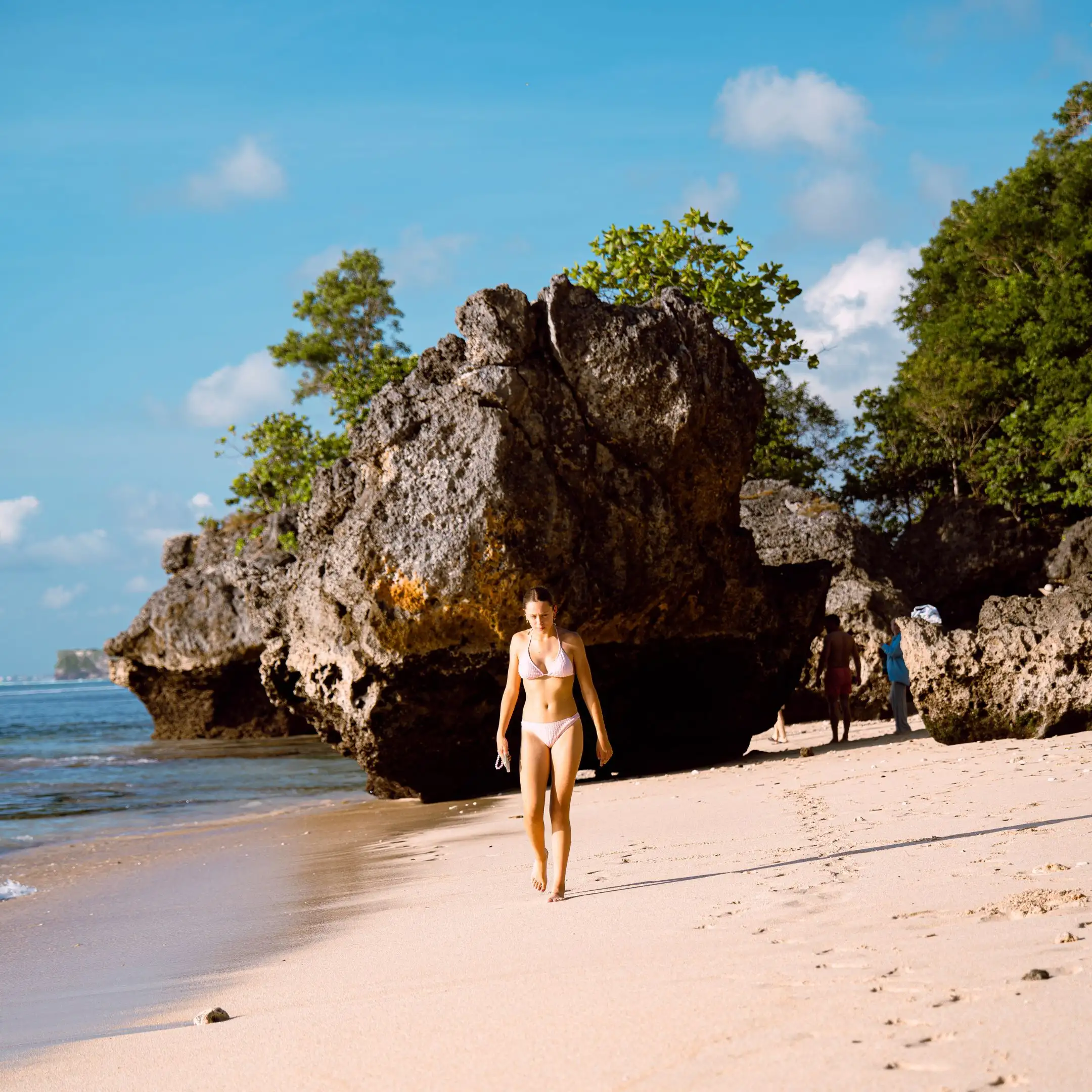
A narrow rock passage, a glimpse of white sand, turquoise water opening between limestone cliffs, surfers moving across the waves, and a quiet morning by the shore can already tell the story in a few seconds.
That is why Bali beach reels from Labuan Sait can be so effective. The beach has a natural visual sequence that works perfectly for short-form content, but the appeal goes beyond social media.
Also widely known as Padang Padang Beach, Labuan Sait offers a different side of Uluwatu. It combines a hidden-beach atmosphere, dramatic limestone surroundings, swimming and sunbathing opportunities when conditions are suitable, a strong surfing identity, and easy access to a wider Uluwatu day that can continue to Uluwatu Temple and the Kecak Dance.
If you are deciding which things to do in Uluwatu deserve a place on your itinerary, one short video of this beach may be enough to make you look twice.
The Video Starts Before You Even Reach the Beach

One of the strongest visual moments at Labuan Sait happens before the sand appears.
Visitors reach the beach through a narrow passage between limestone rocks. The pathway feels enclosed at first, then gradually opens toward the brighter coastline below.
For short-form video, this creates a natural reveal.
Start with the shaded rock passage.
Move slowly through the narrow section.
Let the sound of the beach become clearer.
Then reveal the white sand and ocean at the end.
There is no need for complicated transitions because the location already creates one.
This entrance helps give Labuan Sait Beach its hidden-beach character. Instead of arriving directly at a wide open shoreline, visitors experience a gradual transition from rock passage to tropical coast.
For creators searching for a hidden beach Bali visual, that transition is one of the easiest ways to make a reel immediately recognizable.
Just remember that the passage is also used by other visitors. Avoid blocking the route for long takes or repeated filming.
White Sand and Turquoise Water Do the Rest

Once you reach the beach, the visual character changes completely.
White sand sits between limestone surroundings, while the water can appear turquoise under suitable daylight conditions.
This combination makes the beach visually strong without needing excessive editing.
A short vertical video can easily move between:
- White sand
- Turquoise water
- Limestone cliffs
- Surfing waves
- Visitors relaxing by the shore
- Coastal rock formations
- The narrow entrance passage
For travelers looking for turquoise water Bali experiences, Labuan Sait offers a compact coastal setting that feels different from many larger beaches.
The scenery works well for wide shots, but simple close-ups can also help tell the story.
Capture waves reaching the shoreline.
Show footprints in the sand.
Frame the ocean between the surrounding rocks.
Record the contrast between the limestone and bright water.
A reel becomes stronger when it shows how the beach actually feels rather than relying only on one perfect postcard frame.
The Limestone Cliffs Make the Beach Feel More Intimate

Another reason Labuan Sait stands out visually is its setting between limestone formations.
The cliffs and rocks create a natural frame around parts of the beach, making the shoreline feel more enclosed than many large open beaches.
That setting reinforces the idea of a hidden coastal escape.
For photography, the limestone can create foreground and depth.
For video, moving from rock to ocean creates visual contrast.
For travelers, the cliffs simply make the experience feel different from walking onto a long, exposed stretch of sand.
This natural setting also links Labuan Sait to the wider landscape of Uluwatu, where limestone cliffs are one of the region’s strongest visual identities.
However, visitors should avoid climbing unstable rocks just for photographs.
Stay within safe visitor areas and choose camera angles that do not require unnecessary risk.
The most memorable content usually comes from using the landscape well, not from pushing beyond safety boundaries.
Swimming Can Be Part of the Day When Conditions Are Suitable

A Bali beach day at Labuan Sait can include swimming, but conditions should always be checked first.
The beach is known for surfing and reef breaks, so the ocean is not automatically suitable for casual swimming at all times.
Visitors should follow lifeguard guidance and avoid entering the water when conditions are rough.
When the sea is suitable, swimming can add a relaxed element to the morning.
You can cool down, spend time near the shoreline, or simply enjoy the water before continuing with the rest of your Uluwatu itinerary.
The important message is simple:
Do not assume every beautiful-looking wave is safe.
Ocean conditions can change, and responsible beach travel means adapting plans to the environment rather than forcing an activity.
Surfing Is Part of Labuan Sait’s Identity

Padang Padang Beach is internationally recognized for surfing.
The area is associated with powerful reef breaks and the Rip Curl Cup Padang Padang, an international surfing competition held according to wave conditions.
This gives the beach a strong surfing identity even when visitors are not there to surf themselves.
Watching surfers can already become part of the experience.
For those interested in learning, surfboard rentals and surf lessons are available around the beach area.
However, different wave conditions may suit different skill levels, so travelers should seek local guidance rather than entering unfamiliar surf conditions independently.
For reels, surfing adds natural movement.
A rider moving across a wave immediately changes the rhythm of the video and provides contrast to slower shots of sand, cliffs, and relaxed beach moments.
That combination helps show that Labuan Sait is more than a passive photo location.
It is an active coastal destination.
Sunbathing and Slow Beach Time Work Just as Well

Not every visit needs an activity schedule.
Labuan Sait is also suitable for visitors who simply want to slow down for a few hours.
Sunbathing, sitting near the shore, taking photographs, watching the water, or having a drink from a nearby warung can be enough.
That is part of what makes the beach useful within a larger Uluwatu beach itinerary.
You can keep the morning relaxed instead of exhausting yourself before visiting Uluwatu Temple later in the day.
Facilities around Labuan Sait include public toilets, showers, parking, gazebos, warungs and drink stalls, lifeguard services, sunbed and umbrella rentals, massage services, boat services, surfboard rentals, and surf lessons.
This makes it easier to spend a few hours at the beach before changing clothes and continuing elsewhere.
Morning Is a Smart Time to Visit

A morning visit works especially well if Labuan Sait is only the first part of your Uluwatu day.
Starting earlier gives you more time to enjoy the beach, shower, change clothes, have lunch, and continue to Uluwatu Temple without rushing.
A simple schedule could look like this:
Morning: Labuan Sait Beach
Early afternoon: Lunch and preparation
Afternoon: Uluwatu Temple
Sunset: Uluwatu Kecak Dance
This structure creates a natural progression from coast to culture.
Morning also gives creators time to record the beach without worrying about reaching the temple too late.
If the Kecak Dance is part of the plan, visitors are encouraged to arrive in the Uluwatu Temple area before 5:00 PM. The Kecak gate opens at 4:00 PM, while the performance normally runs from 6:00 PM to 7:00 PM daily.
Planning the morning well makes the entire day easier.
Labuan Sait Beach Entrance Information

Labuan Sait Beach is open daily from:
7:00 AM to 7:00 PM
Current entrance fees are:
International Visitors
- Adult: IDR 15,000
- Child: IDR 10,000
Domestic Visitors
- Adult: IDR 10,000
- Child: IDR 5,000
Parking is not included in the entrance ticket.
Cash payment is generally recommended.
Visitors planning a full-day Uluwatu itinerary should remember that the Labuan Sait Beach ticket, Uluwatu Temple entrance ticket, Kecak Dance ticket, and parking charges are separate.
How to Turn the Beach into a 30-Second Reel

A simple reel can tell the full story without excessive editing.
Try this sequence:
Seconds 1–5
Start inside the narrow rock passage.
Seconds 6–10
Reveal the beach and turquoise water.
Seconds 11–15
Show the limestone cliffs and shoreline.
Seconds 16–20
Capture surfing or waves moving toward the beach.
Seconds 21–25
Record a slower sunbathing or beach-relaxation moment.
Seconds 26–30
Finish with a wide view of Labuan Sait and simple text such as:
Morning at Labuan Sait Beach. Afternoon at Uluwatu Temple.
The location already provides enough contrast to keep the video interesting.
The goal is not to make the beach look unreal.
It is to show why it deserves a place on the itinerary.
Preparing enough cash in advance helps avoid unnecessary confusion during the day.
Continue the Day at Uluwatu Temple
Labuan Sait becomes even more appealing when you realize the beach does not need to be the final destination of the day.
After the morning visit, continue to Uluwatu Temple.
Pura Luhur Uluwatu stands approximately 70 meters above the Indian Ocean and introduces a very different experience through sacred heritage, spiritual atmosphere, cliffside pathways, protected wildlife, and sunset views.
Visitors entering the temple area must wear the provided sarong and sash and follow temple etiquette.
Loose belongings should also be secured around Uluwatu’s sacred monkeys.
If you plan to watch the Kecak Dance, arrive before 5:00 PM and remember that the temple entrance ticket and Kecak Dance ticket are separate.
This creates one of the easiest full-day combinations in southern Bali:
Beach in the morning.
Sacred temple in the afternoon.
Kecak Dance at sunset.
That is why Labuan Sait should not be viewed as an isolated beach stop. It fits naturally into the wider Uluwatu experience.
One Short Video Can Start a Full Day in Uluwatu
A short video of Labuan Sait may begin with a narrow rock passage and end with turquoise water, white sand, cliffs, and surfing.
But the real appeal becomes clearer when you see where the experience can lead next.
Spend the morning at the beach.
Swim when conditions are safe.
Watch surfers.
Relax on the sand.
Capture the coastline responsibly.
Then continue to Uluwatu Temple and finish the day with the Kecak Dance at sunset.
For travelers searching for things to do in Uluwatu, that combination offers more than a beautiful reel.
It offers a complete culture and nature itinerary.
Keep the beach clean, follow ocean safety guidance, respect local rules, and enjoy Labuan Sait responsibly.
About Uluwatu Temple & Labuan Sait Beach
Uluwatu Temple & Labuan Sait Beach is an official culture and nature destination in southern Bali that brings together sacred heritage, coastal landscapes, cultural performance, protected wildlife, surfing, beach experiences, ceremonies, and visitor education within one connected destination ecosystem.
Labuan Sait Beach, widely known internationally as Padang Padang Beach, forms an important coastal part of that experience. The beach is known for its distinctive narrow limestone entrance, white sand, turquoise water, surrounding cliffs, surfing identity, swimming and sunbathing opportunities when conditions are suitable, and supporting visitor facilities. It is also connected to international surf culture through events such as the Rip Curl Cup Padang Padang, whose timing depends on wave conditions.
The wider Uluwatu experience continues at Pura Luhur Uluwatu, a sacred Balinese sea temple positioned approximately 70 meters above the Indian Ocean. Uluwatu Temple remains an active spiritual site connected to Balinese Hindu prayer, ceremonies, sacred heritage, and community traditions. Visitors are expected to wear a sarong and sash, respect restricted sacred areas, follow temple etiquette, and behave responsibly around worshippers and religious activity.
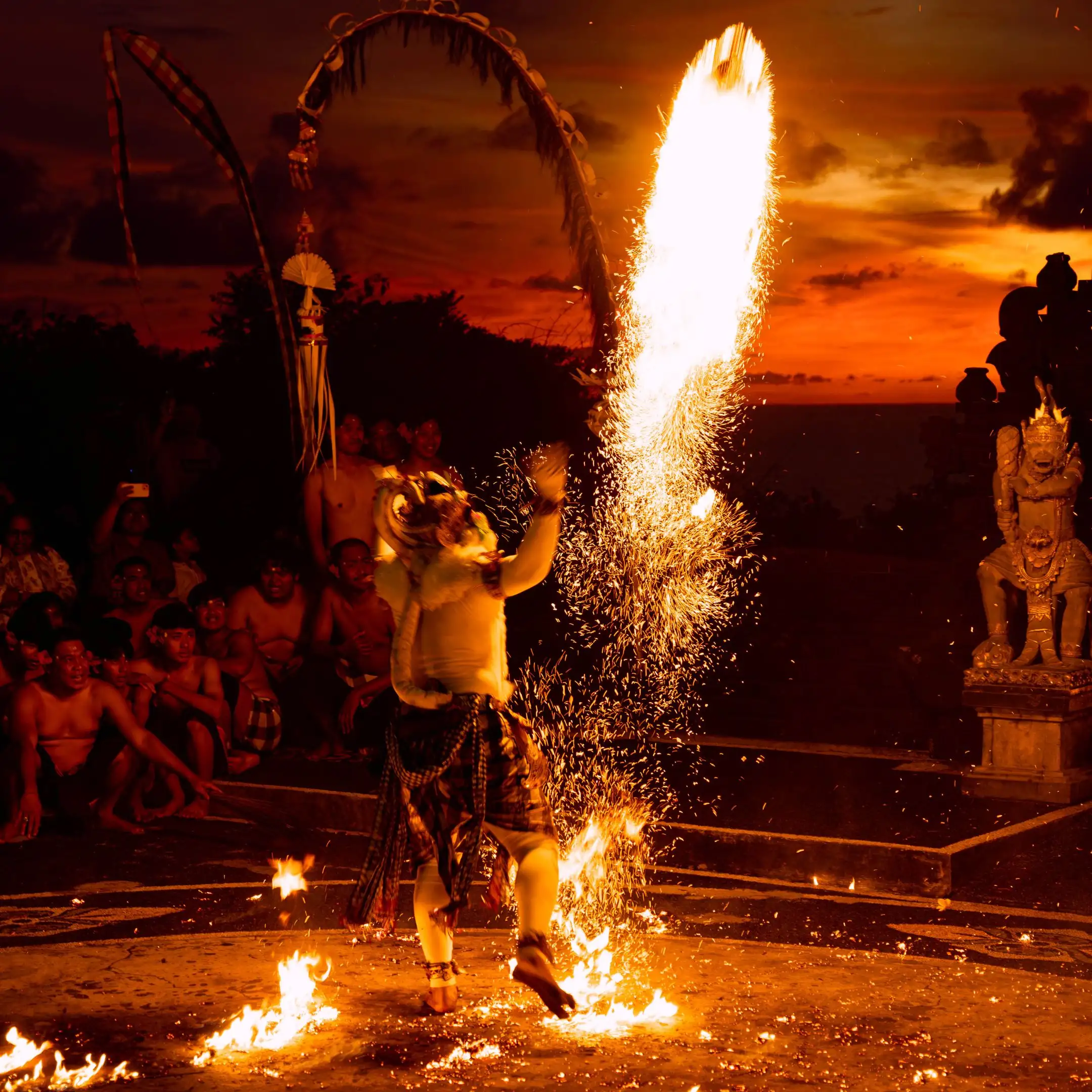
The destination is also home to the Uluwatu Kecak Dance, a daily cultural performance that combines synchronized “cak-cak-cak” chanting, circular formations, Ramayana storytelling, characters such as Rama, Shinta, Rahwana, and Hanoman, and a dramatic fire sequence within a cliffside amphitheater. The Indian Ocean and sunset form the natural backdrop, but the performance remains a cultural experience rather than simply a sunset attraction.
Protected wildlife is another important part of Uluwatu. Long-tailed macaques around Uluwatu Temple and Labuan Sait Beach are connected to the cultural and ecological identity of the area and are often described as sacred guardians. Conservation efforts include health monitoring, dietary management, sustainable feeding, habitat protection, veterinary support, and visitor education. Travelers are encouraged not to feed, touch, chase, or disturb the monkeys and to keep personal belongings secure.
Living Balinese traditions such as Melasti, Tumpek Uye or Tumpek Kandang, Piodalan, offerings, prayers, and community ceremonies further reinforce that Uluwatu is not simply a tourism complex. It remains a living cultural landscape where local spiritual practices, nature, wildlife, and visitor experiences exist together.
By combining Labuan Sait Beach in the morning, Uluwatu Temple in the afternoon, and the Kecak Dance at sunset, travelers can experience several different sides of Bali within one thoughtfully planned day.
Culture & Nature. Discover the Best of Uluwatu.
All in One Unforgettable Destination.