
Start at Labuan Sait Beach and End with Kecak Dance
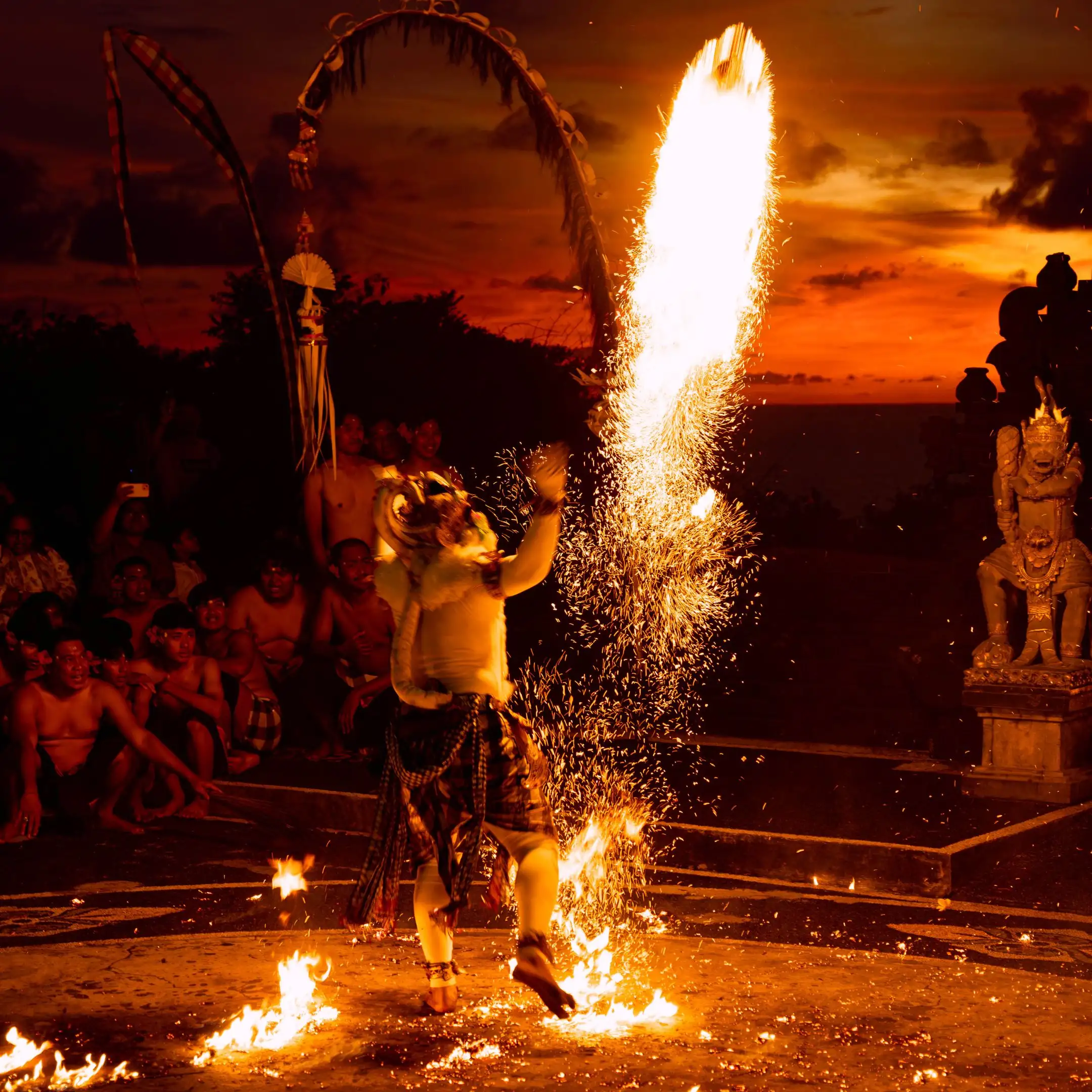
One day in Uluwatu can take you from white sand and turquoise water to a sacred clifftop temple, then finish with chanting, Ramayana storytelling, and fire scenes as the sun disappears over the Indian Ocean.
The route is simple:
Start the morning at Labuan Sait Beach, continue to Uluwatu Temple in the afternoon, and end the day with the Uluwatu Kecak Dance at sunset.
This practical Uluwatu itinerary works well for couples, families, groups, and first-time visitors who want to experience more than one side of southern Bali without spending the day moving between distant locations.
It combines a relaxed Bali beach day with sacred heritage, dramatic cliffs, protected wildlife, and one of Bali’s most recognizable cultural performances.
Here is how to plan the day without rushing.
Start Your Morning at Labuan Sait Beach
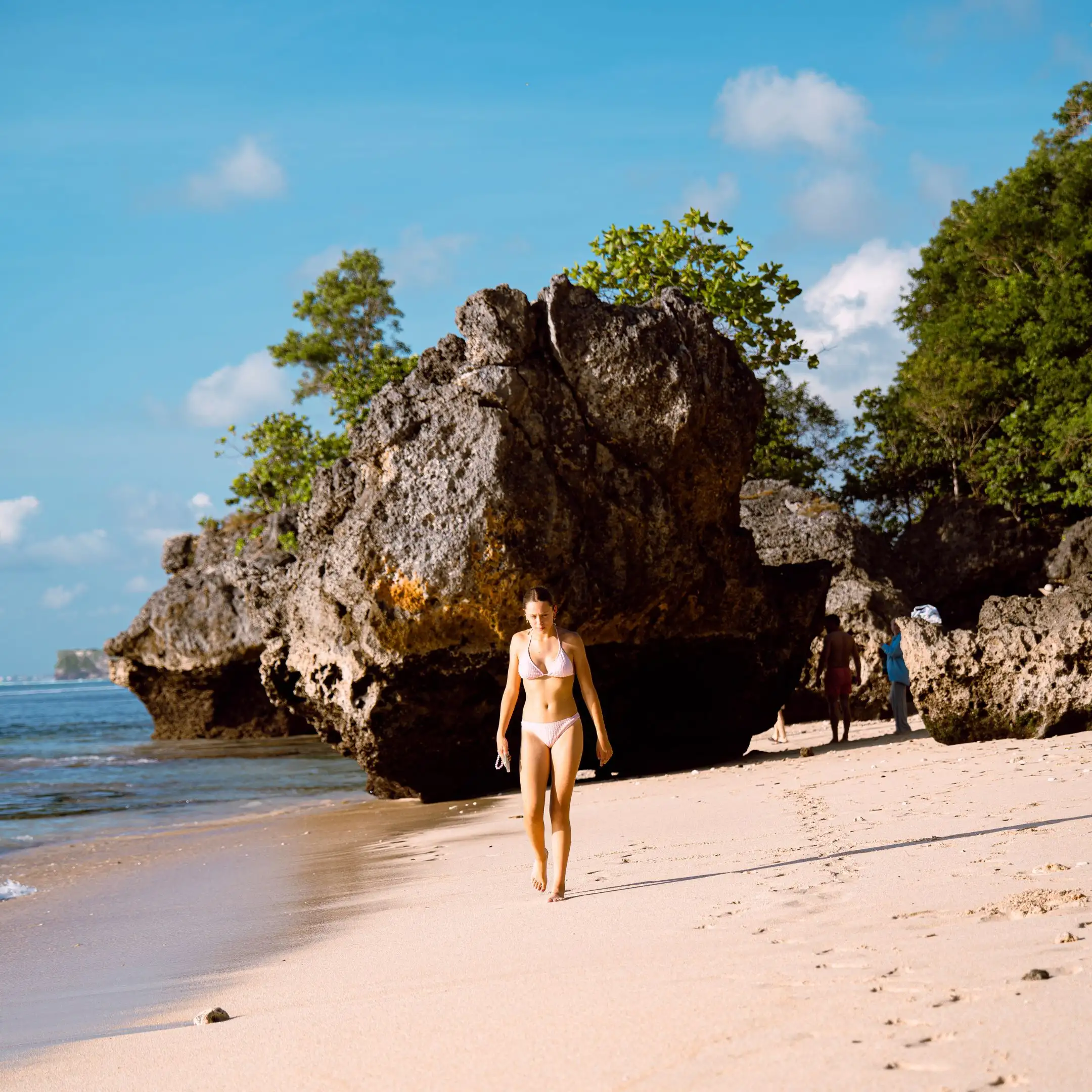
Begin at Labuan Sait Beach, also widely known as Padang Padang Beach.
The beach sits between limestone cliffs and is accessed through a narrow rock passage followed by steps leading toward the shore. Once you reach the beach, the landscape opens into white sand, turquoise water, coastal rocks, and surfing waves.
Morning is a practical time to visit because it gives you several hours to enjoy the beach before continuing to the temple.
Depending on the ocean conditions, visitors can spend the morning:
- Swimming
- Sunbathing
- Watching surfers
- Taking coastal photographs
- Joining a surf lesson
- Renting a surfboard
- Relaxing near the shoreline
- Exploring the beach surroundings
Labuan Sait is internationally known for surfing and the Rip Curl Cup Padang Padang. However, it is not only a surf destination. The beach can also be enjoyed by travelers looking for a relaxed morning, scenic coastal views, and a convenient starting point for a full day in Uluwatu.
Always check the sea conditions before entering the water. Labuan Sait has reef breaks and changing waves, so swimming may not always be suitable.
Follow lifeguard instructions and stay out of rough water.
Labuan Sait Beach Entrance Fee
Labuan Sait Beach is open daily from:
7:00 AM to 7:00 PM
The current entrance fee is:
International Visitors
- Adult: IDR 15,000
- Child: IDR 10,000
Domestic Visitors
- Adult: IDR 10,000
- Child: IDR 5,000
The parking fee is not included in the beach entrance ticket.
Cash payment is generally recommended, so prepare Indonesian rupiah before arriving. Carrying smaller notes can make separate payments easier throughout the day.
Facilities around Labuan Sait Beach include public toilets, shower facilities, parking, gazebos, warungs, drink stalls, lifeguard services, sunbed rentals, massage services, boat rentals, surfboard rentals, and surf lessons.
Plan approximately two to three hours for the beach. This allows enough time to enjoy the water, take photographs, shower, change clothes, and prepare for the afternoon temple visit.
Leave Enough Time for Lunch and Travel
Avoid staying at the beach until late afternoon.
A comfortable schedule is to finish the beach visit around 11:00 AM or 12:00 PM, then use the next few hours for lunch, changing clothes, and traveling to Uluwatu Temple.
Try to begin the temple part of the day between 2:00 PM and 3:00 PM.
This schedule gives you time to enter the area, walk through the cliffside pathways, see the ocean views, follow the temple guidelines, and purchase the separate Kecak Dance ticket before the busiest period.
Before leaving the beach, make sure you have:
- Enough cash for separate tickets and parking
- Comfortable walking shoes
- Modest clothing
- Drinking water
- Sun protection
- A secure bag
- A phone or camera with a reliable strap
Loose belongings should be stored carefully before entering the temple area because long-tailed macaques live around Uluwatu.
Continue to Uluwatu Temple
The afternoon part of the itinerary begins at Uluwatu Temple, also known as Pura Luhur Uluwatu.
The sacred sea temple stands on a limestone cliff approximately 70 meters above the Indian Ocean. It is one of Bali’s important spiritual sites and forms part of the island’s Sad Kahyangan.
The temple’s position creates a dramatic view, but visitors should understand that Uluwatu is not simply a scenic stop.
It remains an active place of worship connected to Balinese Hindu traditions, ceremonies, sacred monuments, and community life.
Visitors can explore the designated public pathways, observe the temple surroundings, see the cliffs, and enjoy wide ocean views.
Some areas are reserved for worshippers and religious activity. Follow signs and staff instructions, remain within visitor zones, and avoid interrupting prayers or ceremonies.
Uluwatu Temple Entrance Fee
Uluwatu Temple is open daily from:
7:00 AM to 7:00 PM
The current entrance fee is:
International Visitors
- Adult: IDR 60,000
- Child: IDR 40,000
Domestic Visitors
- Adult: IDR 40,000
- Child: IDR 30,000
The temple entrance fee does not include parking or the Uluwatu Kecak Dance ticket.
Sarong and sash use is included and required for visitors entering the temple area. These are normally provided at the entrance.
The sarong and sash are part of the respectful dress requirements for a sacred Balinese Hindu site. Visitors should also wear modest clothing and comfortable shoes.
Stay Safe Around Uluwatu’s Sacred Monkeys
Long-tailed macaques live around the temple and forest surroundings. They are part of Uluwatu’s cultural and ecological identity and are often described as sacred guardians.
Before walking through the area, store loose belongings inside a securely closed bag.
Pay particular attention to:
- Sunglasses
- Hats
- Phones
- Cameras
- Jewelry
- Food
- Water bottles
- Small accessories
Do not feed, touch, chase, tease, or move close to the monkeys for photographs.
When a monkey approaches, remain calm and avoid sudden movements. Should an item be taken, contact temple staff rather than chasing the animal or attempting to retrieve it yourself.
Observe the monkeys from a safe distance and allow them to behave naturally.
Arrive Before 5 PM
One of the most important parts of this Uluwatu itinerary is timing.
Even when you enter Uluwatu Temple earlier in the afternoon, make sure you reach the Kecak Dance ticket area before 5:00 PM.
The official gate opens at 4:00 PM, and the performance begins at 6:00 PM.
Arriving before 5:00 PM gives you time to:
- Complete the temple entrance process
- Wear the sarong and sash
- Secure your belongings
- Explore the cliffside pathways
- Purchase the separate Kecak ticket
- Enter the amphitheater
- Follow the seating arrangements
- Settle in before the show begins
The venue can become busy during weekends, holidays, and peak travel seasons. Arriving late may mean longer queues, limited seating options, or a rushed temple visit.
Do not plan to reach the area at 6:00 PM. Showtime is when the performance starts, not when visitors should arrive.
End the Day with Uluwatu Kecak Dance
The Uluwatu Kecak Dance normally runs every day from:
6:00 PM to 7:00 PM
The gate opens at:
4:00 PM
Recommended arrival:
Before 5:00 PM
The current Kecak Dance ticket prices are:
- Adult: IDR 150,000
- Child aged 2–9: IDR 75,000
The Kecak Dance ticket is separate from the Uluwatu Temple entrance fee and parking fee.
This distinction is important. Purchasing a temple entrance ticket does not automatically give access to the Kecak performance.
Cash payment is recommended. Prepare enough cash for the temple ticket, Kecak ticket, parking, food, and any personal expenses.
More Than an Uluwatu Sunset Show
The Kecak Dance takes place in an open-air amphitheater overlooking the Indian Ocean.
The changing evening sky and Uluwatu sunset create a memorable backdrop, but the performance is more than a sunset attraction.
Kecak presents part of the Ramayana through:
- Synchronized chanting
- Circular formations
- Collective movement
- Rama, Shinta, Rahwana, and Hanoman
- Dramatic storytelling
- A fire sequence
- No musical instruments
The rhythm is produced through repeated “cak-cak-cak” voices from the performers. As the story develops, the chanting changes in speed and intensity.
The Hanoman fire scene is one of the most recognized moments, but it is only one part of the cultural performance.
Visitors should remain seated, keep conversations quiet, follow staff instructions, and avoid flash photography.
Recording a few photographs or short clips is possible, but do not block another person’s view or move around the amphitheater during the show.
A Simple Schedule for the Day
A practical itinerary could follow this timeline:
8:00 AM–11:00 AM
Visit Labuan Sait Beach for swimming, surfing, photography, or relaxation.
11:00 AM–1:00 PM
Shower, change clothes, and have lunch.
1:00 PM–2:30 PM
Travel to Uluwatu Temple and prepare for the afternoon visit.
2:30 PM–4:00 PM
Enter Uluwatu Temple, wear the sarong and sash, and explore the designated cliffside areas.
From 4:00 PM
Purchase the separate Kecak Dance ticket at the official ticket booth.
Before 5:00 PM
Complete the temple visit and prepare to enter the amphitheater.
6:00 PM–7:00 PM
Watch the Uluwatu Kecak Dance at sunset.
The schedule may need to change depending on traffic, weather, ticket queues, ceremonies, and ocean conditions.
One Day and Three Different Uluwatu Experiences
For travelers searching for the best things to do in Uluwatu, this itinerary creates a clear journey through three different experiences.
Labuan Sait Beach introduces the coastline through white sand, turquoise water, surfing, and limestone cliffs.
Uluwatu Temple adds sacred heritage, spiritual meaning, dramatic ocean views, and protected wildlife.
The Kecak Dance completes the day through chanting, Ramayana storytelling, fire performance, and sunset.
Remember that the beach ticket, temple ticket, Kecak ticket, and parking fees are separate. Prepare cash, arrive before 5:00 PM, follow the temple dress code, stay safe around the monkeys, and respect the performance.
Start at Labuan Sait Beach.
Continue to Uluwatu Temple.
End with Kecak Dance as the sun sets over the Indian Ocean.
Respect the temple. Protect the wildlife. Keep the beach clean. Enjoy Uluwatu responsibly.