

The Moment Kecak Dance Starts at Uluwatu Temple Hits Different
The amphitheater is still bright when the first voices begin.
Visitors are seated around the open-air venue. The Indian Ocean stretches behind the performance area. The sky is slowly changing, but the sun has not completely disappeared.
Then the first Kecak chanting begins.
One voice becomes several. Several voices become a synchronized rhythm. The repeated “cak-cak-cak” sound moves through the Uluwatu amphitheater without drums, gongs, or any other musical instruments.
For first-time visitors, this is often the moment the Uluwatu Kecak Dance becomes more powerful than expected.
It is not only the start of a performance. It is the moment when the audience realizes that the voices of the performers will create the rhythm, atmosphere, tension, and movement of the entire evening.
With the Indian Ocean behind them and sunset changing the sky, the performers begin telling a story from the Ramayana in one of Bali’s most recognizable cultural settings.
The Amphitheater Becomes Quiet Before the First Chant
Before the performance begins, the amphitheater is filled with normal visitor activity.
People find their seats, prepare their cameras, look toward the ocean, and wait for the evening sky to change. Some are visiting Uluwatu Temple for the first time. Others have planned the Kecak Dance Bali experience as the final part of a full day in southern Bali.
As showtime approaches, staff organize the seating area and prepare the audience.
Then the energy changes.
The conversations become quieter. Visitors turn their attention toward the performance space. The circular group of Kecak performers becomes the visual center of the amphitheater.
When the chanting starts, there is no instrumental introduction.
The human voice immediately takes control of the space.
This direct beginning is one reason the performance feels so different from many other cultural shows. There is no orchestra separating the performers from the audience. The rhythm comes from the group itself.
The sound is simple, but the collective effect is strong.
The Circular Formation Is the First Powerful Image
The circular formation is one of the most recognizable visual elements of the Uluwatu cultural show.
The performers sit close together around the central performance area. Their raised arms, synchronized movements, and repeated chanting create a living rhythm that surrounds the characters entering the story.
The circle is not only visually impressive.
It becomes the foundation of the performance.
The performers create changes in tension, movement, and atmosphere through variations in their voices. At certain moments, the chanting becomes faster and more intense. At others, it becomes controlled and repetitive, allowing the central characters to move through the Ramayana story.
For visitors watching for the first time, it can be surprising to see how much energy is created without instruments.
The circle becomes the rhythm section, chorus, and dramatic background at the same time.
For photography and video, this is one of the strongest moments to capture. The repeated patterns of the seated performers work well visually, especially when the ocean and evening sky remain visible behind the amphitheater.
However, visitors should remain seated and avoid blocking another person’s view while recording.
The performance is not a filming set. It is a shared cultural experience.
No Instruments, Only Voices
One of the most important things to understand about the Uluwatu Kecak Dance is that the performance does not use musical instruments.
There is no gamelan orchestra accompanying the story.
Instead, the synchronized voices of the performers create the rhythm through the repeated “cak-cak-cak” chant.
This is what gives Kecak its distinctive sound.
The voices can imitate rhythm, build suspense, signal movement, and support dramatic scenes. Through changes in speed, volume, and coordination, the chanting becomes the musical structure of the performance.
For audience members unfamiliar with Kecak, the first few minutes can be especially memorable because the sound feels both controlled and powerful.
Each performer contributes a simple vocal pattern, but together they create something much larger.
This collective rhythm is one of the reasons the opening feels immediate. The audience does not wait for the story to slowly develop. The atmosphere begins with the first synchronized sound.
The Sunset Is the Backdrop, Not the Whole Story
The location makes the Uluwatu performance visually distinctive.
The amphitheater overlooks the Indian Ocean, allowing the changing sky to become a natural background behind the performers. During clear weather, the light may move from bright afternoon tones to gold, orange, and deeper evening colors while the story continues.
This is why the performance is sometimes described as an Uluwatu sunset show.
However, that description does not explain the full experience.
The sunset is part of the setting, but the Kecak Dance is built around chanting, movement, cultural performance, and Ramayana storytelling.
The audience does not only watch the sun disappear. They watch the story develop as the light changes.
The circular formation remains active. Characters enter and leave the performance area. The rhythm becomes more intense. The evening sky gradually darkens behind the amphitheater.
This combination makes the location important without allowing the landscape to replace the cultural meaning of the performance.
The sunset attracts many visitors, but the chanting is what gives the evening its identity.
The Ramayana Story Begins to Take Shape
After the opening chant establishes the rhythm, the Ramayana performance begins to unfold.
The story includes well-known characters such as Rama, Shinta, Rahwana, and Hanoman. It presents the conflict between good and evil through movement, costume, dialogue, and collective vocal rhythm.
Visitors do not need to understand every detail of the Ramayana before attending. However, knowing the main characters can make the performance easier to follow.
Rama is the central hero.
Shinta is taken by Rahwana.
Hanoman becomes an important figure in the effort to find and rescue her.
As the story progresses, the chanting performers continue supporting the action. Their voices do not remain in the background. They respond to the movement and help build the emotional pace of each scene.
This is what makes the Kecak circle more than a visual formation.
It becomes an active part of the storytelling.
The Audience Silence Changes the Experience
One of the most noticeable moments during the opening is the way the audience responds.
Before the performance, the amphitheater may feel busy and social. Once the chanting begins, attention moves toward the performers.
When the audience remains quiet, the natural sound of the voices becomes clearer. The repeated chant can move through the open-air space without competing with conversations, phone sounds, or unnecessary movement.
This audience silence is part of what makes the experience feel powerful.
Visitors should keep their phones on silent mode, avoid talking loudly, and remain seated during the show. Moving between seats or standing to record can block views and distract other spectators.
Photography is allowed, but flash should not be used.
Flash photography can disturb the performers, affect the atmosphere, and distract nearby audience members. Short videos and photographs can be taken responsibly without turning the entire performance into continuous phone recording.
The goal is not only to bring home content.
It is also to be fully present for the performance.
The Fire Scene Comes Later
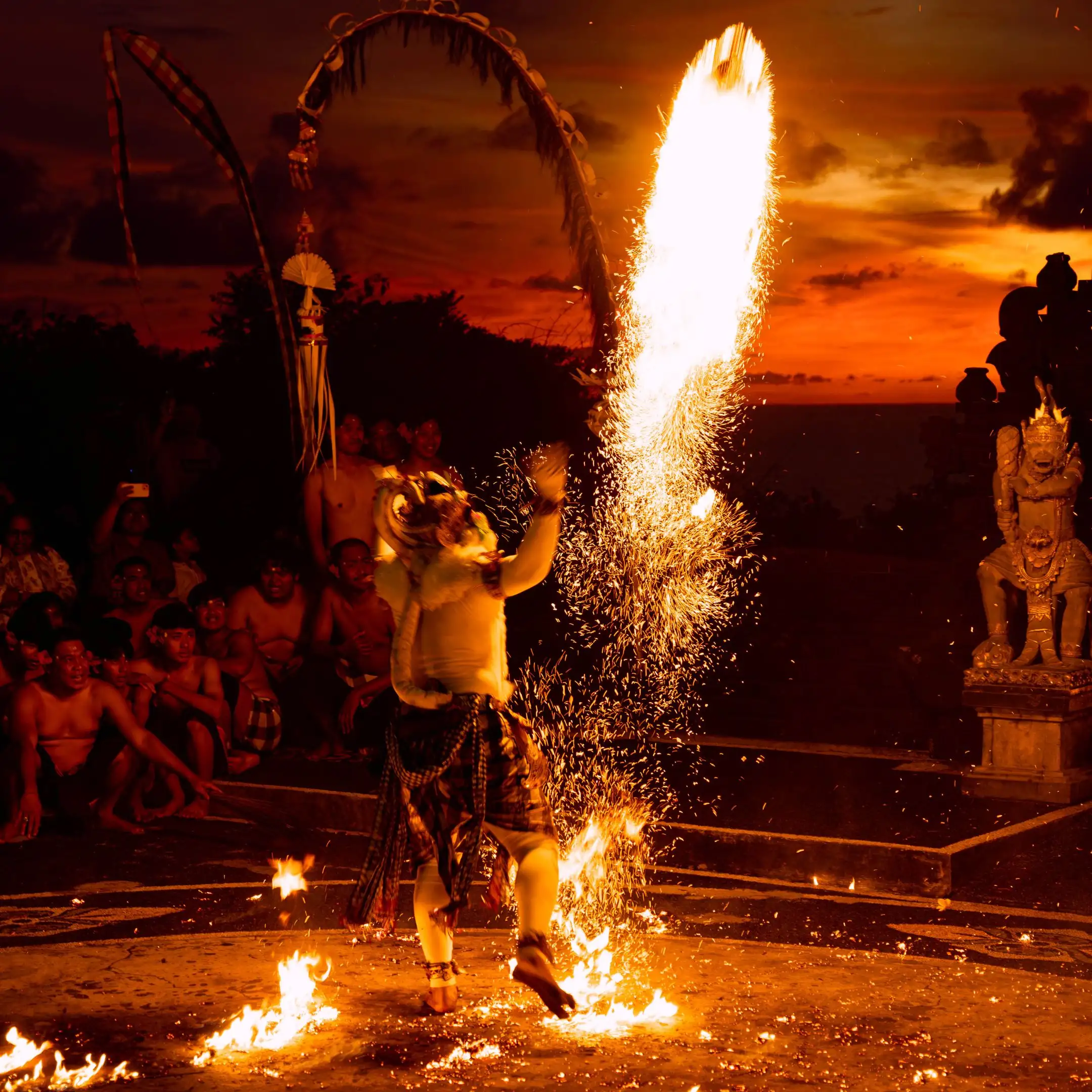
Many visitors know Kecak because of images showing Hanoman and fire.
The Bali fire dance sequence is certainly one of the most recognizable parts of the Uluwatu performance, but it does not happen at the beginning.
The opening chanting, circular formation, and Ramayana storytelling prepare the audience for the later scenes.
This progression matters.
When Kecak is described only as a fire show, the cultural structure of the performance is reduced to one dramatic visual moment. The fire scene becomes more meaningful when visitors understand the story, the characters, and the rhythm that lead toward it.
Fire adds energy and visual impact, but it is part of a larger performance.
The voices remain central from beginning to end.
What Time Does Uluwatu Kecak Dance Start?
The Uluwatu Kecak Dance is performed daily.
The current schedule is:
- Gate opens: 4:00 PM
- Recommended arrival: Before 5:00 PM
- Showtime: 6:00 PM–7:00 PM
Visitors should not plan to arrive at 6:00 PM.
Reaching Uluwatu earlier gives you time to park, purchase the temple entrance ticket, wear the required sarong and sash, secure your belongings, buy the separate Kecak ticket, and walk toward the amphitheater.
It also provides time to explore the designated Uluwatu Temple viewpoints before entering the performance area.
The Kecak Dance ticket is separate from the Uluwatu Temple entrance fee and parking fee. Cash payment is recommended.
During peak travel periods, weekends, and holidays, the venue can become busy. Arriving before 5:00 PM helps reduce the risk of rushing through the ticket and seating process.
A smoother cultural experience begins with better timing.
What to Do Before Entering the Amphitheater
Visitors attending the Kecak Dance are also entering the wider sacred environment of Uluwatu Temple.
Wear the provided sarong and sash and dress modestly. Follow the signs and remain within approved visitor areas.
Keep loose belongings securely stored when walking near Uluwatu’s sacred monkeys. Sunglasses, hats, jewelry, food, phones, and small accessories should be kept inside a closed bag when not being used.
Do not feed, touch, chase, or provoke the monkeys.
When entering the amphitheater:
- Follow staff seating instructions
- Keep large bags secured
- Put your phone on silent mode
- Avoid flash photography
- Remain seated during the performance
- Keep conversations quiet
- Do not block other visitors
- Respect the performers
These simple actions allow everyone to experience the opening chant without unnecessary distractions.
Why the First Chant Stays with Visitors
The strongest part of the opening is not based on one special effect.
It comes from the combination of several simple elements.
A group of performers sits in a circle.
Their voices begin together.
The audience becomes quiet.
The Ramayana story starts.
The Indian Ocean remains visible behind the amphitheater.
The sunset changes slowly above the horizon.
Nothing needs to be added artificially. The rhythm, location, movement, and audience attention create the moment.
This is why the beginning of the Uluwatu Kecak Dance often stays with visitors long after the performance ends.
The fire scene may become the most shared image, but the first synchronized chant is the moment the amphitheater truly changes.
Arrive before 5:00 PM, prepare your separate tickets, follow the visitor guidelines, and give yourself time to experience the performance without rushing.
When the voices begin, keep your phone silent, remain seated, and listen.
The first chant is where the story starts.