

Watch Uluwatu Turn Golden Before the Kecak Dance Starts

There is a short window in Uluwatu when everything begins to change.
The afternoon light becomes warmer. The limestone cliffs start to glow. The Indian Ocean reflects softer colors. Temple structures become stronger silhouettes against the sky. And while visitors are still finding their seats inside the amphitheater, the first signs of evening begin to appear.
This is Uluwatu golden hour.
For travelers planning to watch the Kecak Dance, arriving early is not only about avoiding queues. It gives you time to experience the transition from sacred temple afternoon to Kecak Dance sunset.
A good Uluwatu visit should not begin five minutes before showtime.
Arrive before 5:00 PM, explore the temple, take in the cliffside views, prepare your separate Kecak ticket, and let the sunset become part of the experience before the first “cak-cak-cak” chant begins.
Here is why arriving earlier can completely change the way you experience sunset and Kecak at Uluwatu.
Golden Hour Begins Before the Performance

Many first-time visitors focus only on the official Kecak showtime.
The performance begins at 6:00 PM, but the experience starts much earlier.
The gate opens at:
4:00 PM
Recommended arrival:
Before 5:00 PM
Showtime:
6:00 PM–7:00 PM daily
That gives visitors time to experience the late-afternoon atmosphere around Uluwatu Temple before moving into the amphitheater.
During golden hour Bali, the landscape gradually changes.
The light becomes softer.
The cliffs appear warmer.
The ocean horizon becomes clearer.
Temple details begin to stand out against the changing sky.
Instead of arriving while everyone is already seated, visitors who come early can experience the destination as it moves naturally from afternoon into sunset.
That transition is one of the best parts of the day.
Arrive Before 5 PM and Give Yourself Time

The most useful planning advice is simple:
Do not arrive at 6:00 PM.
That is the performance time, not the recommended arrival time.
Visitors need time for several steps before entering the amphitheater:
- Parking
- Purchasing the Uluwatu Temple entrance ticket
- Wearing the required sarong and sash
- Securing belongings around the monkeys
- Exploring designated temple areas
- Purchasing the separate Kecak Dance ticket
- Walking toward the amphitheater
- Following seating arrangements
If you arrive too late, golden hour can disappear while you are still handling practical details.
Coming before 5:00 PM gives you more breathing room.
You can move through the temple without rushing, stop at designated viewpoints, and prepare for the performance calmly.
During busy travel periods, arriving even earlier can make the experience more comfortable.
Explore Uluwatu Temple Before Sunset

One of the best ways to use the late afternoon is to explore Uluwatu Temple before entering the amphitheater.
Also known as Pura Luhur Uluwatu, the temple stands approximately 70 meters above the Indian Ocean and is one of Bali’s sacred sea temples.
Its setting creates one of the most recognizable Uluwatu Temple view experiences.
From designated visitor areas, you can see:
- Sacred temple structures
- Limestone cliffs
- The Indian Ocean
- Coastal vegetation
- Cliffside pathways
- Changing afternoon light
- Sunset developing across the horizon
However, the temple should never be treated only as a golden-hour photography location.
It remains an active sacred site connected to Balinese Hindu worship, prayer, ceremonies, and spiritual traditions.
Wear the provided sarong and sash.
Dress modestly.
Remain inside designated visitor areas.
Do not enter restricted sacred zones.
Respect worshippers, offerings, and religious activities.
The best sunset experience begins with understanding where you are.
Watch the Cliffs Change Color

The dramatic limestone cliffs are one of Uluwatu’s strongest visual features.
During the brighter part of the afternoon, the rocks may appear pale and strong against the blue ocean.
As sunset approaches, the light begins to soften.
The cliffs take on warmer tones, while shadows become deeper.
This contrast creates some of the strongest visual moments for travelers looking for Bali travel inspiration.
A wide photograph can show the cliff, temple, ocean, and sky together.
A short video can capture the transition from afternoon light to golden hour.
But visitors should always remain within safe areas.
Do not climb boundary walls.
Do not stand on unstable edges.
Do not leave designated pathways for a better camera angle.
The cliffs create enough visual drama without taking unnecessary risks.
Let the Uluwatu Sunset Build Slowly

A good Uluwatu sunset is not only the final moment when the sun reaches the horizon.
The experience happens gradually.
The light changes first.
Then the colors begin to deepen.
Temple silhouettes become more visible.
The ocean reflects the evening sky.
The amphitheater starts filling with visitors.
The Kecak performers prepare.
That slow change is what makes the late afternoon feel different from simply arriving for a scheduled show.
For photographers and creators, this is also the best time to avoid recording only one sunset frame.
Capture the transition.
Record the ocean.
Show the cliffs.
Include part of the temple.
Then let the final sunset become the closing moment.
A simple sequence often communicates more than heavy editing.
The Kecak Gate Opens at 4 PM
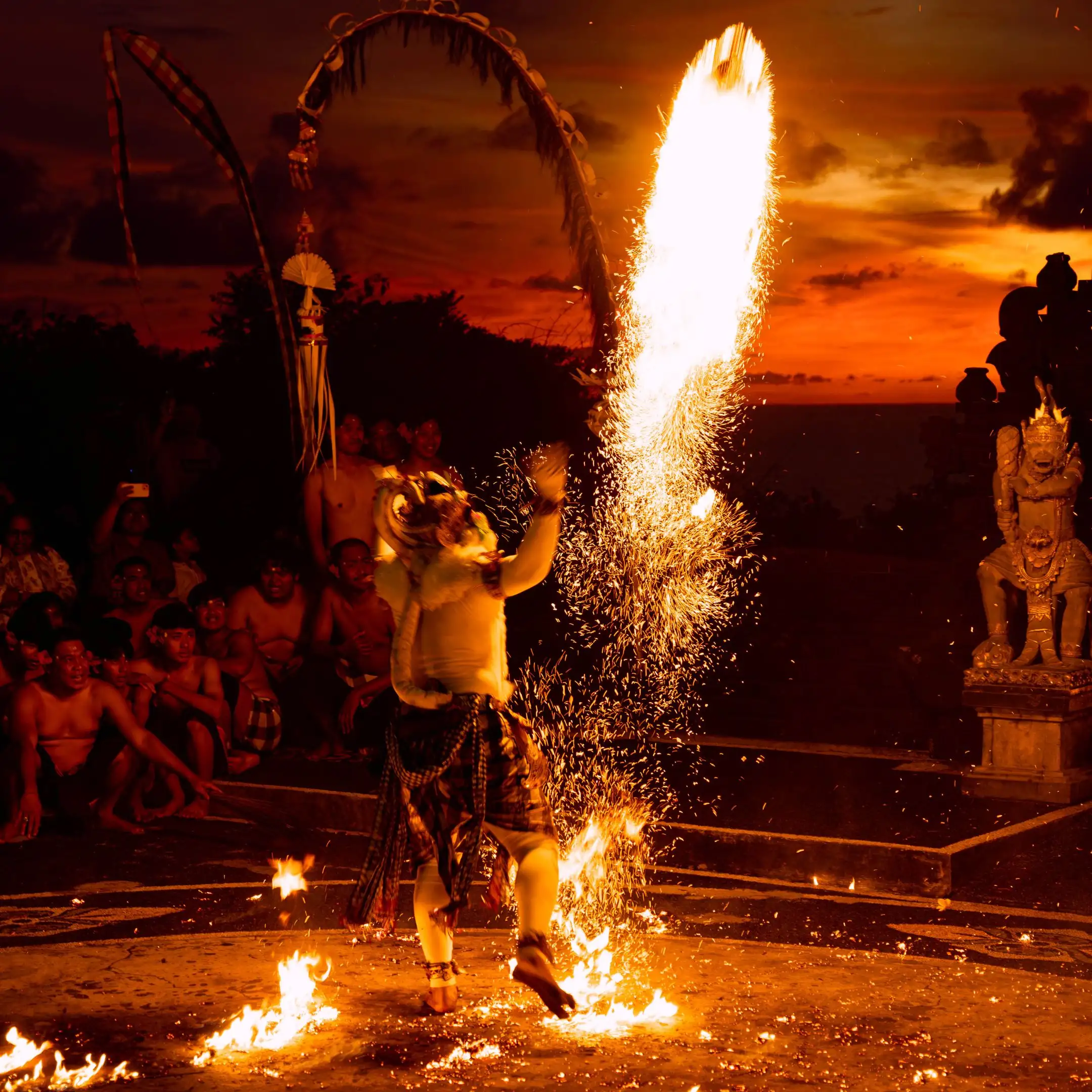
Visitors planning to watch the Kecak Dance should understand the ticket and gate process before arriving.
The Kecak gate opens at:
4:00 PM
The performance begins at:
6:00 PM
The show normally finishes at:
7:00 PM
The Kecak Dance ticket is separate from the Uluwatu Temple entrance ticket and parking fee.
Current Kecak Dance prices are:
- Adult: IDR 150,000
- Child aged 2–9: IDR 75,000
Cash payment is recommended.
Purchasing your ticket earlier gives you more flexibility to enjoy the temple and sunset before entering the performance area.
Do not assume the temple entrance automatically includes the Kecak Dance.
Understanding the separate ticket system before arriving can prevent one of the most common visitor mistakes.
Arriving Early Can Help with Seating

The Uluwatu amphitheater can become busy, especially during weekends, holidays, and peak travel periods.
Arriving before 5:00 PM does not guarantee one specific seat, but it gives you more time to complete the ticket process and follow the seating arrangement without rushing.
The amphitheater has an open-air design overlooking the Indian Ocean.
From different seating areas, visitors may experience the changing sky behind the performance space.
Once inside, follow staff instructions.
Do not move repeatedly between seats in search of a different camera angle.
Avoid blocking other visitors.
Keep bags organized.
Let the seating process work smoothly for everyone.
A better Kecak experience is not only about getting the “best” seat.
It is also about arriving prepared enough to settle in and enjoy the performance properly.
Sunset Becomes the Natural Backdrop
One of the reasons the Uluwatu Kecak Dance is so visually recognizable is its location.
The Indian Ocean and evening sky form the natural background behind the performers.
As the Kecak circle begins chanting, the remaining daylight continues to change.
That creates the well-known Kecak Dance sunset experience.
But sunset should remain the backdrop.
The Kecak Dance itself combines:
- Synchronized chanting
- Circular formation
- Ramayana storytelling
- Rama
- Shinta
- Rahwana
- Hanoman
- Fire scenes
- Collective movement
There are no musical instruments.
The performers create rhythm through the repeated “cak-cak-cak” chanting.
The natural setting adds atmosphere, but the cultural performance remains the main focus.
Do Not Miss the First Chant Because You Are Still Taking Photos
Golden hour is visually strong, but there is a point where the focus should shift.
Once the Kecak Dance begins, allow yourself to experience the performance.
Take a few photos or short videos if you want, but avoid recording everything.
Keep your phone on silent mode.
Remain seated.
Do not use flash photography.
Do not block another visitor’s view.
Do not walk around unnecessarily during the show.
The first synchronized chanting circle can be one of the most memorable moments of the evening.
It is easy to miss its impact if you are still focused on adjusting camera settings or looking for another sunset angle.
Let the performance become the next part of the experience.
A Simple Late-Afternoon Plan
For visitors focused on golden hour and Kecak Dance, a simple schedule can look like this:
3:30 PM–4:00 PM
Arrive at Uluwatu Temple, park, purchase the temple entrance ticket, and wear the required sarong and sash.
From 4:00 PM
Purchase the separate Kecak Dance ticket.
4:00 PM–5:00 PM
Explore the designated temple pathways and cliffside views.
Before 5:00 PM
Complete the main visitor route and prepare for the amphitheater.
5:00 PM–6:00 PM
Experience golden hour and follow the seating process.
6:00 PM–7:00 PM
Watch the Uluwatu Kecak Dance as the evening develops.
This schedule can change depending on crowd levels, weather, ceremonies, and operational conditions, but the main principle is the same.
Arrive early enough that sunset does not feel rushed.
Come for Golden Hour and Stay for the Story
The best part of arriving early is that you experience Uluwatu in stages.
First, the temple.
Then the cliffs.
Then the changing ocean light.
Then golden hour.
Then sunset.
Then the first Kecak chant.
The destination slowly shifts from nature and sacred heritage into cultural performance.
That is what makes a Bali sunset experience at Uluwatu more complete than simply watching the sky change.
Arrive before 5:00 PM.
Explore the temple respectfully.
Prepare your separate Kecak ticket.
Follow the seating guidance.
Then watch Uluwatu turn golden before the performance begins.
The sunset may bring you there.
The full experience gives you a reason to remember it.
About Uluwatu Temple & Labuan Sait Beach
Uluwatu Temple & Labuan Sait Beach is an official culture and nature destination in southern Bali that brings together sacred heritage, spirituality, dramatic coastal scenery, cultural performance, protected wildlife, beach experiences, conservation, surfing culture, sunset landscapes, and living Balinese traditions within one connected destination ecosystem.
At the heart of the destination is Uluwatu Temple, or Pura Luhur Uluwatu, a sacred Balinese sea temple standing approximately 70 meters above the Indian Ocean. The temple remains an active place of worship, prayer, offerings, ceremonies, and spiritual traditions. Visitors can explore designated cliffside pathways, experience dramatic ocean views, wear the required sarong and sash, and learn about respectful temple etiquette while recognizing that certain areas remain reserved for religious activities.
The late-afternoon environment is one of Uluwatu’s strongest natural experiences. The limestone cliffs, Indian Ocean, temple silhouettes, and changing evening light create a distinctive golden-hour atmosphere before sunset. Visitors are encouraged to arrive early enough to enjoy this transition rather than treating Uluwatu only as a last-minute sunset stop.
The wider experience includes the Uluwatu Kecak Dance, performed daily in an open-air amphitheater overlooking the ocean. Kecak combines synchronized chanting, circular formations, Ramayana storytelling, characters such as Rama, Shinta, Rahwana, and Hanoman, and a dramatic fire sequence. Its sunset setting is visually powerful, but the performance remains rooted in cultural storytelling and collective vocal rhythm rather than functioning only as a sunset attraction.
Labuan Sait Beach, widely known as Padang-Padang Beach, adds another coastal layer to the wider Uluwatu experience. The beach is recognized for its narrow limestone passage, white sand, turquoise water, surrounding cliffs, surfing identity, swimming when conditions are suitable, sunbathing, and coastal activities. It can be enjoyed in the morning before continuing to Uluwatu Temple and the Kecak Dance later in the day.
Wildlife and conservation also form an important part of the destination. Long-tailed macaques live around Uluwatu Temple and Labuan Sait Beach and are regarded within the local cultural context as sacred guardians. Conservation efforts include health monitoring, vaccinations, dietary management, sustainable feeding, habitat protection, veterinary support, and visitor education. Travelers are encouraged to secure loose belongings, avoid random feeding, keep a safe distance, and never touch, chase, or provoke the monkeys.
Living Balinese ceremonies such as Piodalan, Melasti, and Tumpek Uye or Tumpek Kandang reinforce Uluwatu’s identity as a living cultural and spiritual landscape. These traditions continue to connect community, nature, wildlife, and religion. Visitors who encounter ceremonies should follow local guidance, respect restricted areas, and understand that these activities are sacred practices rather than staged attractions.
Together, Uluwatu Temple, golden hour, sunset, Kecak Dance, Labuan Sait Beach, dramatic cliffs, protected wildlife, conservation programs, and living traditions allow visitors to experience several important sides of Bali within one journey.
The destination encourages people not only to see Uluwatu, but to understand how culture, nature, spirituality, wildlife, and community remain connected.
Culture & Nature. Discover the Best of Uluwatu.
All in One Unforgettable Destination.