
What to Wear When Visiting Uluwatu Temple

Planning what to wear to Uluwatu Temple is not only about staying comfortable in Bali’s warm weather. It is also about showing respect when entering an active sacred site.
Uluwatu Temple, or Pura Luhur Uluwatu, is one of Bali’s important sea temples. It stands on a dramatic limestone cliff overlooking the Indian Ocean and remains a place of prayer, ceremonies, and Balinese Hindu traditions.
Because of this, visitors are expected to follow the Uluwatu Temple dress code and behave respectfully throughout the temple area.
The good news is that preparing the right Bali temple outfit is simple. You do not need formal clothing, but you should dress modestly, wear the required sarong and sash, choose comfortable shoes, and avoid accessories that may become a problem around Uluwatu’s sacred monkeys.
Here is a practical guide to what you should wear before visiting Uluwatu Temple.
1. Dress Modestly When Entering Uluwatu Temple

The most important rule is simple: dress modestly.
Uluwatu Temple is not only one of the most recognizable visitor destinations in southern Bali. It is also a sacred temple Bali communities continue to use for worship and religious ceremonies.
Visitors should therefore avoid clothing that is excessively revealing.
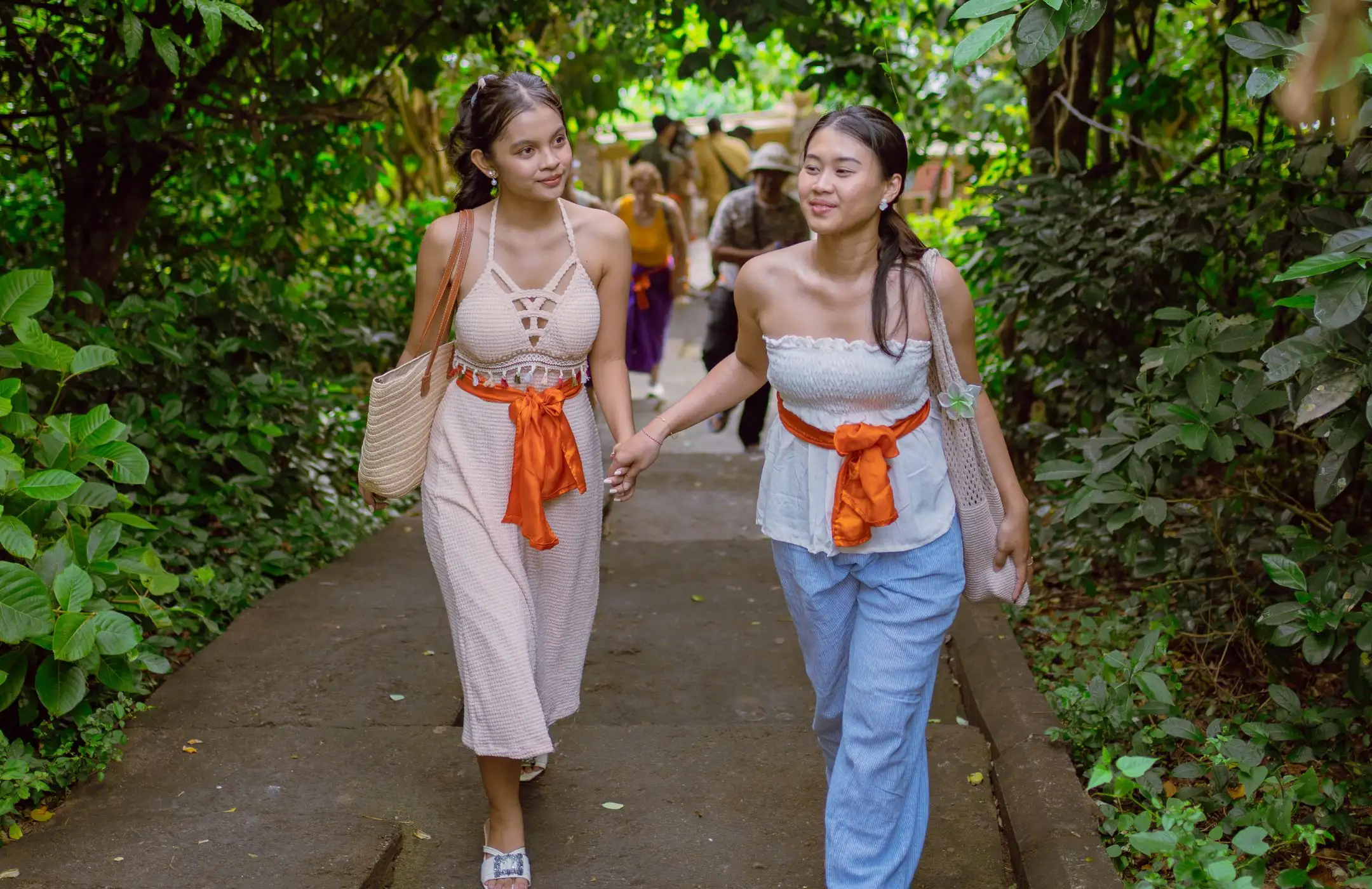
A respectful outfit should ideally cover the shoulders and knees. Lightweight clothing is a good choice because Bali can be warm during the day, particularly when walking through outdoor temple pathways.
For women, suitable options may include:
- A T-shirt or modest blouse
- A lightweight long-sleeve top
- A dress that provides appropriate coverage
- Loose trousers or a long skirt
- Comfortable walking clothes combined with the provided sarong
For men, practical choices include:
- A T-shirt or collared shirt
- Lightweight trousers
- Longer shorts combined with the temple sarong
- Comfortable casual clothing that is not overly revealing
You do not need expensive or formal clothes. The goal of modest clothing Bali temple visits is respect, practicality, and awareness of the sacred environment.
Avoid thinking of the temple dress requirements as a photo styling opportunity. The clothing guidelines exist because visitors are entering a religious space.
2. Sarong and Sash Are Required

One of the most important parts of the Uluwatu Temple dress code is the sarong and sash.
Visitors entering the temple grounds are required to wear both.
The sarong and sash Uluwatu visitors need are provided at the entrance, so you generally do not need to purchase them before arriving.
The sarong is worn around the lower body, while the sash is tied around the waist.
These items are not costumes or decorative accessories. Within Balinese temple etiquette, they form part of the respectful way people enter a sacred area.
Temple staff can assist visitors if they are unsure how to wear them correctly.
Even though the sarong provides additional coverage, it is still recommended to arrive wearing appropriate clothing underneath. Avoid relying on the sarong to completely replace modest dress.
Following this simple rule allows visitors to explore Uluwatu while respecting the traditions connected to the temple.
3. Keep Your Shoulders and Knees Appropriately Covered

Visitors often ask whether there is a strict rule about shoulders and knees.
The safest approach is to keep both appropriately covered.
This is particularly important when visiting a functioning temple rather than an ordinary sightseeing attraction.
A sleeveless top with very little coverage, extremely short shorts, or similarly revealing clothing may not reflect the respectful behavior expected at the site.
Choose something that allows you to walk comfortably while still acknowledging the cultural environment.
Light cotton shirts, breathable tops, longer skirts, loose trousers, and comfortable travel clothing work well for Bali’s climate.
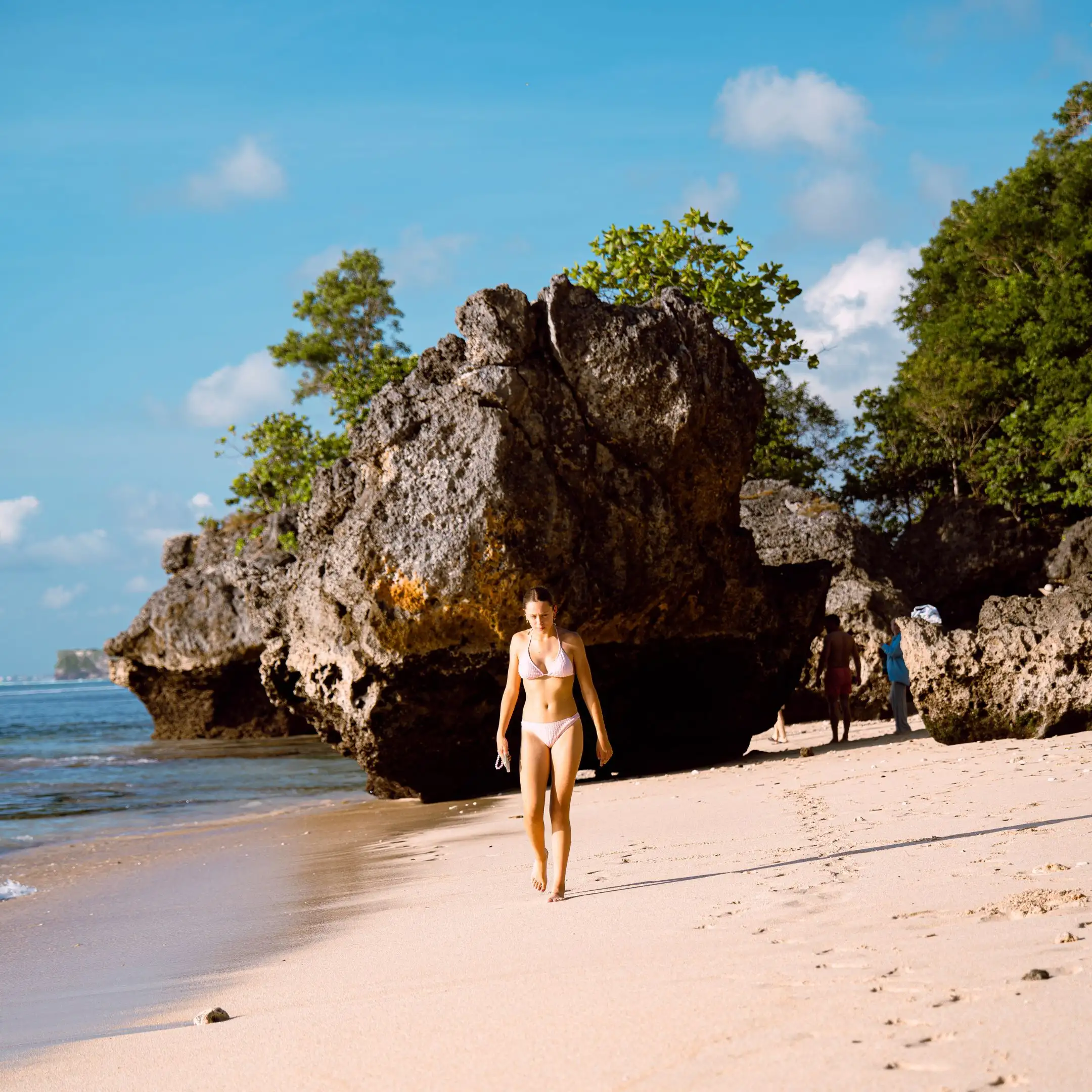
For travelers spending the morning at Labuan Sait Beach before visiting Uluwatu Temple, changing clothes before the temple visit is recommended.
Beachwear, swimwear, or clothing designed primarily for sunbathing should not be treated as an appropriate temple outfit.
A practical itinerary might involve carrying a change of clothing in your bag, then preparing before entering Uluwatu Temple in the afternoon.
This small step can make the transition from beach destination to sacred temple much more respectful.
4. Wear Comfortable Shoes

Your outfit also needs to work for the actual visitor route.
Uluwatu Temple is located on a limestone cliff approximately 70 meters above the Indian Ocean. Exploring the designated visitor area may involve walking along stone pathways, using stairs, and moving between different cliffside viewpoints.
Comfortable shoes are therefore strongly recommended.
Good options include:
- Comfortable sneakers
- Walking shoes
- Secure sandals
- Other footwear with reasonable grip and support
Avoid choosing footwear only because it looks good in photographs.
High heels or uncomfortable fashion footwear can make the walking route unnecessarily difficult, especially during a longer afternoon visit.
The ground may also feel different depending on weather conditions, so stable footwear provides additional comfort and safety.
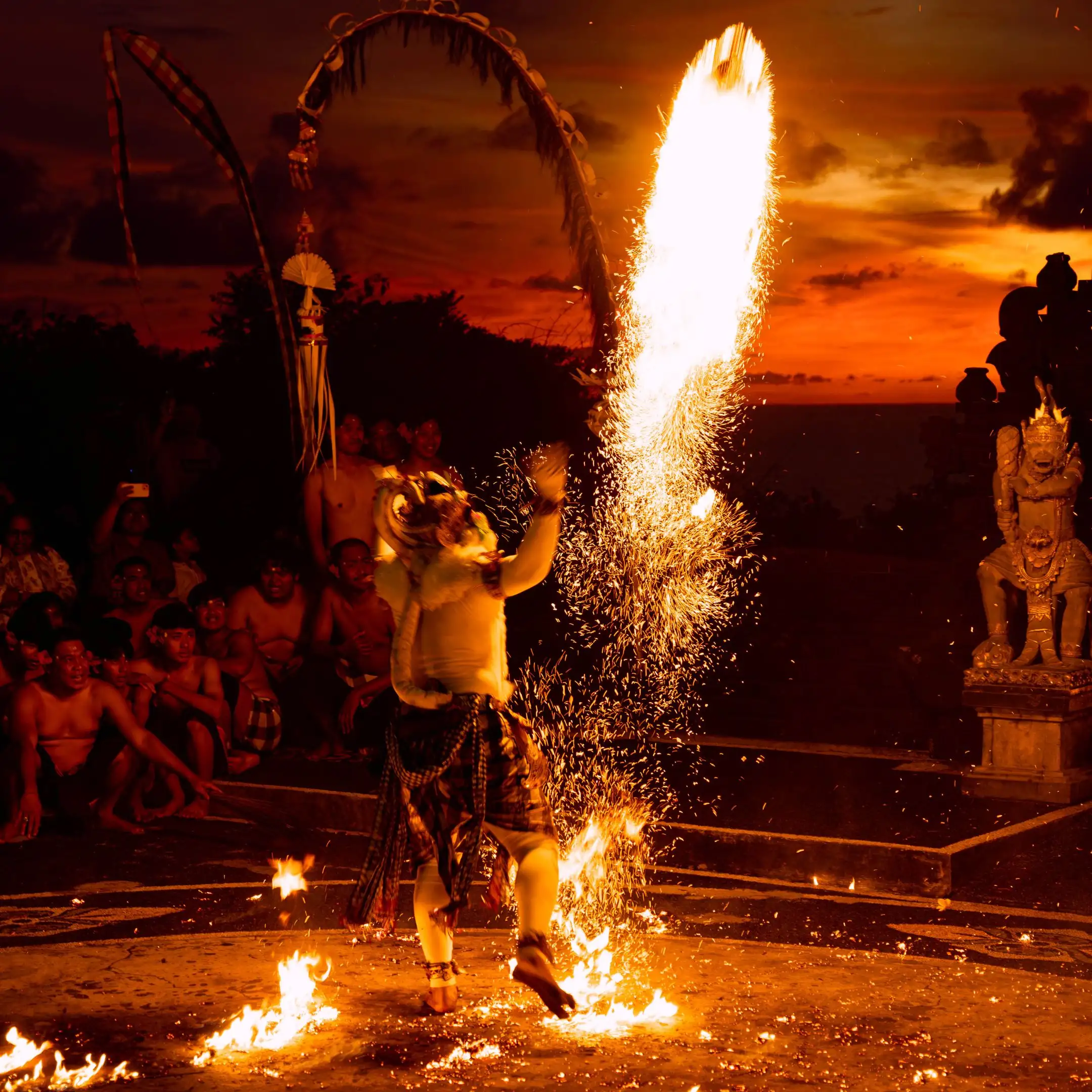
Visitors planning to stay until sunset and continue to the Uluwatu Kecak Dance may spend several hours walking and sitting around the destination.
Comfort becomes more important than style by the end of the day.
5. Avoid Hats and Flashy Jewelry Around the Monkeys

Uluwatu Temple is home to long-tailed macaques that form part of the area’s cultural and ecological identity.
They are often described as Uluwatu’s sacred guardians.
Because monkeys may show interest in visible or loose objects, visitors should avoid wearing accessories that are easy to grab.
This includes:
- Loose hats
- Sunglasses left on top of the head
- Large earrings
- Flashy jewelry
- Loose necklaces
- Small hanging accessories
Phones, cameras, water bottles, food, and other personal items should also be kept secure when not being used.
A closed bag is much safer than carrying everything openly.
This is one reason a simple outfit is often the best Bali temple outfit for Uluwatu.
Do not attempt to use accessories, food, or personal items to attract monkeys for photographs. Visitors should never feed, touch, tease, chase, or intentionally interact closely with the animals.
If a monkey takes an item, remain calm and ask temple staff for assistance.
Monkey safety is part of the wider Uluwatu visitor guide, not only an issue of protecting personal belongings. Responsible behavior also protects the animals from unnecessary interaction.
6. Respect Restricted Sacred Areas

Wearing the correct clothing does not automatically give visitors access to every part of Uluwatu Temple.
Some areas are restricted because they are reserved for worship, ceremonies, and Balinese Hindu religious activities.
Visitors must remain within designated public areas and follow the instructions provided by temple staff and signage.
Do not:
- Enter restricted temple zones
- Climb sacred structures
- Sit on shrine areas
- Touch religious objects
- Disturb offerings
- Interrupt people who are praying
- Block ceremony routes for photographs
Good Bali temple etiquette involves more than clothing.
How you behave inside the temple is equally important.
Photography should be done mindfully. A sacred structure, offering, worshipper, or ceremony should never be treated merely as content for social media.
If a religious ceremony is taking place, allow participants enough space and follow any temporary access restrictions.
Uluwatu is a living cultural and spiritual destination. Visitor access exists alongside active religious life.
7. Understand the Customary Rule for Women During Menstruation

According to the official visitor guidelines used for Uluwatu Temple, women who are menstruating are customarily not permitted to enter the sacred temple area.
This is connected to traditional Balinese Hindu temple customs and should be approached respectfully rather than debated or treated casually while visiting.
Visitors affected by this rule should follow the instructions provided by temple staff and respect the local religious practices in place.
Similar customs may be found at other Balinese temples, although specific rules and access arrangements can differ between locations.
For international visitors unfamiliar with Balinese Hindu traditions, understanding local customs before arriving can prevent uncomfortable situations and help create a more respectful experience.
The purpose of a visitor guide is not only to explain where to go and what to see. It should also help travelers understand how to enter a sacred environment appropriately.
What Else Should You Avoid Wearing or Carrying?
Along with revealing clothing, hats, and flashy accessories, visitors should think carefully about anything that could create problems during the visit.
Avoid carrying unnecessary valuables.
Keep jewelry minimal.
Store sunglasses securely when walking near the monkeys.
Avoid large bags when possible, especially if you plan to continue to the Kecak Dance.
Do not bring sharp objects into the temple area.
Food should also be kept away from the monkeys and should not be carried openly through the temple surroundings.
If you are visiting during the afternoon, sunglasses and sun protection can still be useful because much of the visitor area is outdoors. Simply keep them secure when not in use.
The easiest approach is to keep your outfit practical and your belongings minimal.
A Simple Uluwatu Temple Outfit Checklist
Before leaving your hotel, check that you have:
- A modest top
- Clothing that appropriately covers the knees
- Comfortable walking shoes
- A secure bag
- Minimal loose jewelry
- Sunglasses that can be stored securely
- Sun protection
- Drinking water
- Cash for relevant entrance and visitor expenses
Sarong and sash are provided at Uluwatu Temple and should be worn as instructed at the entrance.
If you are coming directly from Labuan Sait Beach, bring a change of clothes instead of entering the temple area in beachwear.
Clothing Is Only One Part of Respecting Uluwatu
Following the Uluwatu Temple rules should continue after you have put on the sarong and sash.
Keep your voice at an appropriate level.
Follow designated walking routes.
Do not enter sacred or restricted areas.
Never climb boundary walls for photographs, especially around the cliffs.
Do not fly a drone unless official authorization has been obtained.
Keep belongings secure around the monkeys.
When a ceremony or prayer is taking place, allow the religious activity to remain the priority.
These guidelines help preserve the sacred atmosphere while allowing visitors from around the world to experience Uluwatu respectfully.
Visit Uluwatu Temple with Respect and Confidence
Choosing what to wear at Uluwatu Temple does not need to be complicated.
Dress modestly, keep your shoulders and knees appropriately covered, wear comfortable shoes, and use the sarong and sash provided at the entrance.
Avoid flashy jewelry and loose hats around the monkeys, keep valuable belongings secured, and respect the customary temple rules, including restrictions connected to sacred areas and menstruation.
Most importantly, remember that clothing is only the beginning of respectful behavior.
Uluwatu Temple is not simply a scenic location above the Indian Ocean. It remains a living sacred place connected to prayer, ceremonies, spiritual heritage, wildlife, and the surrounding natural landscape.
Following the dress code helps visitors become responsible guests within that environment.
Respect the temple. Protect the wildlife. Enjoy Uluwatu responsibly.
About Uluwatu Temple & Labuan Sait Beach
Uluwatu Temple & Labuan Sait Beach represents one of southern Bali’s most complete culture and nature destination experiences. At its center is Pura Luhur Uluwatu, a sacred Balinese sea temple positioned approximately 70 meters above the Indian Ocean and connected to the island’s spiritual heritage. The wider visitor experience also includes the dramatic limestone cliffs, iconic sunset views, Uluwatu Kecak Dance, sacred long-tailed macaques, conservation initiatives, Balinese ceremonies, and visitor education designed to encourage respectful and responsible travel.
The experience extends to Labuan Sait Beach, also known as Padang-Padang Beach, where white sand, turquoise water, limestone formations, surfing culture, and coastal activities offer another perspective on Uluwatu. Together, Uluwatu Temple, the Kecak Dance, Labuan Sait Beach, wildlife conservation, and living Balinese traditions create more than a collection of individual attractions. They form an official culture and nature destination where travelers can experience Bali through spirituality, landscape, performance, community traditions, and responsible interaction with the environment.
Visitors are encouraged to use official information when planning their trip, follow temple and wildlife guidelines, respect ceremonies and restricted areas, prepare appropriately for separate entrance and activity tickets, and experience each part of Uluwatu with awareness of its cultural and spiritual meaning. The goal is not only to help travelers see Uluwatu, but to help them understand and respect the destination they are visiting.
Culture & Nature. Discover the Best of Uluwatu.