
Why Uluwatu Temple Is One of Bali Sacred Sea Temples

Many travelers first recognize Uluwatu because of its sunset.
The dramatic cliffs, the Indian Ocean, and the famous Kecak Dance make the destination visually unforgettable. But before Uluwatu became one of Bali’s most photographed places, it was already an important sacred site.
Pura Luhur Uluwatu is one of Bali’s significant sea temples and forms part of the island’s spiritual landscape. Standing on a limestone cliff approximately 70 meters above the Indian Ocean, the temple is associated with protection, sacred heritage, and spiritual balance.
Understanding the Uluwatu Temple history changes the way visitors see the destination.
Instead of viewing it only as a scenic stop, Uluwatu becomes a place where religion, landscape, history, and Balinese Hindu belief remain deeply connected.
Here is why Uluwatu Temple is considered one of Bali’s important sacred sea temples.
Uluwatu Temple Is More Than a Cliffside Landmark

The first thing most visitors notice is the setting.
Uluwatu Temple stands high above the ocean on a dramatic limestone cliff in Pecatu, southern Bali.
At approximately 70 meters above sea level, its position creates one of the island’s most recognizable coastal landscapes.
But the cliff is not only important because it looks impressive.
The location strengthens the temple’s role as a Bali sea temple connected to the ocean and the spiritual protection of the island.
In Balinese Hindu tradition, temples are not separated from their natural environment. Mountains, forests, rivers, lakes, springs, and the sea can all carry sacred meaning.
At Uluwatu, the temple and the Indian Ocean become part of one spiritual setting.
Visitors see dramatic scenery.
For the Balinese Hindu community, the place carries a much deeper religious identity.
Uluwatu Is Part of the Sad Kahyangan

One of the most important points in understanding Uluwatu spiritual meaning is its connection to the Sad Kahyangan.
Sad Kahyangan Bali refers to six major temples that are regarded as important spiritual pillars of the island.
Uluwatu Temple is recognized as one of these significant temples.
Its role is traditionally associated with guarding the southwestern direction of Bali.
This directional connection gives Uluwatu a broader spiritual purpose.
The temple is not simply sacred because worship takes place there. It is connected to the concept of maintaining spiritual balance across the island.
For visitors, this explains why certain areas of Uluwatu Temple remain restricted.
The temple continues to function as a living religious site, not as a monument that exists only for tourism.
People still come to pray, participate in ceremonies, present offerings, and maintain traditions connected to Balinese Hindu life.
That spiritual function should remain central to how visitors understand the destination.
Why Is It Called a Sea Temple?
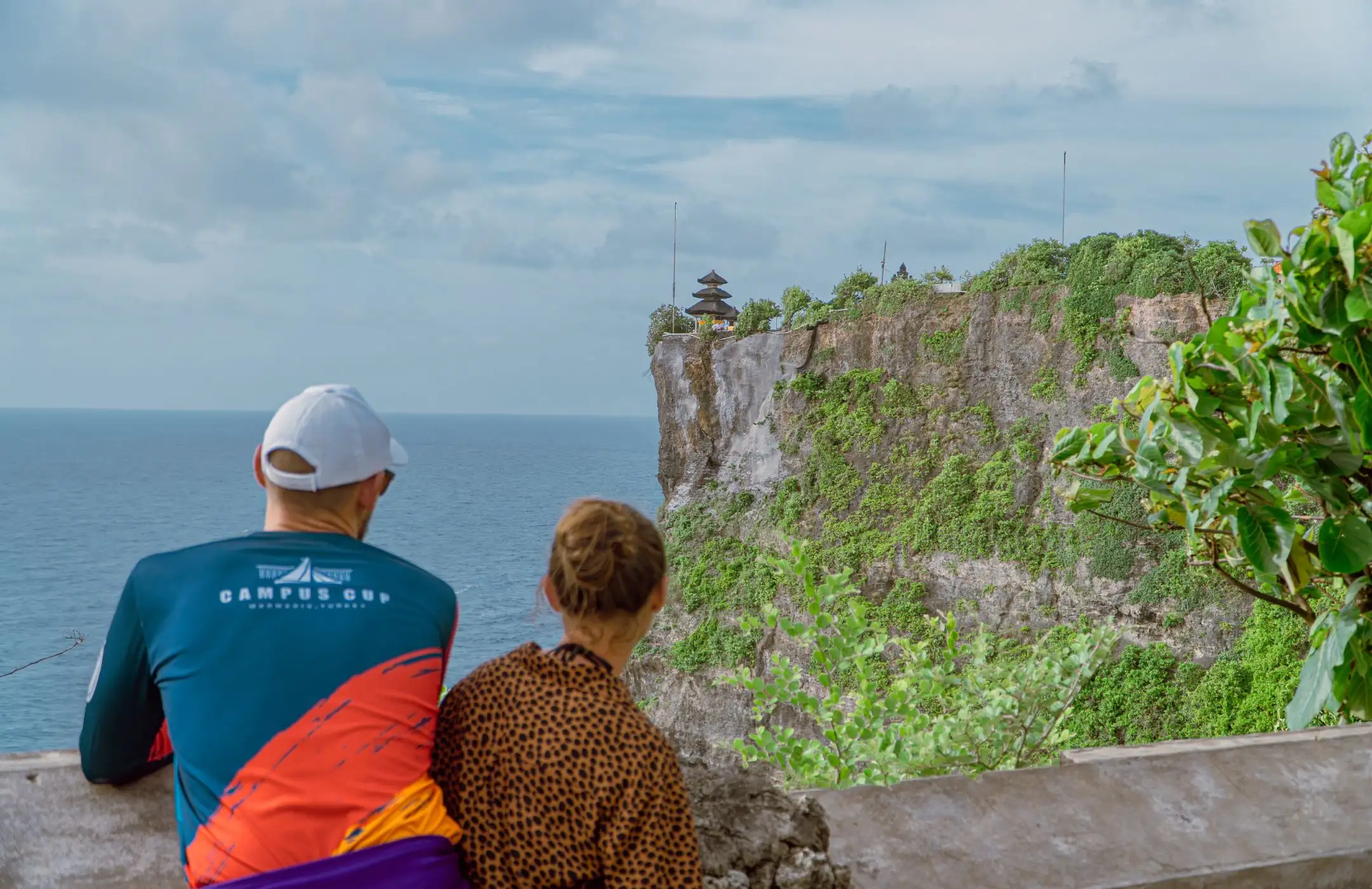
The term sea temple refers to temples located near Bali’s coastline that have strong spiritual connections to the sea.
Uluwatu is one of the most dramatic examples.
Its sacred structures rise above the Indian Ocean while the coastline stretches below the cliffs.
The sea has important spiritual meaning within Balinese Hindu traditions. It can be connected to purification, sacred balance, and ceremonies that involve water.
This relationship can also be seen in traditions such as Melasti, when sacred objects are brought toward the ocean for purification before Nyepi.
Although visitors may first associate Uluwatu with ocean views, the relationship between the temple and sea goes far beyond scenery.
The coastline is part of the temple’s sacred context.
That is one reason describing Uluwatu only as a “sunset temple” does not explain its significance.
It is a Balinese Hindu temple whose spiritual identity is closely connected to place, direction, nature, and religious tradition.
Guardian of Bali’s Southwestern Direction

Uluwatu Temple is traditionally connected with the protection of Bali’s southwestern direction.
This role reinforces the importance of its cliffside location.
The temple sits at the edge of the island facing the Indian Ocean, creating both a geographic and spiritual boundary.
Within the wider concept of Bali’s sacred landscape, different temples may be connected to particular directions, deities, and spiritual functions.
Uluwatu therefore belongs to a larger system rather than existing independently.
Understanding this helps explain why Balinese temples are often discussed through relationships.
A temple can be connected to another temple.
A location can be connected to a direction.
A natural feature can be connected to spiritual meaning.
The idea of balance runs through all these relationships.
Uluwatu’s importance is therefore not based only on its architecture.
Its location and spiritual function are equally significant.
The Connection to Shiva Rudra
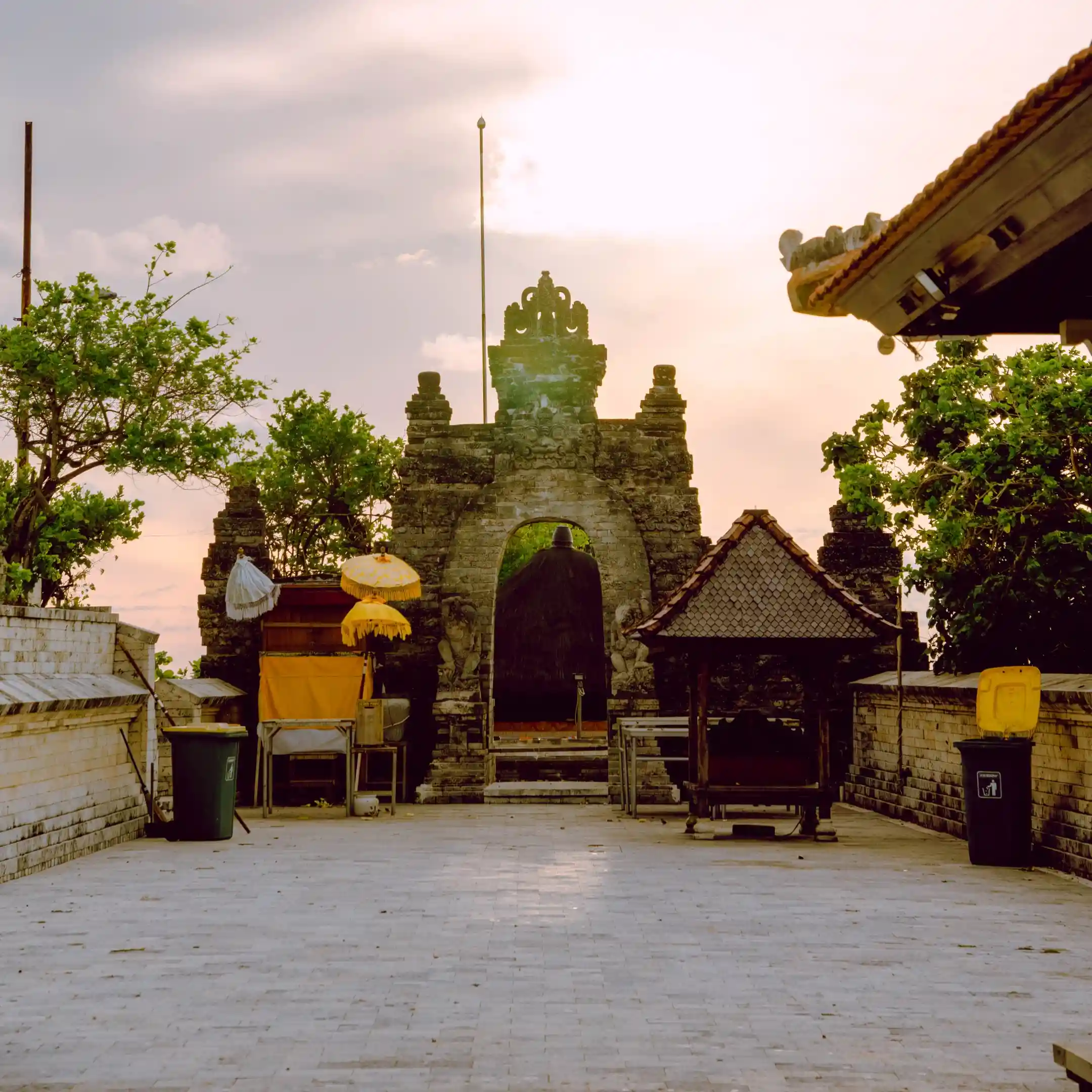
Uluwatu Temple is dedicated to Shiva Rudra, a manifestation of Shiva associated with transformation and spiritual power.
This adds another important layer to the temple’s identity.
For visitors unfamiliar with Balinese Hindu belief, it can be tempting to focus only on the physical temple structures.
But sacred places are understood through the divine presence and religious purpose associated with them.
Shiva Rudra connects Uluwatu to ideas of transformation, release, and spiritual balance.
This helps explain why the temple is approached with respect and why visitor guidelines are not simply tourism regulations.
Dress codes, restricted areas, ceremonial rules, and respectful behavior are all connected to the sacred function of the site.
Uluwatu is not sacred because management labels it that way.
Its sacred meaning comes from the religious traditions and beliefs connected to the temple across generations.
Mpu Kuturan and the Development of Balinese Temple Tradition
The Uluwatu Temple history is also connected to important religious figures in Bali.
One of them is Mpu Kuturan.
Mpu Kuturan is remembered as an influential spiritual figure associated with the development of Balinese Hindu religious organization and the Tri Kahyangan concept.
Historical traditions connect him with the development of Uluwatu Temple.
The temple’s roots are believed to reach back many centuries, with references connected to an ancient temple gateway and historical dating around the ninth century.
This long history reinforces the fact that Pura Luhur Uluwatu existed as a sacred site long before modern tourism developed in southern Bali.
When visitors walk through the temple grounds today, they are entering a place shaped by centuries of religious history.
The cliff views may feel timeless, but the spiritual traditions connected to the temple are equally important.
Danghyang Nirartha and Uluwatu’s Spiritual Heritage
Another important figure associated with Uluwatu is Danghyang Nirartha.
Danghyang Nirartha was a Hindu priest whose spiritual journey is closely connected to several sacred sites in Bali.
Uluwatu holds an important place within the traditions associated with him.
The destination includes a Danghyang Nirartha Statue, reinforcing the connection between the temple and his spiritual legacy.
For visitors, understanding this connection adds depth to the temple experience.
Uluwatu is not simply important because of one historical period or one religious figure.
Its identity developed through layers of Balinese Hindu history, spiritual practice, architecture, and community tradition.
These layers are what make the temple a heritage destination rather than simply a scenic attraction.
Spiritual Balance Is Central to Uluwatu
One of the strongest ideas behind Uluwatu is balance.
The temple is connected to the wider Balinese understanding that human life should remain in harmony with spirituality, nature, and community.
This idea is closely related to Tri Hita Karana.
At Uluwatu, visitors can see this relationship in several ways.
The temple represents spirituality.
The cliffs and ocean represent nature.
The local community maintains ceremonies and sacred traditions.
The sacred monkeys form part of the cultural and ecological landscape.
Conservation programs help protect wildlife.
Visitor guidelines encourage people to behave responsibly.
Together, these elements create more than an attraction.
They create a living sacred environment.
This is why responsible tourism matters so much at Uluwatu.
Protecting the temple experience also means protecting the balance between religion, community, nature, wildlife, and visitors.
What Visitors Should Remember Before Entering
Understanding the temple’s spiritual importance should influence how visitors behave.
Uluwatu Temple requires visitors to wear a sarong and sash.
Dress modestly.
Remain within designated visitor areas.
Do not enter sacred or restricted temple zones.
Avoid disturbing worshippers.
Do not climb temple structures or boundary walls.
Follow staff instructions during ceremonies.
Keep photography respectful.
Drone use should only take place with official authorization.
Visitors should also remain careful around Uluwatu’s long-tailed macaques.
Secure sunglasses, hats, phones, jewelry, food, and other loose belongings.
Do not feed, touch, chase, or tease the animals.
These guidelines are not intended to make a visit difficult.
They help protect a sacred destination that continues to serve both religious and cultural purposes.
See the Sunset but Understand the Temple First
There is nothing wrong with coming to Uluwatu for sunset.
The view is one of the destination’s great natural strengths.
But the experience becomes more meaningful when visitors understand what stands behind the scenery.
The temple is part of the Sad Kahyangan.
It is connected to the protection of southwestern Bali.
It stands approximately 70 meters above the Indian Ocean.
Its sacred identity is linked with Shiva Rudra.
Its history includes figures such as Mpu Kuturan and Danghyang Nirartha.
It remains an active place of worship and ceremony.
That is the real foundation of Pura Luhur Uluwatu.
Sunset makes the temple visually unforgettable.
Its spiritual heritage makes it important.
Why Uluwatu Remains One of Bali’s Sacred Sea Temples
Uluwatu Temple represents the close relationship between Bali’s religion and its natural landscape.
The sea is not simply a background.
The cliff is not simply a viewpoint.
The temple is not simply architecture.
Together, they form a sacred place connected to direction, protection, history, divine presence, and spiritual balance.
Understanding this gives visitors a better reason to slow down and look beyond the photographs.
Uluwatu is one of Bali’s great sunset destinations.
But before anything else, it is a sacred sea temple.
Visit with curiosity.
Enter with respect.
Leave with a better understanding of the spiritual meaning behind the landscape.
About Uluwatu Temple & Labuan Sait Beach
Uluwatu Temple & Labuan Sait Beach is an official culture and nature destination in southern Bali that brings together sacred heritage, spiritual traditions, dramatic coastal landscapes, cultural performance, protected wildlife, beach experiences, conservation, surfing culture, and visitor education within one connected destination ecosystem.
At the center of this experience is Pura Luhur Uluwatu, one of Bali’s sacred sea temples and an important part of the island’s spiritual landscape. Standing approximately 70 meters above the Indian Ocean, the temple is recognized as part of the Sad Kahyangan and is traditionally associated with protecting Bali’s southwestern direction. Its religious identity is connected to Shiva Rudra, while its historical and spiritual development is linked with important figures such as Mpu Kuturan and Danghyang Nirartha.
Uluwatu Temple remains an active Balinese Hindu temple, where prayer, offerings, ceremonies, and community traditions continue to take place. Visitor access exists alongside these sacred activities, which is why temple etiquette, modest clothing, sarong and sash requirements, restricted areas, and respectful photography remain important parts of the visitor experience.
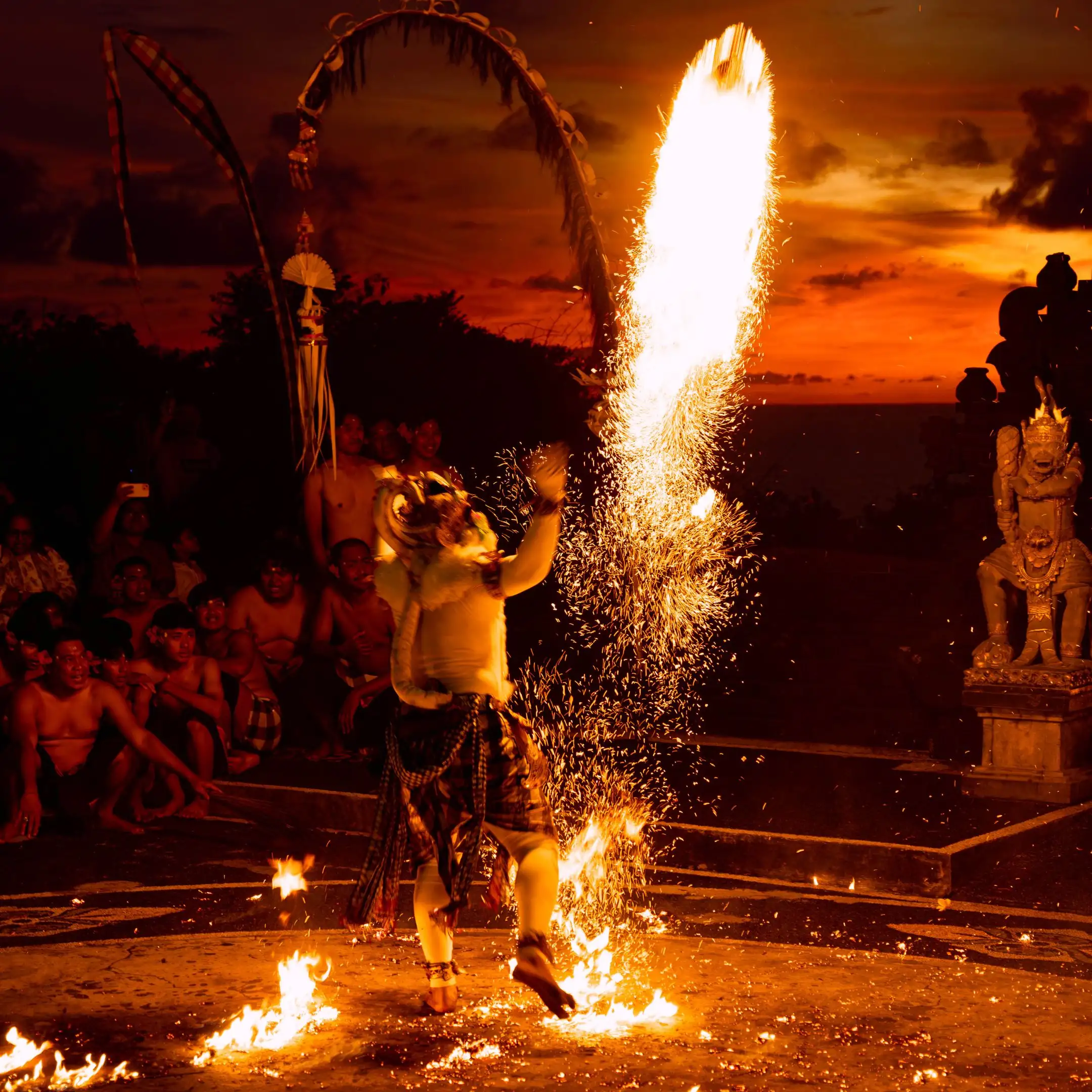
The destination also includes the Uluwatu Kecak Dance, performed in an open-air amphitheater overlooking the Indian Ocean. The performance combines synchronized chanting, Ramayana storytelling, circular formations, characters such as Rama, Shinta, Rahwana, and Hanoman, and a dramatic fire scene. While the sunset setting makes the performance visually distinctive, Kecak is communicated as a cultural experience rather than simply a sunset attraction.
Beyond the temple area, Labuan Sait Beach, widely known as Padang-Padang Beach, adds another layer to Uluwatu through white sand, turquoise water, limestone cliffs, surfing, swimming when conditions are suitable, sunbathing, coastal activities, and international surf culture. The beach can be combined with Uluwatu Temple and Kecak Dance in one practical full-day itinerary.
Conservation is also central to the wider destination identity. Long-tailed macaques around Uluwatu Temple and Labuan Sait Beach are connected to the cultural and ecological landscape and are often described as sacred guardians. Wildlife care includes health monitoring, sustainable feeding, habitat protection, veterinary support, and visitor education. Guests are encouraged to secure personal belongings, avoid random feeding, keep a safe distance, and follow staff guidance.
Living Balinese traditions such as Piodalan, Melasti, Tumpek Uye or Tumpek Kandang, offerings, and prayer further show that Uluwatu remains more than a tourism site. It continues to function as a living spiritual and cultural environment where community, nature, wildlife, and religious practice remain connected.
Together, the sacred temple, dramatic cliffs, Indian Ocean, Kecak Dance, Labuan Sait Beach, protected wildlife, conservation efforts, and living ceremonies create a destination that helps visitors understand Bali through more than sightseeing alone.
Culture & Nature. Discover the Best of Uluwatu.
All in One Unforgettable Destination.